If you want breakfast at a temple-run café or dining room in Kyoto, the safest rule is simple: do not assume temple grounds, prayer spaces, and eating areas work the same way. Check the venue type first, confirm opening hours and any reservation rule, and follow the site’s food-and-drink etiquette before you sit down. Checked on 2026-11-23. This advice should still be useful later, but temple hours, booking rules, and meal formats can change by site and season.
Direct answer
Yes, you can often have breakfast at a temple-related venue in Kyoto, but only if the place is explicitly open to visitors and clearly permits dining. Kyoto’s official visitor guidance asks people not to eat or drink at temples and shrines, so the key question is whether you are entering a separate café, a temple-run dining room, or a space tied to worship rather than to hospitality. Kyoto visitor etiquette guide
In practice, the safest approach is: verify the exact venue, check the current hours, reserve if required, and do not bring food into the grounds unless the site says you may. For temple-stay breakfast, JNTO says breakfast is commonly included and that meals are often shojin ryori, with some temple stays accepting only cash. JNTO temple stay guide
The quickest way to decide if you are allowed in
| Situation | What to do |
|---|---|
| Temple-run café with a public menu | Check opening hours and whether reservations are required before arrival. |
| Breakfast inside a temple-stay or shukubo | Assume booking rules, set meal times, and house etiquette apply. |
| Dining in a prayer space or on temple/shrine grounds without a clear café sign | Do not eat there unless staff have explicitly directed you to a permitted area. |
| Unsure whether the venue is for guests only | Ask ahead; Kyoto tourism notes that reception at temples and shrines often closes around 4 p.m., so late clarification is risky. |
Kyoto’s official FAQ says temple and shrine reception often closes around 4 p.m., so do not wait until late afternoon to sort out access questions for the next morning. Kyoto Tourism FAQ on temple and shrine reception
What to do before you sit down
- Confirm the exact venue name. A temple complex may contain a public café, a private lodging breakfast room, and prayer areas with different rules.
- Check the live opening hours. Kyoto tourism notes that site hours vary; for example, Kiyomizu-dera is shown opening at 6:00 a.m. in official morning-visit material, but that does not apply to every temple breakfast venue. Kyoto morning visit guide
- Look for booking language. Kyoto’s reservation guide warns that some places require advance booking regardless of season or group size. Kyoto reservation guide
- Check the meal format. Temple-stay breakfasts are often shojin ryori, which means the food may be vegetarian and set-menu based rather than café-style. JNTO temple stay guide
- Prepare cash as a backup. JNTO says some temple stays accept only cash, so do not assume card payment. JNTO temple stay guide
If you are moving around Kyoto with luggage before breakfast, it may help to sort bags first; our Japan luggage forwarding vs station lockers guide covers the practical options.
Etiquette that matters most in temple-linked dining
The main etiquette issue is not a complex set of special dining gestures; it is respect for the boundary between hospitality and sacred space. Kyoto’s visitor guidance explicitly says not to eat or drink at temples and shrines, so keep food inside the designated eating area only. Kyoto visitor etiquette guide
- Do not wander with breakfast in hand. Stay in the eating area unless staff direct you otherwise.
- Do not assume photography is allowed everywhere. If the venue is attached to worship space, check local rules first.
- Keep your voice low. Temple-related venues are often calm places, especially early in the morning.
- Follow the set pace. Temple-stay meals may be served at fixed times; arriving late can disrupt service.
If the venue looks like a café in a temple complex, the etiquette is usually closer to quiet café behavior. If it is a temple-stay breakfast room, think of it as part of the accommodation experience, with the house rules taking priority.
What is likely to change in the future
This topic is especially sensitive to future changes because temple hours, reservation systems, and meal formats are site-specific. The official sources used here are broad guides, not a single universal rulebook. That means the advice should remain valid as a planning method, but the exact opening hour, booking requirement, menu style, and payment method should be rechecked before travel. Kyoto morning breakfast guide
Use this as a decision process, not a fixed directory: identify the venue, verify access, confirm the meal format, and respect the no-food-in-temple-grounds rule unless the site clearly says otherwise. That is the most reliable way to avoid a polite but unnecessary mistake.
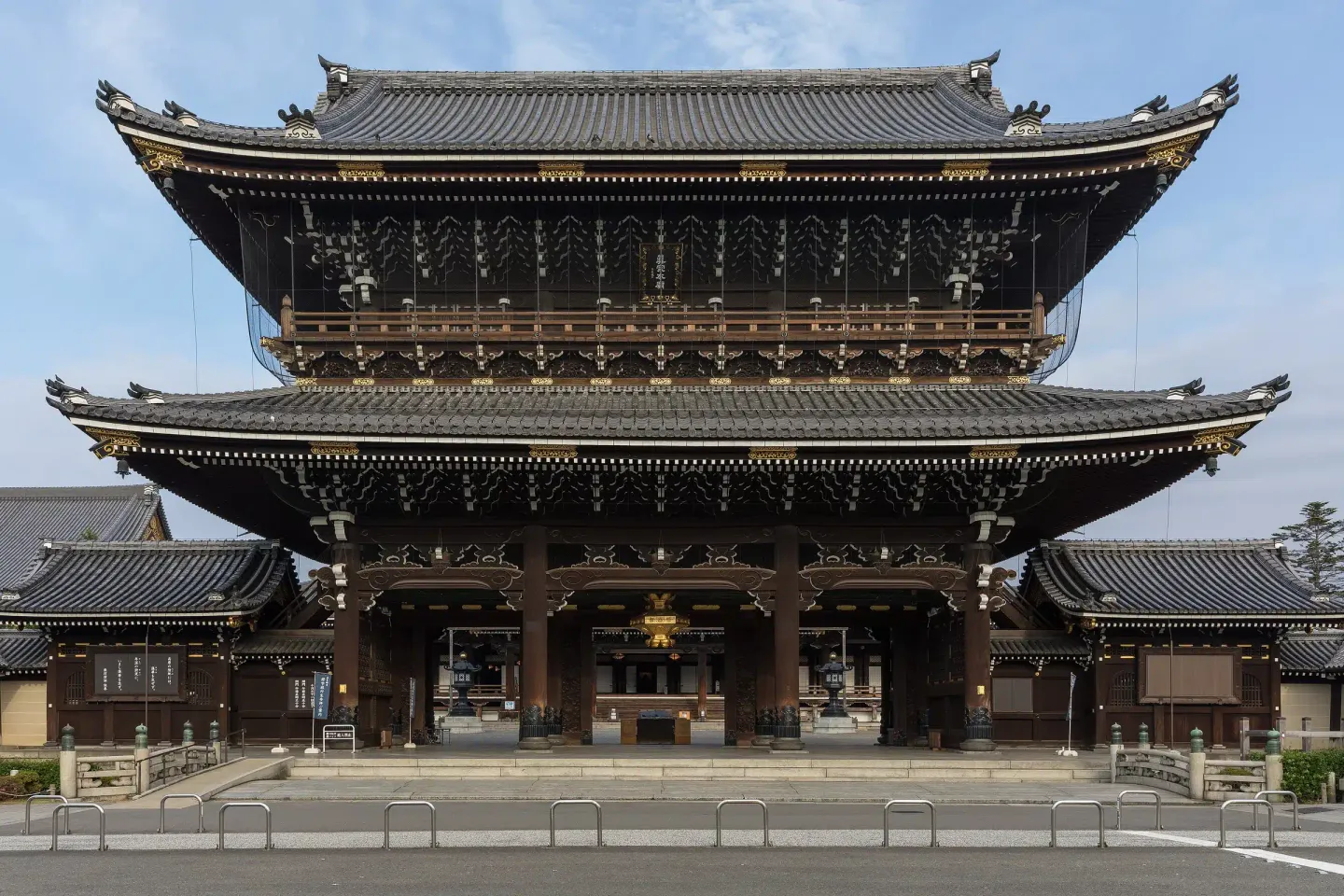
Featured image: Contextual daytime photo of a real Kyoto temple gate that can illustrate the article's temple-linked breakfast etiquette; it does not claim to show breakfast service or current opening hours. Photo: Basile Morin / Wikimedia Commons, CC BY-SA 4.0. Resized and converted to WebP; the image adaptation retains its source license.