Checked on 2026-11-20. For visitors with limited mobility, the short answer is: start with the Acropolis Museum, treat the Acropolis as conditional rather than easy, and assume most other ancient sites in central Athens need a site-by-site check before you commit. Athens can work well for a mobility-aware archaeology trip, but only if you plan around entrances, lifts, gradients, and on-the-day operational rules. Future travelers should recheck official pages shortly before visiting, because access services and opening hours can change.
The direct answer: which Athens ancient sites are realistic?
Most realistic: the Acropolis Museum, because its official visit page says it has special ramps at all entrances, elevator access, accessible WCs on all floors, wheelchairs available to borrow, Braille guides, and guide-dog access. That makes it the most dependable archaeology stop in Athens for wheelchair users, people using walking aids, and many stroller users. Official Acropolis Museum visitor information
Conditionally realistic: the Acropolis itself. Official ODAP material describes the western approach as steep, while also noting paved routes on the plateau and an accessible main entrance route on the western slope. In practice, that means access exists, but it is not flat, frictionless, or equally manageable for every visitor. ODAP accessibility procurement notice
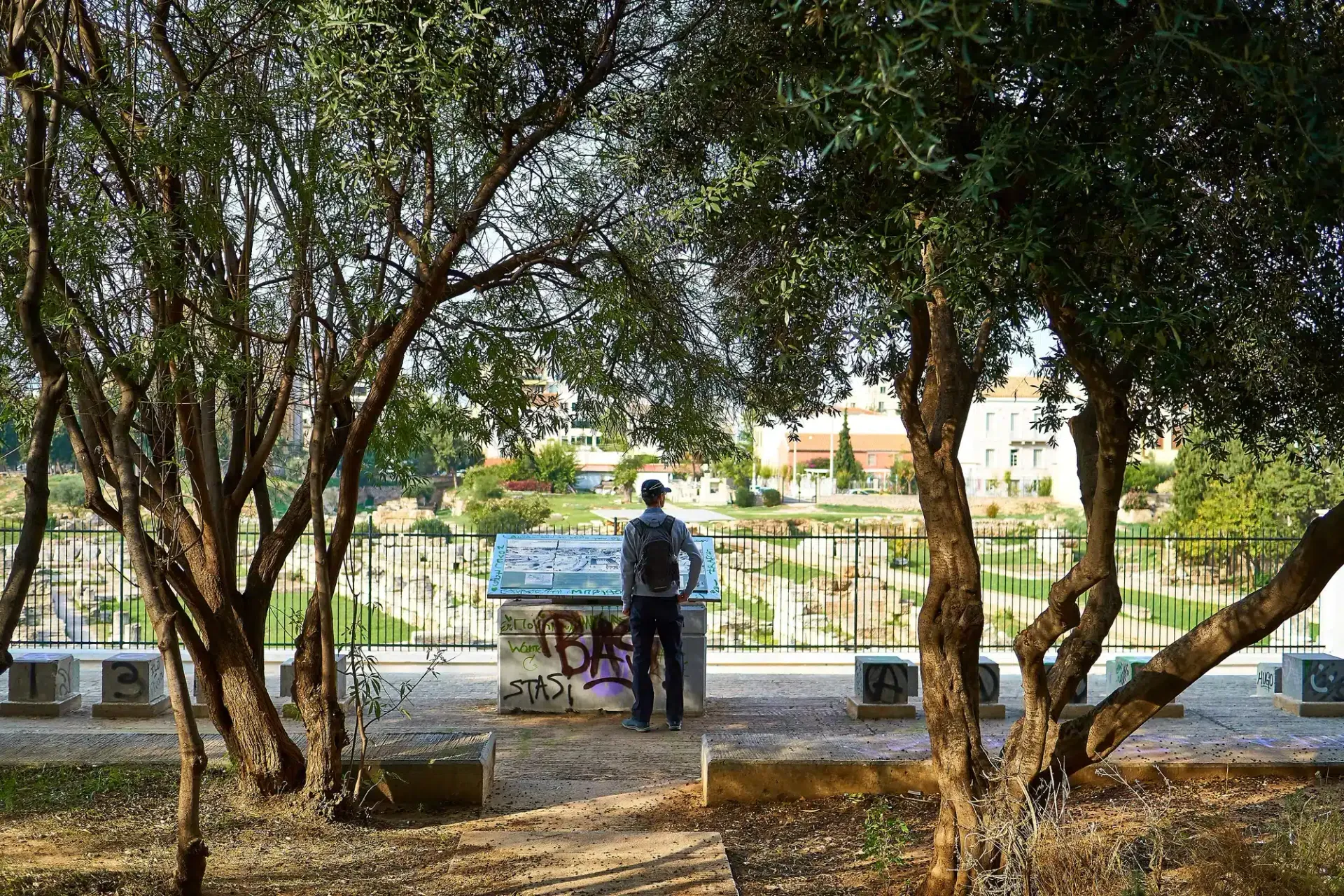
Partially realistic: Kerameikos, which ODAP’s own operating rules describe as partially accessible to visitors with disabilities using a wheelchair, with the assistance of an escort. That is useful, but it is not the same as a fully step-free site. ODAP Kerameikos operating rules
If you want the safest one-site answer, choose the museum first and treat the ruins as a bonus only after you have confirmed current conditions.
Quick decision table
| Site | Practical mobility verdict | What the official sources support | Best use case |
|---|---|---|---|
| Acropolis Museum | Best choice | Ramps at all entrances, elevators, accessible WCs, wheelchairs, Braille guides, guide-dog access | Reliable half-day cultural stop |
| Acropolis | Conditional | Steep west approach, but paved routes and an accessible western entrance route are described | Only if your mobility level matches the terrain |
| Kerameikos | Partial | Accessible with wheelchair and escort assistance | Shorter, more controlled visit |
This table is intentionally narrow: it compares only the sites for which current official accessibility statements were available in the supplied research.
Why the Acropolis Museum is the safest anchor
The museum is the most dependable choice because its access page reads like a real operations guide rather than a vague promise. It states that wheelchair and stroller ramps are available at all entrances, elevators serve the building, accessible WCs exist on all floors, and visitors can borrow wheelchairs from the Visitor Services Desk. It also lists Braille guides in Greek and English and allows guide dogs. Acropolis Museum plan-your-visit page
The museum also helps with timing. Its page publishes seasonal opening hours, including winter hours from 1 November to 31 March, so visitors should check the exact day they plan to go rather than assuming a year-round schedule. The museum’s ticketing also points visitors to the official e-ticketing service for Acropolis site tickets, which is useful if you are trying to coordinate a museum visit with the nearby archaeological zone. Official hours and ticketing note
Practical takeaway: if your itinerary has room for only one archaeological stop in Athens, this is the one most likely to work without surprises.
How to think about the Acropolis and Kerameikos
The Acropolis is not impossible, but it is not a simple yes either. ODAP’s current accessibility procurement document is useful because it describes the steep western approach while also mentioning paved routes on the plateau and an accessible main entrance route from the western slope. That tells you something important: access is route-dependent, not universal across the whole hill. If a visitor can handle gradients and unevenness, the Acropolis may be doable; if not, it may be frustrating or unsafe. ODAP accessibility procurement notice
Kerameikos is more modest and more honest in its wording: partial accessibility with escort assistance. That makes it a possible short visit for some travelers, but not a site to assume is fully step-free. If you are choosing between Kerameikos and the Acropolis Museum, the museum is the lower-risk option; if you are choosing between Kerameikos and the Acropolis, the terrain and your own mobility tolerance should decide it, not the name recognition of the site. Kerameikos official operating rules
For both sites, the main issue is not just “is there an entrance?” but “can you complete the visit comfortably once you are inside?”
What to verify before you go, and what may change
Checked date: 2026-11-20. Future travelers should treat this article as a current snapshot, not a permanent promise. The safest pre-visit checks are simple: confirm the exact opening hours for your day, confirm whether any lift, wheelchair loan, or access route is temporarily out of service, and check whether the specific site you want is using the official Hellenic Heritage e-ticket platform at that moment. ODAP’s current digital-ecosystem materials say that the official platform is the ticketing system for museums, archaeological sites, and monuments across Greece, and that it can include access-information tools and, where available, services such as elevator or wheelchair reservation. Official Hellenic Heritage e-Ticket services page
Two caveats matter most. First, accessibility investment is ongoing: ODAP’s procurement notice for at least 100 wheelchairs shows active improvement work, but it does not guarantee that every site will already have the same equipment in the same quantity. Second, accessibility on ancient terrain can change with maintenance, crowding, or weather-related operational decisions, so day-of confirmation is still worth the time.
If you want the most predictable Athens archaeology day, build it around the museum, then add one outdoor site only if the official route and your own mobility needs line up.
Featured image: Photo: Davide Mauro / Wikimedia Commons, CC BY-SA 4.0. Resized and converted to WebP; the image adaptation retains its source license.