Copenhagen is often flattened into a few reliable images: colorful quays, bikes, clean water, a famous statue with too many visitors around it. This set pushes past that shorthand. The real subject is the harbor itself, not as backdrop but as operating system — a long civic edge where preservation, transport, leisure, and redevelopment keep overlapping.
Nyhavn is the obvious anchor. Its canal, painted facades, rigging, café terraces, and quay furniture still carry the visual grammar of a port city. But the point is not that Nyhavn remains a working mercantile harbor in the old sense. Copenhagen’s own planning material treats it as a protected cultural environment, and its present life is largely staged around hospitality, walking, canal tours, and the maritime atmosphere that survives in the basin, the buildings, and some preserved vessels.
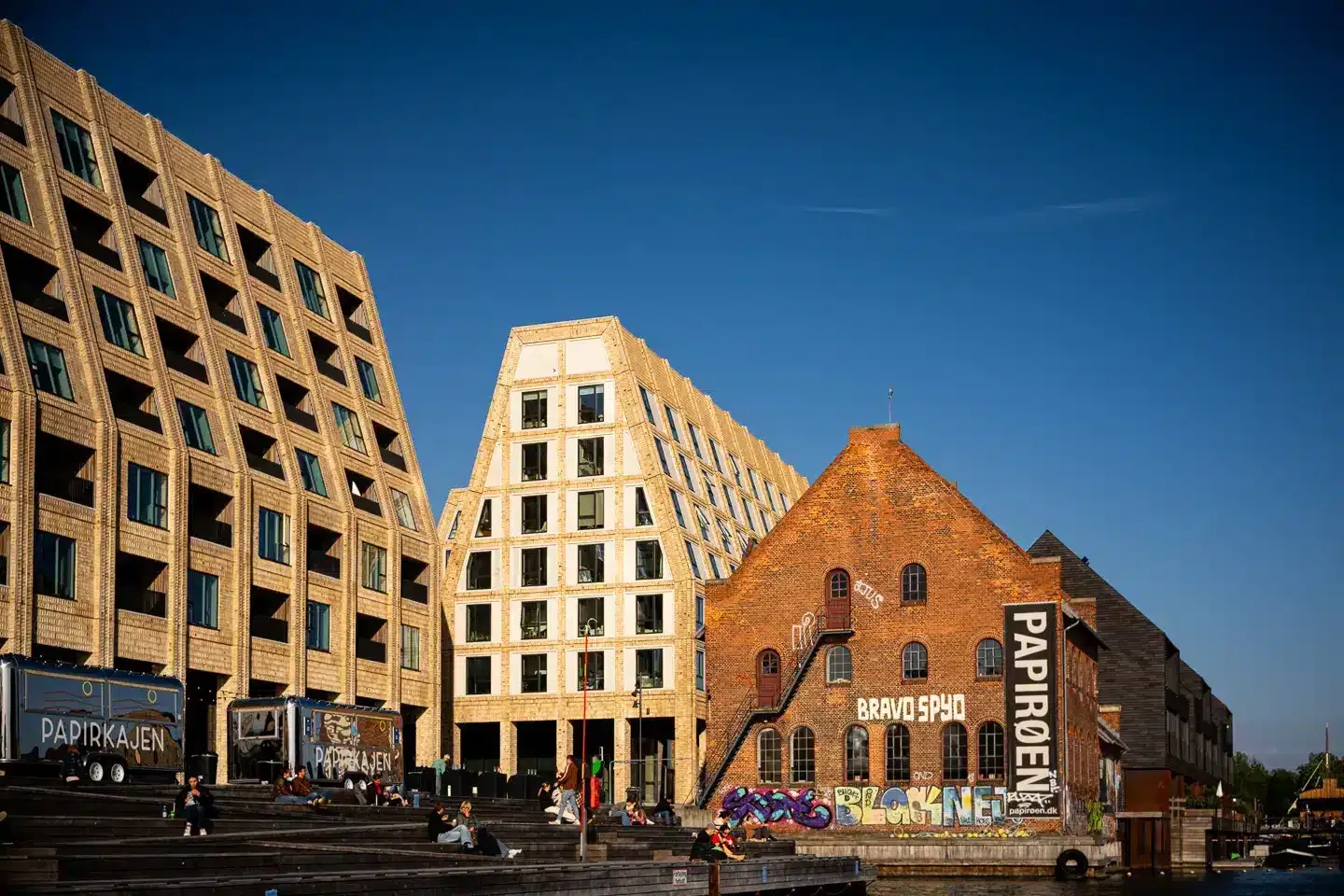
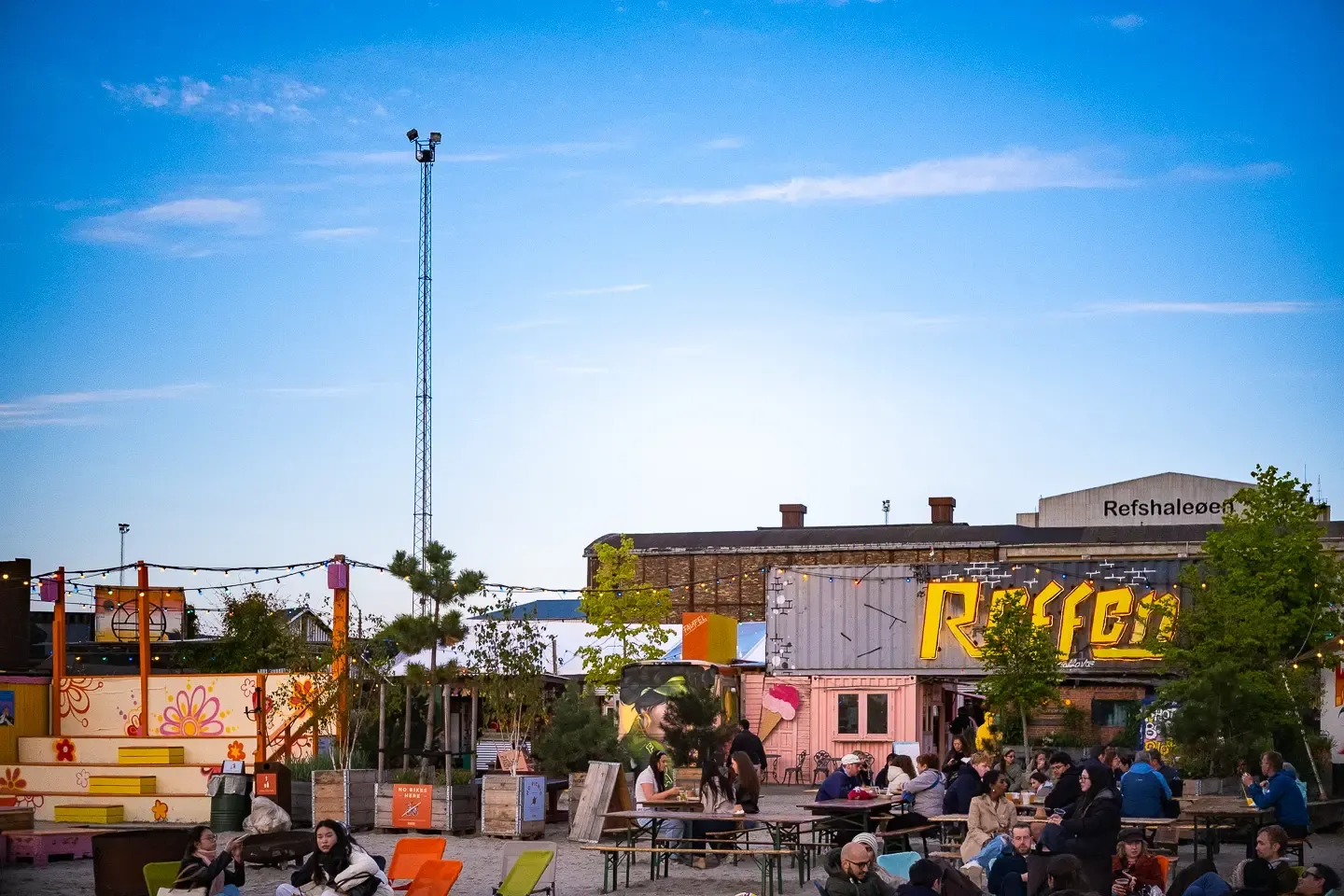
Move outward and the waterfront changes register rather than meaning. Papirøen, once used for paper storage and later known for its temporary street-food and culture phase, now sits inside a longer redevelopment arc built around public access to the water. Refshaleøen carries a different inheritance again: former shipyard ground turned into a seasonal landscape of containers, murals, food stalls, bars, and reused industrial halls. Seen together, these places make more sense as consecutive moments in one harbor story than as isolated destinations.
Nyhavn works because the set refuses to treat it as a postcard
The Nyhavn images are strong precisely because they pay attention to the mechanics of the scene. Not just the famous row of facades, but the masts, mooring lines, awnings, umbrellas, deck hardware, signage, and seating systems that now structure the quay. It reads like a preserved harbor turned into a carefully regulated public room. The canal remains materially legible as harbor space, while the life around it is mostly organized for strolling, dining, and looking.
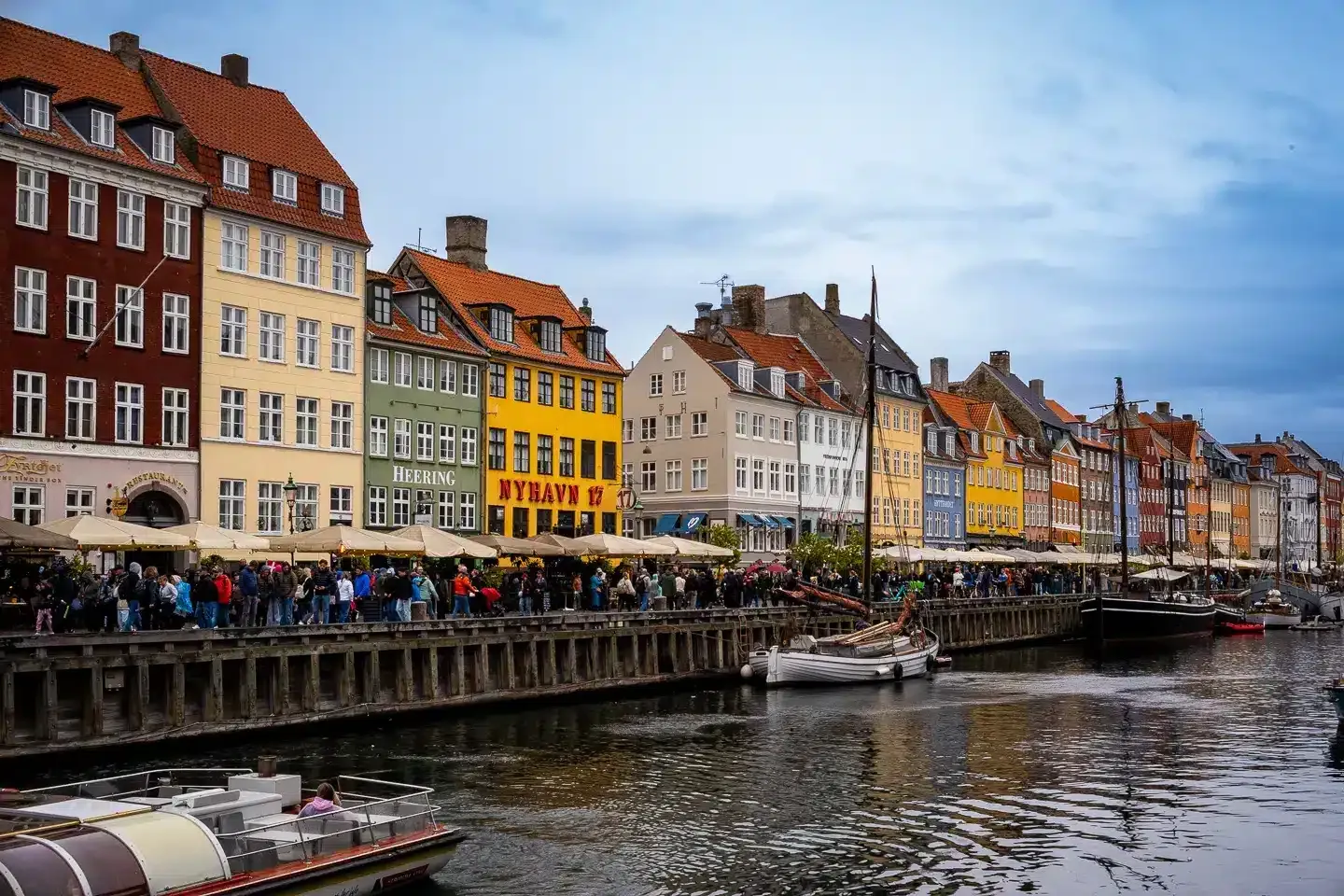
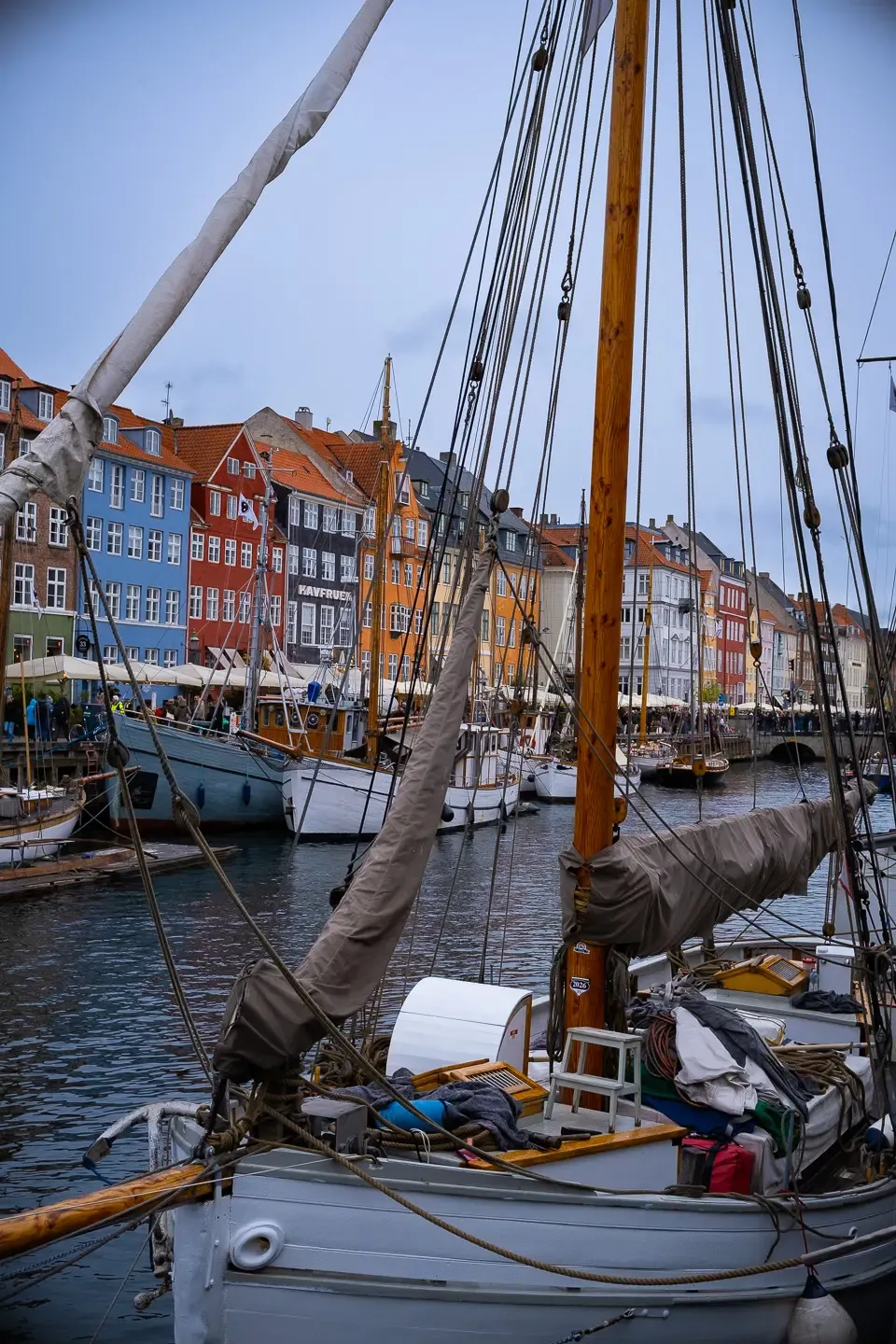
That matters historically. Nyhavn began as a 17th-century canal district tied to the city’s maritime economy, but the old harbor function ebbed away after World War II as trucking displaced small-scale coastal shipping. What remains is not a fake version of port history, though. The surviving canal form, the tight waterfront building rows, and the continued presence of boats keep the mercantile past readable, even when the dominant use is leisure. In urban-design terms, Copenhagen has preserved the scene without freezing it into a museum vitrine.
There is also a visual intelligence to how the district performs itself. The bright facades get most of the attention, but the more interesting detail is the density of vertical lines from rigging and masts set against steep gables and tiled roofs. The whole place is a composed graphic field, which may be one reason it photographs so well. It is heritage, but heritage with operational clutter still attached.
Copenhagen’s skyline keeps negotiating between copper spires and flat-roofed waterfront futures
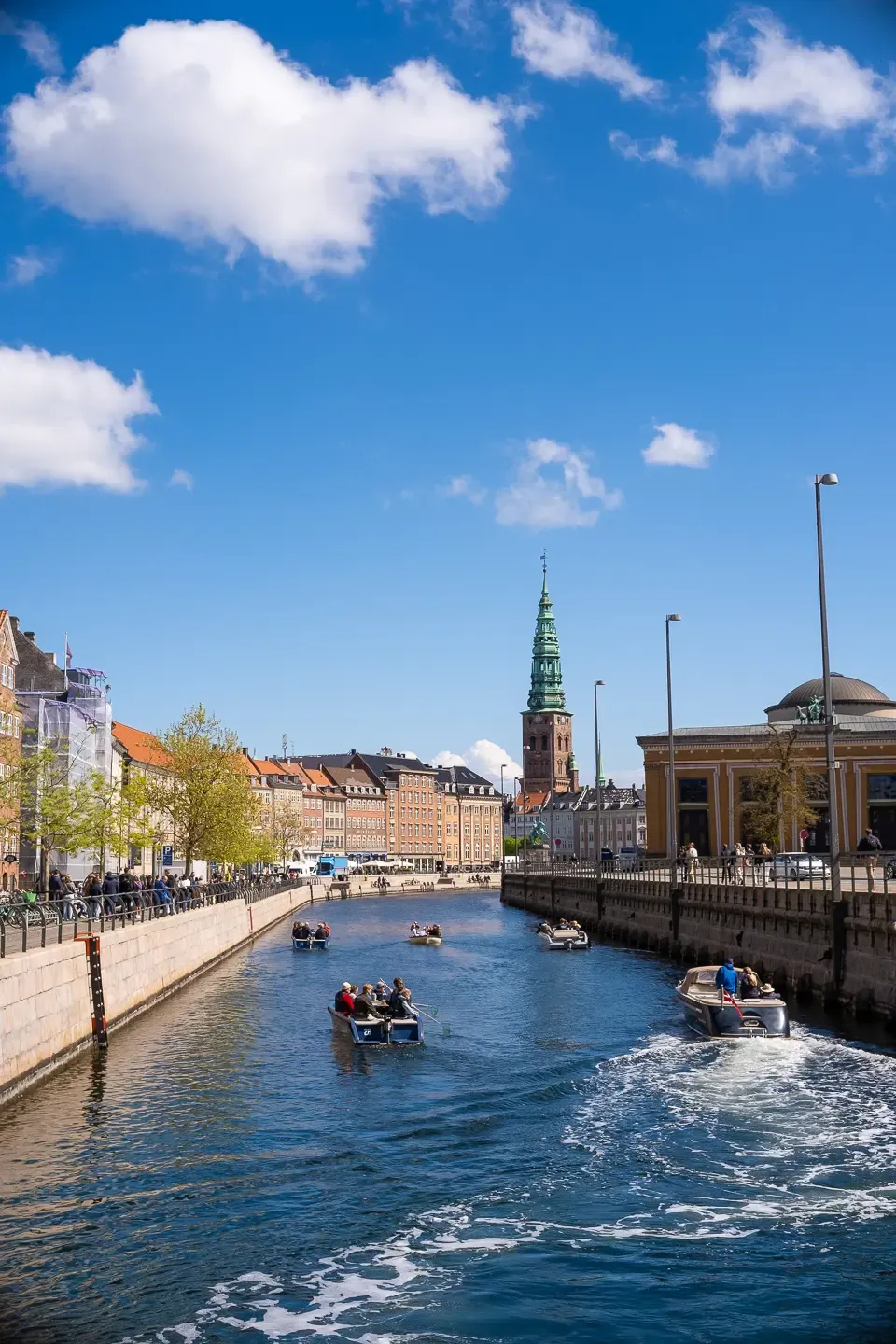
Across the set, older Copenhagen announces itself through spires, domes, plaques, and named streets: Magstræde, Graabrødrehus, church towers, formal civic massing, the familiar green patina of copper aging into landmark status. Those elements are not just ornamental. They are wayfinding devices, a reminder that this harbor city was built long before lifestyle programming and mixed-use masterplans became default planning language.
What makes the sequence more interesting is the repeated collision between that older skyline and contemporary harbor edges. Glassy buildings, dark rectilinear volumes, broad promenades, and engineered public steps show up near the water without trying to mimic the historic center. Copenhagen’s municipal planning has explicitly framed the old industrial harbor as a place for new recreational urban space, housing, and experimentation. In other words, this is not accidental drift. The city has institutionalized the idea that the waterfront should serve public life in new ways while older structures and environments remain legible.
The result is a harbor where different eras stay visible at once. A copper dome in one frame, a ferry slicing past a contemporary facade in another, and somewhere between them the sense that Copenhagen has decided continuity matters more than purity. The city does not need every edge to look historic, and it does not need redevelopment to erase what came before.
Papirøen and Refshaleøen show how temporary design became a waterfront language
If Nyhavn represents the preserved face of the harbor, Papirøen and Refshaleøen show its improvised afterlife. Papirøen — the nickname comes from its former use as paper storage for the Danish press — became widely known during its 2014 to 2018 temporary-use phase, when tenants such as Copenhagen Street Food and Copenhagen Contemporary helped turn it into an interim cultural destination. That temporary chapter mattered because it normalized the idea that former harbor land could become public before becoming finished.
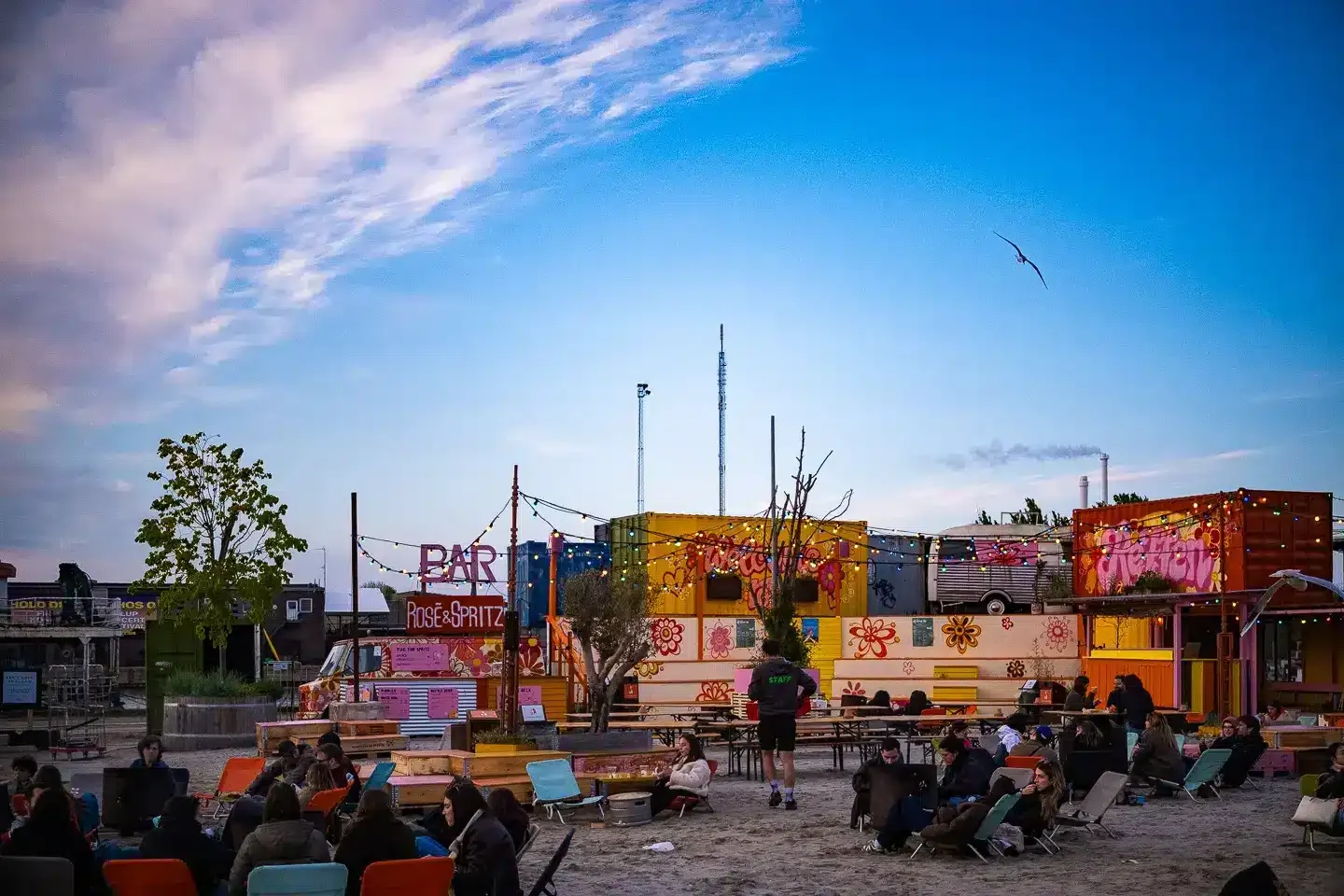
Refshaleøen takes that logic further into a rougher industrial register. The area is rooted in the former Burmeister & Wain shipyard, whose production ended in 1996, and today its identity still depends on that heavy-industrial residue. Reffen’s own language leans into reuse materials and what it jokingly calls container romantics. In the photos, that reads as more than branding. Shipping containers, murals, gravel or sand seating, string lights, hand-painted menus, and open-air bars produce a social landscape that feels provisional even when it is highly designed.
This is a useful distinction in contemporary waterfront urbanism. Temporary-looking spaces are not necessarily accidental or marginal; they can function as transitional design language inside much longer redevelopment processes. Reffen is explicitly seasonal, not a settled year-round monument, and that seasonality is part of its appeal. It lets the harbor feel unfinished in a productive way. Instead of polishing every edge into sameness, Copenhagen allows some districts to remain a little raw, a little improvised, and more open to experimentation.
Movement infrastructure is the thread that turns separate districts into one harbor city
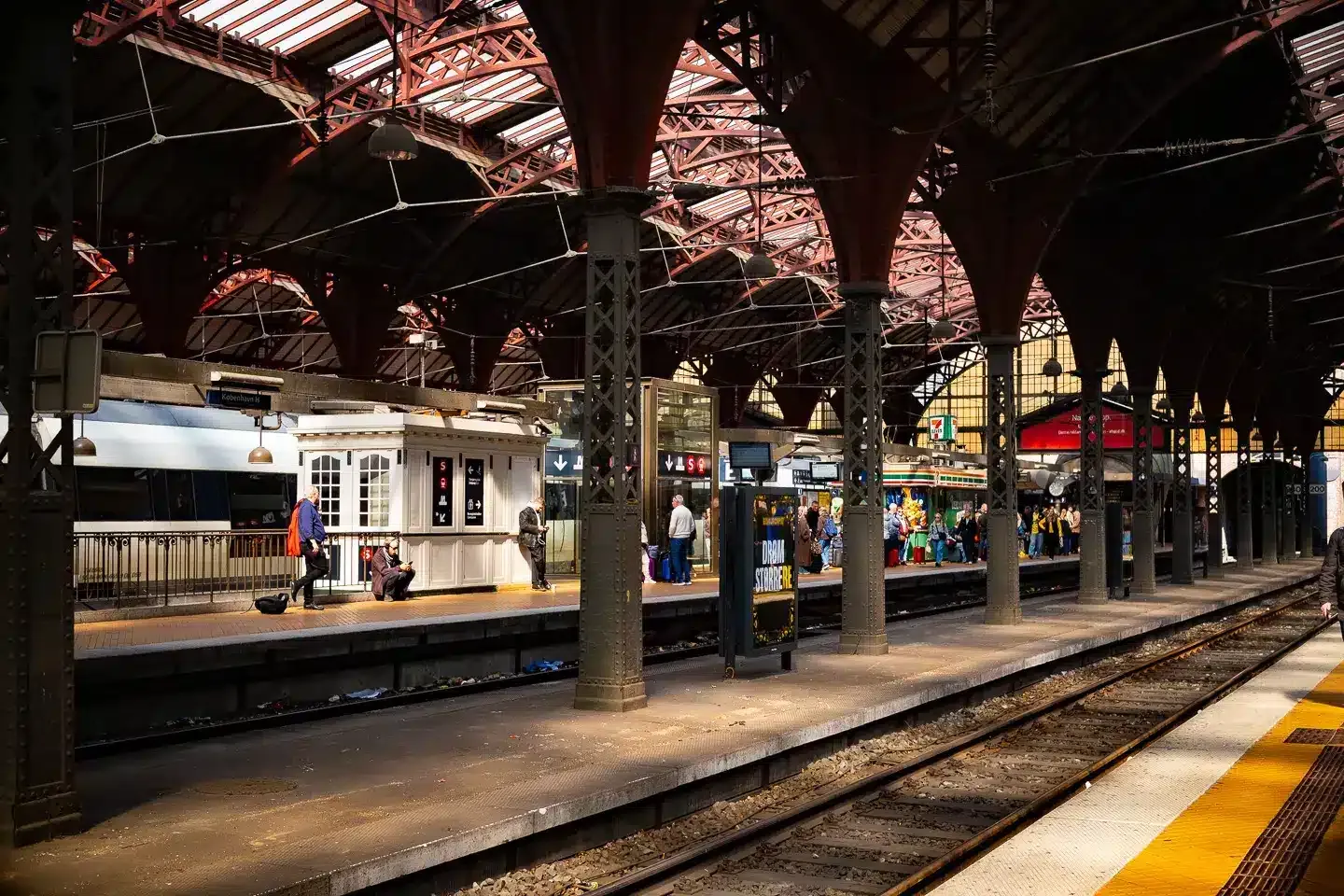
The station images might seem like a detour until you notice they are about the same subject as the waterfront photos: managed circulation. Platforms, arrows, tactile strips, steel canopies, concourses, and multilingual wayfinding all belong to the same civic story as quays, harbor buses, cycling lanes, and promenades. Copenhagen Central Station is not on the water, but it works here as gateway infrastructure, the place where the city’s networks begin to cohere.
Copenhagen’s harbor is not a scenic margin detached from daily life. Harbor buses are part of the regular public-transport network, running on the same fare logic as ordinary buses and connecting districts across the water. Visitor and municipal material alike present the waterfront as active everyday space — for transit, walking, swimming, kayaking, and other forms of use that blur the line between utility and leisure. That larger context helps explain why the photographs keep returning to embankments, docking points, railings, ladders, parked bicycles, and vessels in motion.
Even the bike presence lands differently in this set. Bicycles are there, of course, but not as exported Scandinavian cliché. They appear at canal edges, beside quays, outside old buildings, near transit nodes. They are one layer in a multimodal harbor city rather than the whole identity. The stronger point is that Copenhagen has made the waterfront permeable: easy to arrive at, easy to cross, and easy to occupy.
Even the Little Mermaid makes more sense when seen as harbor infrastructure
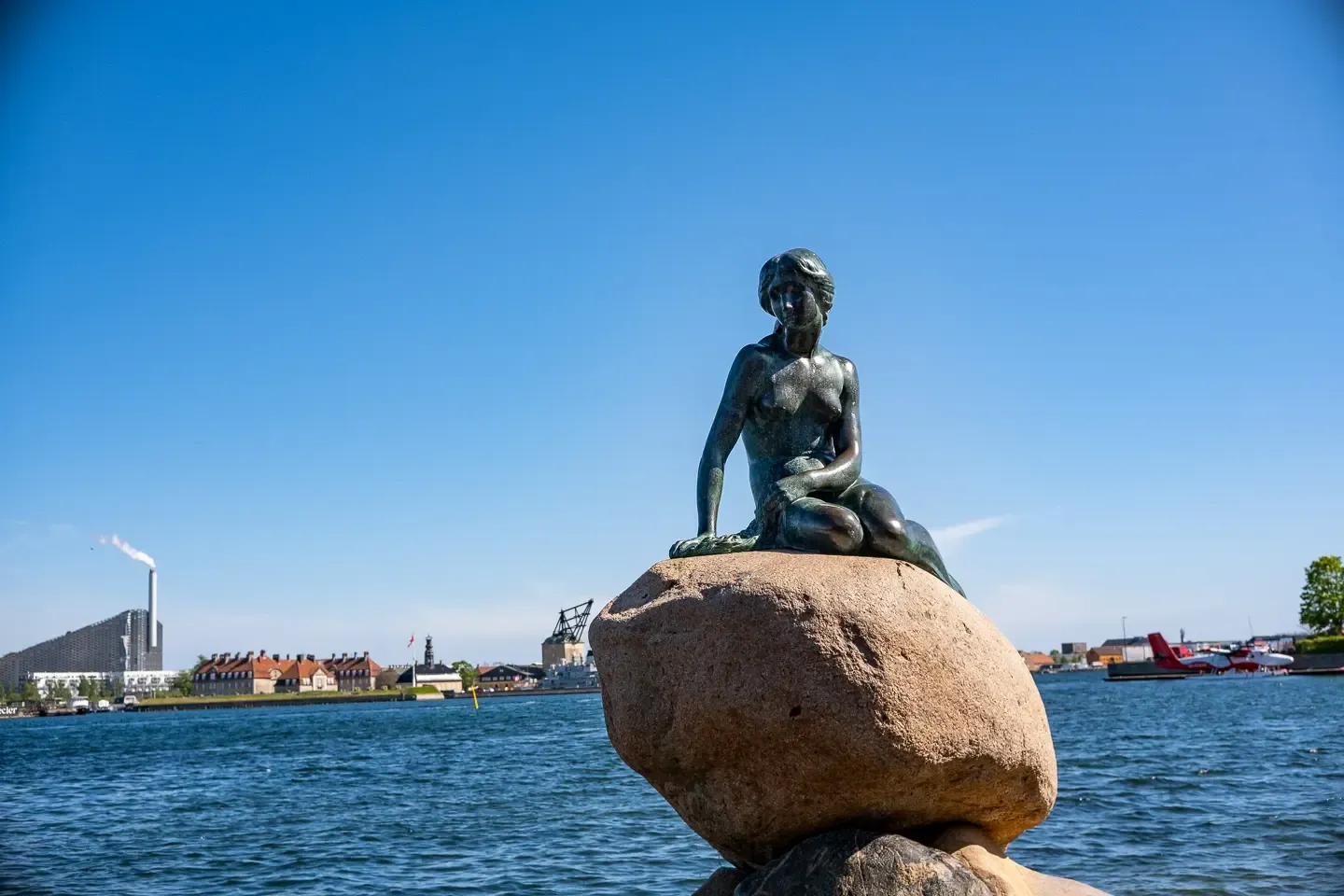
There is a reason the Little Mermaid lands better here than it usually does in city coverage. In most travel writing, the statue gets isolated into landmark mythology. In this sequence, it remains what it physically is: a small figure on a rock inside a much larger maritime environment. Industrial elements, cranes, smoke, passing craft, and open water keep the sculpture from floating free as pure symbol.
That framing is closer to the truth of Copenhagen’s waterfront culture. The harbor is not divided into clean categories of heritage over here, leisure over there, infrastructure somewhere else. It is one extended field where a 1913 literary monument, a seasonal food market, a preserved canal district, a rail hub, and a yellow harbor bus can all belong to the same urban logic.
Seen that way, the waterfront is less about spectacle than about conversion. Merchant edges become promenades. Paper storage becomes redevelopment frontage. Shipyard land becomes art halls and food stalls. Historic basins become social theater. Copenhagen’s real trick is not that it has beautiful water views; plenty of cities do. It is that the city has repeatedly found ways to turn maritime inheritance into contemporary public life without fully deleting the industrial and mercantile textures that made the harbor matter in the first place.
Photography by Gil DeSaant. Explore more of his photography at gildesaant.com.