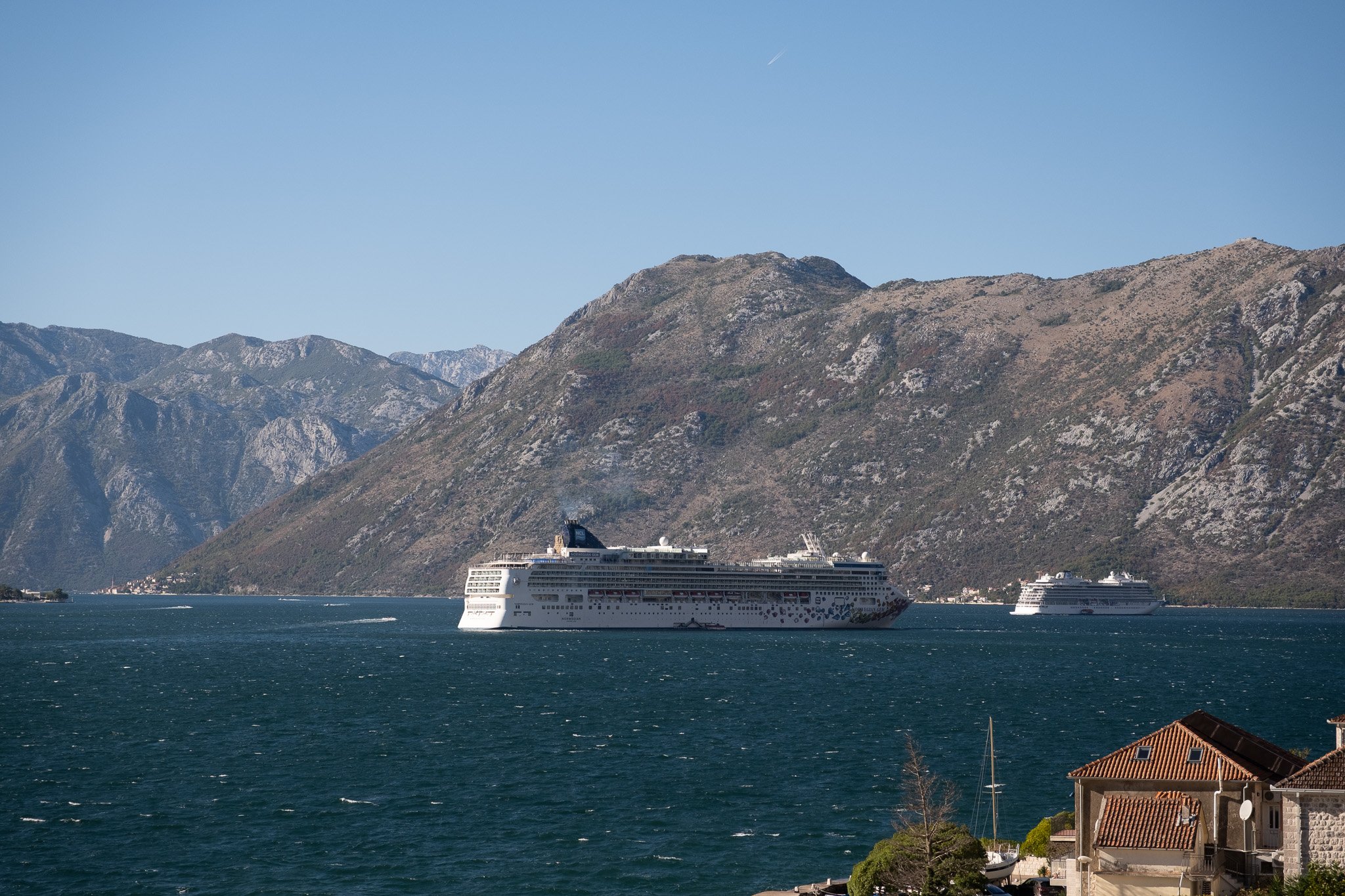
Kotor is easy until it suddenly is not. The pedestrian Old Town is compact, but airport transfers, bay buses, summer traffic and loosely documented timetables require more thought. This Kotor travel guide covers the useful bits: how to explore without a car, what counts as genuinely local food and which logistical traps deserve attention before they start eating into your trip.
Getting around Kotor and the bay
You do not need a car for Kotor Old Town. The historic core is pedestrian-only, and its lanes, gates, market, waterfront and entrances to the city walls sit within a small area. The intercity bus station is about 700 metres from Old Town according to Kotor’s official visitor brochure, although anyone with heavy luggage should inspect the walking route rather than assuming a short distance means an easy trundle.
The closest parts of Dobrota and Muo can also work on foot, but conditions vary by address. Some waterfront-road sections have limited pedestrian space, and accommodation described simply as “Kotor” may be much farther from the walls than the listing suggests. Check the exact route, gradients and sidewalks before booking—particularly if mobility, luggage or summer heat is a concern.
Local and intercity buses
Small Blue Line buses serve settlements around the bay, including the corridor towards Perast and Risan. A 2023 official tourism brochure describes services in both directions as running roughly every 60 minutes, with a stop in front of Old Town. Treat that as a broad pattern, not a timetable. The schedule still surfaced by Kotor Municipality is dated June–August 2019 and should not be used for current planning.
Exact departures, stop locations, fares and payment methods need confirming locally. Carry some euro cash as a backup, ask where the return stop is and check the final service before committing to a late afternoon away from Kotor. Perast has no conventional central bus terminal, so this matters more than it sounds.
Intercity coaches are better documented. They connect Kotor with Budva, Tivat, Herceg Novi and Podgorica, although frequency and journey times vary by date and season. Platforms such as BusTicket4.me list current departures and offer mobile tickets for many services. Allow extra time for summer traffic and possible station or luggage formalities.
Perast is the simplest car-free bay excursion: use the local bus, a taxi, an organized trip or a privately hired boat. There is no verified scheduled public passenger ferry between Kotor and Perast. Budva and Tivat are realistic coach trips; Herceg Novi is possible but involves a longer, more traffic-sensitive day.
Arriving from the airports
- Tivat Airport: At approximately 7.7 kilometres from Kotor, this is the nearest airport. No dependable official bus from the terminal was verified, so a licensed taxi or pre-booked transfer is the least ambiguous option. Agree the fare before leaving. Do not rely on walking to an unofficial roadside bus stop.
- Podgorica Airport: Buses run from outside the terminal to Podgorica Central Bus Station, where travelers can transfer to an intercity coach. However, the timetable displayed by the airport when researched had expired on May 31, 2025. Check directly with the operators through the airport transportation page before relying on it.
- Dubrovnik Airport: Use a pre-booked cross-border transfer or travel into Dubrovnik and take a currently operating international coach from its main bus station. Do not expect a guaranteed direct airport bus. The Croatia–Montenegro border uses the EU Entry/Exit System, including biometric processing for eligible non-EU short-stay travelers, and summer traffic can add further delays. Check live border information and avoid tight same-day flight connections.
When a car helps—and when it does not
A rental car becomes useful for Lovćen, Njeguši, the Luštica Peninsula or accommodation scattered around the bay. It is a liability inside central Kotor: cars cannot enter Old Town, congestion is serious in summer and convenient parking carries a premium.
Current 2026 local listings showed summer parking at approximately €4.80 per commenced hour at Riva, €1.90 at Benovo and €0.90 at Autoboka. These are not rates to build a future budget around; check the tariff displayed at the entrance. The Kamenari–Lepetane vehicle ferry can shorten drives across the western bay, but it does not leave from Kotor and is not a sightseeing ferry. Its official timetable is frequent and year-round, while the current car fare should be reconfirmed because published operator materials have conflicted.
Eat local: what to order and where to look
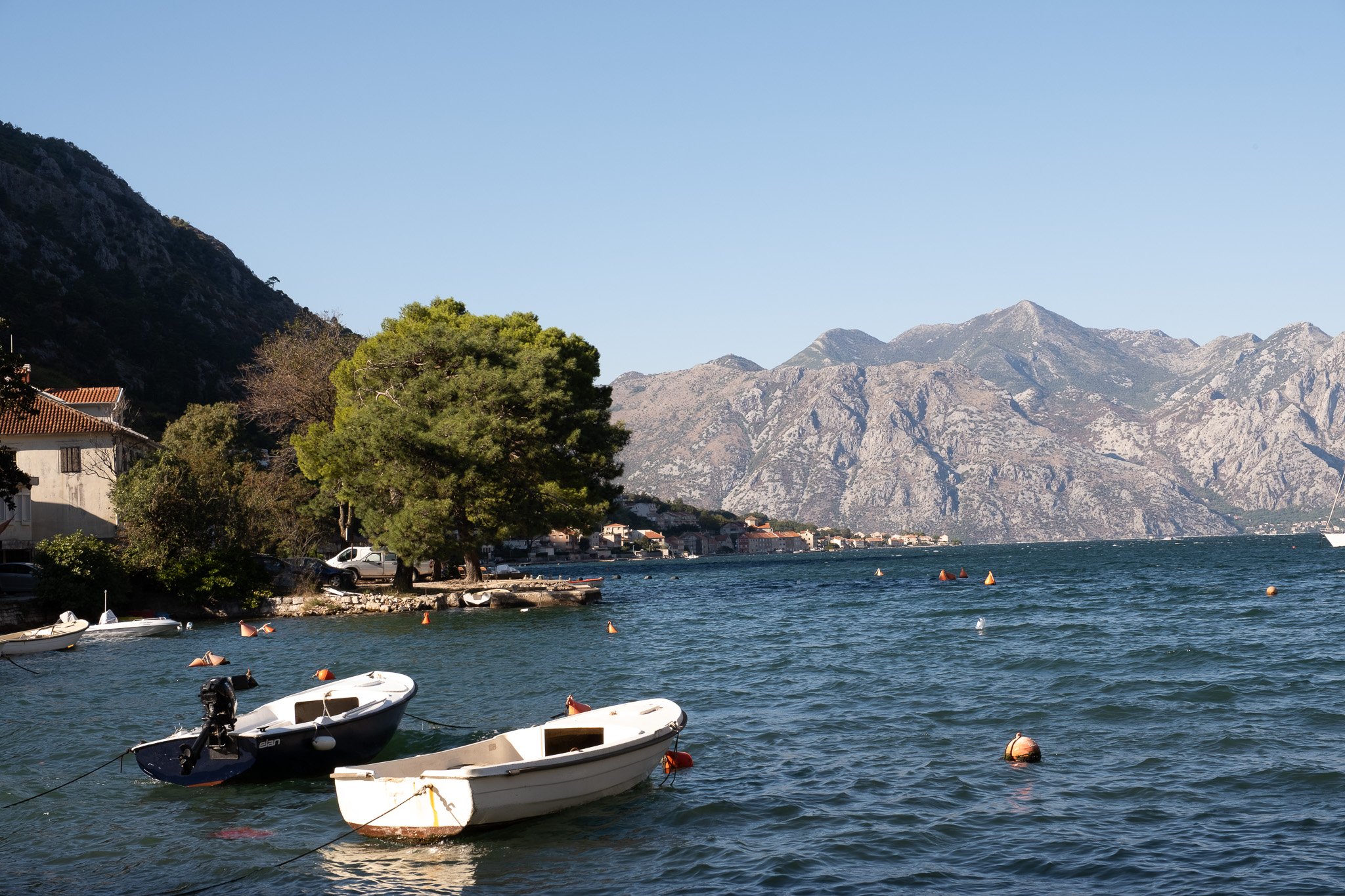
Kotor’s food makes most sense as a meeting of the bay and Montenegro’s mountain interior. That means seafood, olive oil, vegetables and local desserts alongside cured meat, cheese and robust wines. Not every plate containing grilled meat or pastry is uniquely Kotor, however.
Bay dishes worth recognizing
- Boka brodet: A slow-cooked fish dish associated particularly with nearby Muo.
- Mussels na buzaru: Mussels cooked in a coastal-style sauce, commonly involving wine, garlic and herbs.
- Black risotto: Cuttlefish or squid-ink risotto found along the Adriatic coast.
- Fish na gradele or lešo: Fish prepared on the grill or simply boiled, respectively.
- Kotor krempita: The city’s cream-filled pastry. The official destination brochure also identifies Dobrota almond cake and a local flan cake among the area’s desserts.
Whole fish is often priced by weight—per kilogram or per 100 grams. Before it reaches the grill, ask its weight, the unit price and where it came from. “Fresh” does not automatically mean caught locally.
Njeguši pršut and Njeguši cheese are useful additions to a tasting plate, while Vranac red wine, Krstač white wine and rakija broaden the Montenegrin side of the meal. These are regional or national products rather than Kotor exclusives. The same applies to inexpensive Balkan staples such as burek, ćevapi and pljeskavica.
Useful places, not a manufactured ranking
The city market below the Old Town walls is strongest in the morning, with Saturday identified as the main market day by current local food guidance. It is the obvious place to inspect seasonal produce, cheese, honey and seafood, although exact vendor hours are not reliably published.
For a pastry stop, Piccolo in Old Town was operating when checked and promotes Kotor krempita as its specialty. Pržun and Konoba Portun were also operating, with seafood prominent in their respective offerings. Stari Mlini, in Ljuta outside central Kotor, describes itself as a family-owned restaurant using garden produce and ingredients from local families; private parking makes it more practical for drivers.
These are examples across different settings, not a “best restaurants” table assembled from ratings. Menus and hours can change seasonally, especially outside summer, so check the businesses directly before making a dedicated journey.
Cards are accepted by many hotels, restaurants and larger shops, but keep euro cash for markets, small cafés, bakeries and taxis. A tip of around 10% may be appreciated in restaurants and cafés but is not mandatory; rounding up is also common. Do not assume that every bill includes—or excludes—a service charge without reading it.
Travel smarter: crowds, walls and practical rules
Plan around the port, not vague crowd forecasts
Cruise arrivals can change Old Town’s atmosphere quickly. The useful response is not to swear off the city on every ship day, but to check the Port of Kotor announcements shortly before visiting. Calls and tender arrangements can change, so treat third-party calendars as preliminary planning tools rather than final schedules.
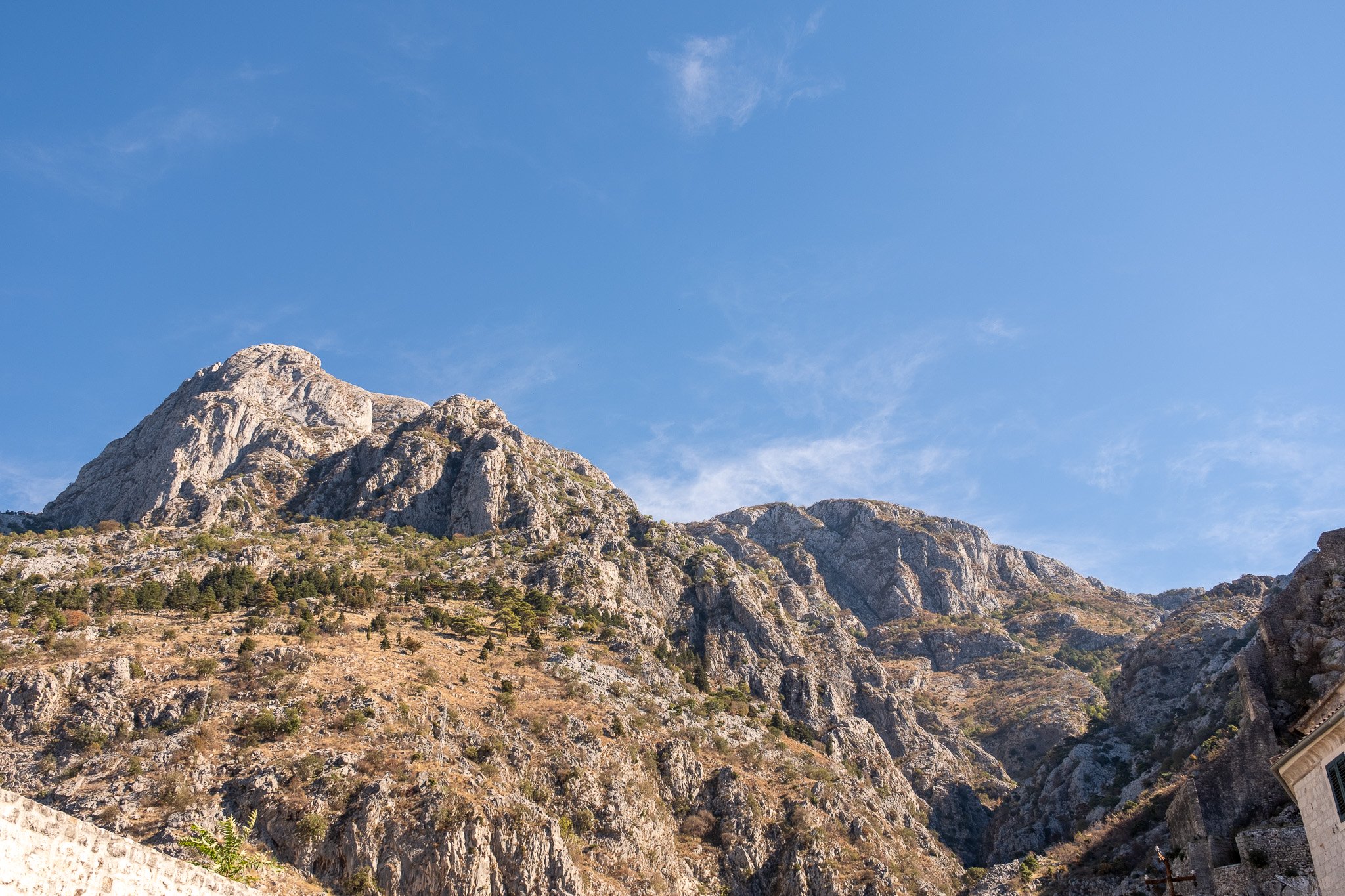
If several ships are expected, use the quieter part of the day for the lanes and main gates, and reserve a bus excursion or long lunch for the busiest period. Early starts are especially sensible for the fortress in summer because the route is steep, uneven and exposed to the heat.
Know the city-walls rules
The latest clearly published municipal admission for the city walls and St John’s Fortress is €15 per person. Older €8 information is obsolete. The published staffed periods are:
- March 1–April 30: 08:00–18:00
- May 1–September 30: 07:00–20:00
- October 1–November 30: 08:00–17:00
The official Kotor City Walls website says toll booths close from December 1 through the end of February. Winter climbing is at the visitor’s own risk; it should not be treated as staffed or maintained access. Remaining on or climbing the walls after 22:00 is prohibited because the terrain is steep and unlit.
Wear footwear with decent grip and carry water. This is not a wheelchair-accessible attraction, and it can be unsuitable for anyone uncomfortable with sustained steps, gradients or uneven surfaces.
Registration, tax and taxis
Foreign visitors who are not using a registered accommodation provider must register their residence with the police or local tourist organization within 24 hours of arrival. Hotels and registered accommodation providers normally do this for guests, but it is worth confirming with a private host rather than discovering later that everyone assumed somebody else handled it.
Kotor’s visitor tax is currently reported as €1 per person per night, €0.50 for travelers aged 12–18 and free for children under 12. Accommodation usually collects it while handling registration.
Use licensed taxis and check the per-kilometre rate or agree the full fare before departure. This is more defensible than trusting an online estimate, particularly for airport transfers and traffic-sensitive journeys.
How long to stay
As planning guidance rather than a rule, one full day is enough for Old Town and the fortress if that is the entire brief. Two or three nights are more useful for the wider bay: they provide room for Perast plus another excursion without making every bus, boat or border crossing a high-stakes operation.
Travelers with reduced mobility should be conservative when planning. Old Town has cobblestones, steps and narrow lanes; the walls are inaccessible to wheelchairs; and regional buses and excursion boats cannot be assumed to offer step-free boarding. Cruise passengers requiring assistance should arrange it in advance, as port surfaces can include gaps, curbs and gradients, while gangway steepness varies.
Kotor without a car is entirely workable if the trip stays focused on Old Town, Perast and coach-connected towns. The important move is to stop treating the whole bay like one seamless urban transport network. Reconfirm local buses, leave generous airport and border buffers, carry some cash and check cruise arrivals before choosing a fortress time. Then order the brodet or mussels—and ask what that whole fish weighs before anyone cooks it.