Mexico City street food is easiest to approach as a daily rhythm rather than a checklist. Tamales and atole appear in the morning, tacos de canasta circulate around workplaces at lunchtime, esquites come out toward evening, and taquerías keep feeding the city late into the night. For a first taste, begin with tacos al pastor or suadero, then try a masa-based snack such as a tlacoyo or quesadilla and finish with esquites or churros.
The capital’s official street-food guide treats tacos, tamales, tortas and other antojitos as part of everyday city life. This guide explains what to order, where to start and how to choose a stand without pretending that one address can represent a city this large.
Mexico City street food at a glance
| Food | What it is | Good time to look | Useful order |
|---|---|---|---|
| Tacos al pastor | Marinated pork cut from a vertical spit | Evening and late night | Dos de pastor con todo |
| Suadero tacos | Slow-cooked beef, usually chopped on the plancha | Lunch through late night | Uno de suadero |
| Tamales | Steamed masa with savory or sweet filling | Morning | Un tamal verde y un atole |
| Tlacoyos | Oval masa cakes filled with beans, fava beans or requesón | Morning and lunch | Ask which fillings are available |
| Esquites | Corn kernels served in a cup with customizable toppings | Afternoon and evening | Con todo, poco chile |
| Churros | Fried dough with sugar, often paired with chocolate | Afternoon or after dinner | Order plain or filled |
1. Tacos al pastor, suadero and tacos de canasta
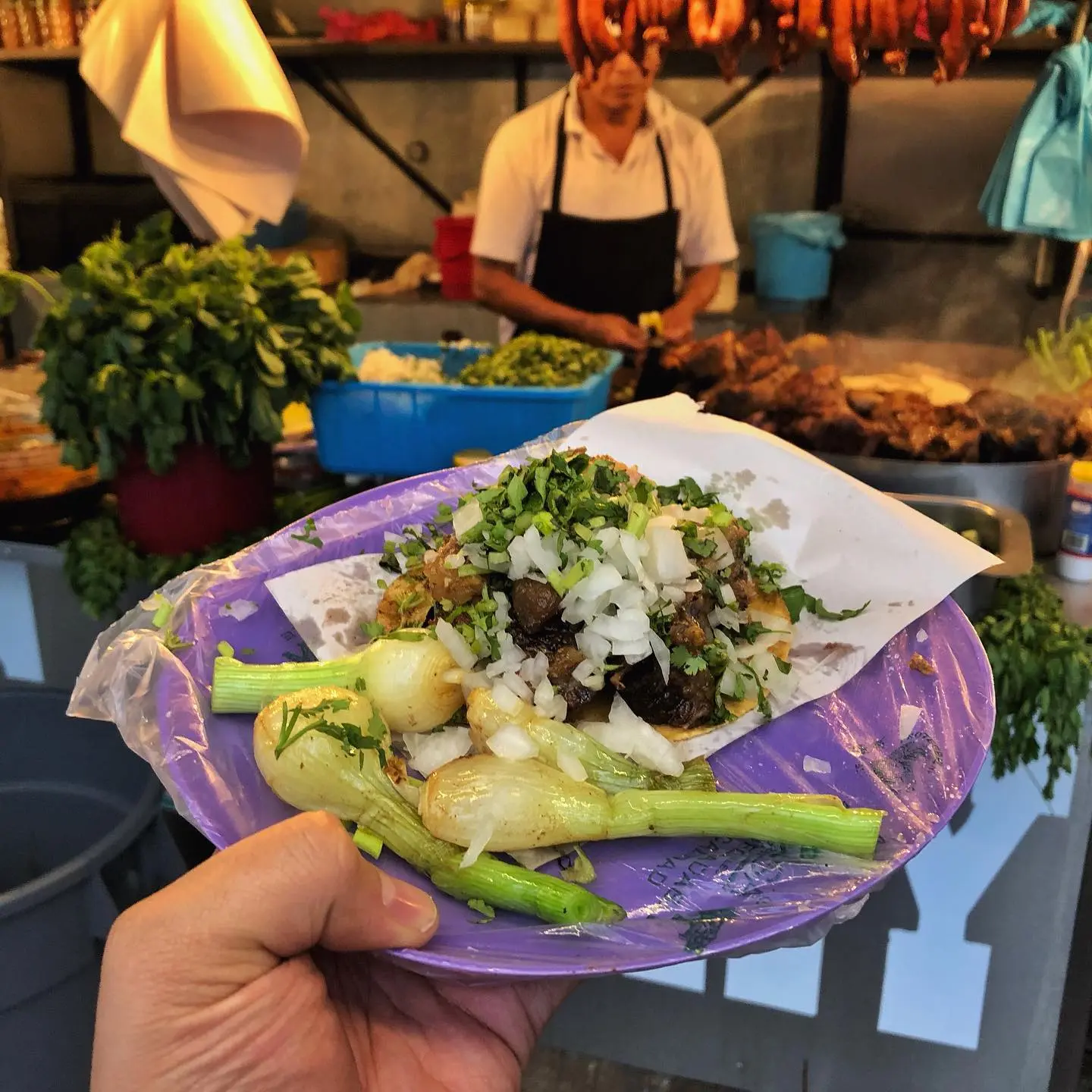
Tacos al pastor are the best-known introduction to the city’s taco culture: pork marinated with chiles and spices, cooked on a vertical trompo, sliced onto small corn tortillas and usually finished with onion, cilantro and pineapple. The cooking method reflects the influence of Lebanese migration on Mexican food, while the seasoning and small tortilla make the result distinctly chilango.
Pastor is only the start. Suadero is a soft, rich beef cut cooked slowly before it meets the hot plancha. Campechano combines meats, often suadero and longaniza. Tacos de canasta are filled tacos steamed together in a cloth-lined basket; look for potato, beans, chicharrón or adobo, especially around offices and busy transport areas earlier in the day.
Where to start: Narvarte is a strong evening taco neighborhood, and El Vilsito is the famous auto-shop-by-day, taquería-by-night reference. In Centro Histórico, Los Cocuyos is known for suadero, tripa and other cuts. Treat any named stand as a starting point, check its current hours on the day and keep room for the busy place you discover nearby.


2. Tamales and the Mexico City guajolota
Tamales are steamed masa parcels wrapped in corn husks or banana leaves. Common fillings include green salsa with chicken or pork, red mole, rajas with cheese and sweet fruit mixtures. Vendors often pair them with atole, a warm corn-based drink. The unmistakable Mexico City variation is the guajolota: a tamal tucked into a bolillo roll for a dense, portable breakfast.
Morning is the best time to look because vendors are busiest and batches turn over quickly. Tamales Doña Emi and Tamales Madre are useful references for seeing how traditional fillings can sit beside more inventive versions, but the neighborhood cart with a short line may be the more practical breakfast.


3. Tlacoyos and quesadillas from the comal
Tlacoyos are thick, oval masa cakes filled before cooking, commonly with beans, fava beans or requesón. They are finished with nopales, salsa, cheese and sometimes crema. Quesadillas use folded masa and can hold mushrooms, flor de calabaza, huitlacoche, potato, meat or cheese. In Mexico City, cheese is not automatic: ask for it explicitly if you want it.
Fresh masa and a busy comal matter more than elaborate presentation. Markets and tianguis are good places to compare fillings, and the official CDMX food material highlights quesadillas and tlacoyos among the capital’s emblematic antojitos.


4. Esquites and elotes
Esquites are corn kernels cooked with aromatics such as epazote and served in a cup. Elotes keep the kernels on the cob. Either can be dressed with lime, chile, mayonnaise or crema and cheese, and every stand has its own balance. Say con todo for the usual toppings, poco chile for less heat or sin mayonesa to leave it out.

5. Tortas, pambazos and churros
A torta turns a bolillo or telera roll into a complete handheld meal, filled with combinations such as milanesa, ham, cheese, avocado, beans and chiles. Pambazos use bread dipped in a red chile sauce, then griddled and filled, traditionally with potato and chorizo. Both belong in a street-food plan because they offer a different texture and scale from tacos.
For something sweet, order churros dusted with sugar or filled with cajeta, chocolate or condensed milk. Churrería El Moro is the classic central reference and has several branches, but neighborhood churrerías and carts can be equally satisfying when the churros come straight from the fryer.
Where to begin by neighborhood
- Centro Histórico: a practical introduction to suadero, tripa, tortas and churros around busy commercial streets. The city’s official Cuauhtémoc food guide includes Los Cocuyos and El Moro.
- Narvarte: an evening taco area associated with al pastor and long-running neighborhood taquerías.
- Roma, Condesa and Juárez: convenient for visitors and useful for comparing traditional snacks with newer interpretations, though famous addresses may cost more than neighborhood stands.
- Coyoacán: combine the market and surrounding streets for tostadas, quesadillas, esquites, churros and aguas frescas.
- La Merced and Jamaica: large markets with a wider view of everyday food culture. The official city guide links Jamaica to the history of the huarache. Go during active daytime hours and keep normal big-city awareness.
How to order without slowing down the line
- Ask the price before ordering when it is not displayed. Prices and payment options change too often for a useful citywide fixed-price promise.
- Carry small pesos. Many stands remain cash-first even when some now accept transfers or cards.
- Use the local sequence: quantity, filling or meat, then toppings. Dos de pastor con todo, por favor is enough.
- Do not reach across the salsa area or reuse a tasting spoon. Follow the queue and the stand’s rhythm.
- Start with one or two items. Small portions let you compare several stands without wasting food.
Street-food safety in Mexico City
Popularity is useful because a line usually means quicker turnover, but it is not a guarantee. The CDMX Health Department’s current guidance is more specific: choose food that looks fresh and is protected; avoid raw or partly cooked items and food that has sat at room temperature; check that ingredients are kept off the ground; look for clean utensils, surfaces and clothing; and notice whether the same hands handle money and ready-to-eat food.
Choose hot dishes that are cooked in front of you and served hot. Wash or sanitize your hands before eating. If your stomach is not accustomed to very rich or spicy food, build up gradually. Bottled or properly purified water remains the straightforward choice.
Frequently asked questions
What is the most famous street food in Mexico City?
Tacos al pastor are the best-known choice, but suadero, tacos de canasta, tamales, tlacoyos, quesadillas and esquites are just as useful for understanding how the city eats.
Is Mexico City street food safe for visitors?
It can be, provided you use the same practical checks recommended by local health authorities: good turnover, protected ingredients, clean utensils, safe water, thorough cooking and separation between money and food handling.
Do Mexico City quesadillas always contain cheese?
No. In Mexico City, a quesadilla can be ordered with many fillings and may not include cheese unless you request it. Say con queso if cheese is essential.
Should I use cash?
Carry small-denomination pesos. Some established stands accept electronic payments, but cash remains the most reliable option for mobile carts and small street stalls.
Street food is one way to read the city through its routines, transport corridors and public spaces. For another view of the capital, continue with Reading Mexico City Through Its Everyday Systems, or browse more dishes in the Street Food collection.