If you are deciding what to eat in Budapest, start with three dishes that show very different sides of Hungarian food: gulyás, a paprika-scented soup; lángos, fried dough made for eating hot; and rántott hús, the Hungarian version of a breaded cutlet. I tried all three while walking through the city, and together they make a useful first lesson in how Budapest eats.
The biggest surprise is that the dish many English-language menus call “goulash” is not always what Hungarians mean by gulyás. Knowing a few menu words before you sit down helps you order the meal you actually want—and keeps three filling dishes from landing on the same afternoon.
Budapest food at a glance
| Dish | What it is | Best moment | Useful menu word |
|---|---|---|---|
| Gulyás | A beef and vegetable soup seasoned with paprika | A cool day or a sit-down lunch | Gulyásleves |
| Pörkölt | A thicker meat stew in a paprika-rich sauce | When you want a substantial main course | Pörkölt |
| Lángos | Deep-fried yeast dough with savory toppings | A market stop or quick shared snack | Sajtos-tejfölös |
| Rántott hús | A thin breaded and fried cutlet | A classic lunch or dinner | Rántott hús |
My short recommendation: order gulyás when you want soup, pörkölt when you want stew, a classic cheese-and-sour-cream lángos to share, and rántott hús only when you arrive hungry. Portions and toppings vary, so check the menu and price before ordering rather than treating every version as interchangeable.
Rántott hús: Budapest’s breaded cutlet
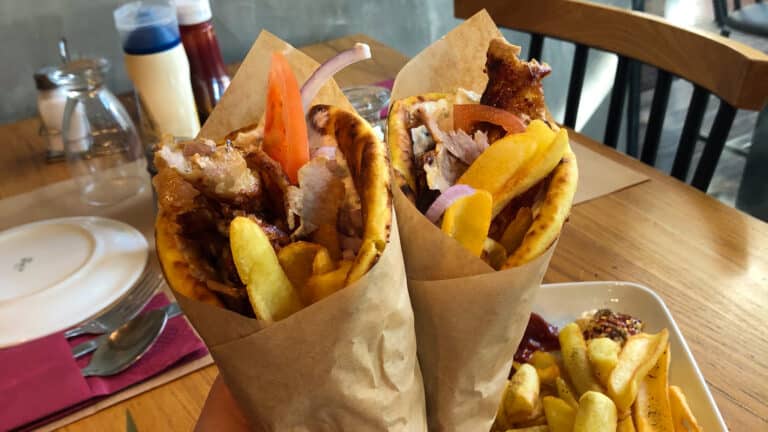
Rántott hús literally points to fried meat. A pork or chicken cutlet is flattened, coated in flour, egg and breadcrumbs, then fried until the crust is crisp. It belongs to the same Central European family as schnitzel, but the Hungarian name is the one worth recognizing on a local menu.

The cutlet in my photo arrived with potato salad, a combination that balances hot, crunchy breading with something cool and tangy. Other common sides include parsley potatoes, rice, pickles or cabbage salad. Lemon may appear at the table, but the cutlet should already have enough texture to stand on its own.
Because the dish is simple, execution matters. Look for an evenly browned crust that has not absorbed too much oil and meat that remains tender inside. If a menu lists the meat, choose according to preference; sertés means pork and csirke means chicken. The dish is usually large enough to anchor the meal, so pairing it with lángos at the same sitting can be overkill.
Lángos: the street-food stop
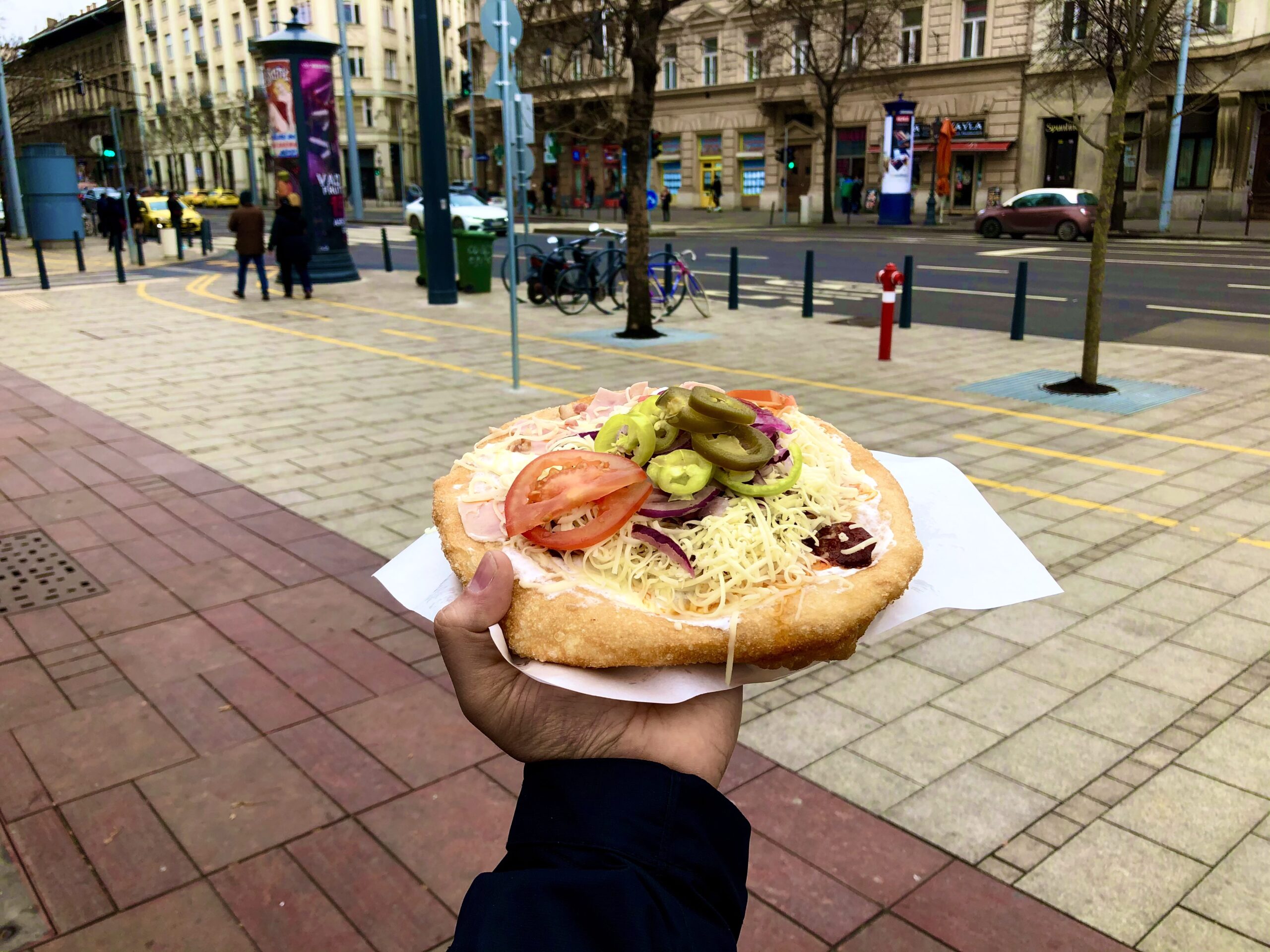
Lángos is a round of soft yeast dough stretched by hand and fried. The classic savory order is rubbed with garlic and topped with sour cream and grated cheese. On a menu, sajtos-tejfölös lángos means the cheese-and-sour-cream version. It is rich, salty and best eaten immediately while the outside is still crisp.

My version came loaded with cheese, sour cream, ham, tomato, onion and peppers. It was fun, filling and much closer to a full meal than a light snack. For a first taste, I would now choose the simpler garlic, sour cream and cheese combination. It makes the fried dough easier to judge and is less awkward to eat while standing.
The official Visit Hungary guide describes lángos as a soft yeast dough fried in flat rounds and traditionally finished with garlic, sour cream and cheese. It also points travelers toward Budapest’s larger market halls, including Fény Street Market, Lehel Market Hall and the Great Market Hall. The city’s official tourism site calls the Great Market Hall the country’s largest traditional food market.
The Great Market Hall is convenient if it already fits your sightseeing route, but it is also one of the city’s best-known visitor stops. Compare the displayed price, toppings and queue before committing. A neighborhood market can offer a calmer setting. Visit Hungary’s Budapest street-food guide is a useful starting point for finding market areas rather than relying on one permanent stall recommendation.
Gulyás is soup, not the thick stew you may expect
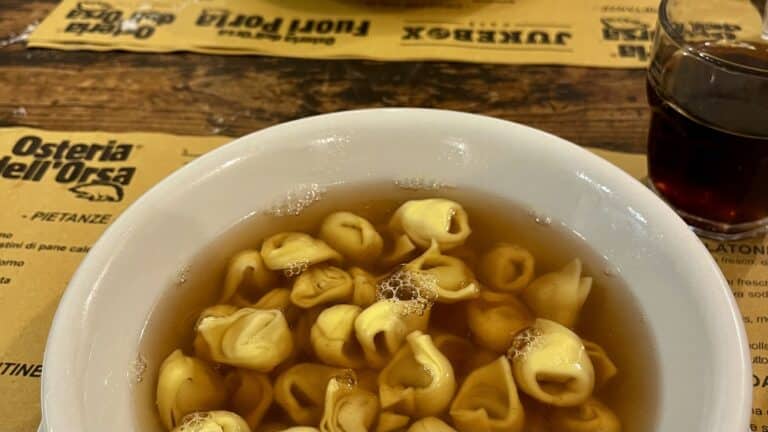
In Hungary, gulyás or gulyásleves is generally a soup. Expect a paprika-colored broth with beef, potatoes and root vegetables; some versions include csipetke, small pinched noodles. It can be hearty, but it should still read as soup rather than meat coated in a dense sauce.

The thicker dish many travelers picture as goulash is closer to pörkölt: meat slowly cooked with onion and paprika until the sauce becomes concentrated. This distinction is more than vocabulary. If you want a warming first course, order gulyásleves. If you want a full main with dumplings or another side, look at the pörkölt section.
Visit Hungary’s overview of Hungarian cuisine describes goulash as one of the country’s substantial soups and pörkölt as a separate cauldron stew. That is a more reliable distinction than judging the English translation alone.
Where to try gulyás in Budapest
I would avoid building an entire food plan around a single “best goulash” claim. Restaurants change menus, prices and kitchen teams. Instead, shortlist a traditional Hungarian restaurant near the part of the city you will already be exploring, check its current menu, and confirm whether it serves gulyásleves or pörkölt.
Gettó Gulyás, at Wesselényi utca 18 in District VII, is one current option with both goulash soup and several pörkölt preparations. Its official site publishes current opening information and its menu notes a service charge, so check those details before visiting. Reservations can be useful at popular dinner times.
How to plan the three dishes without food fatigue
- Start with lángos earlier in the day. Share one if it has heavy toppings.
- Save gulyás for a separate lunch. It works especially well in cool weather and leaves room for another course only if the portion is modest.
- Order rántott hús for dinner or another day. A large fried cutlet plus potatoes is a complete meal.
- Add contrast. Pickles, cabbage salad or cucumber salad cut through the fried and paprika-rich dishes.
- Check the bill. Look for a listed service charge before deciding whether to add more.
You can connect these stops with the city rather than treating food as a separate checklist. A market visit pairs naturally with the Danube and Liberty Bridge; District VII works with an evening walk; and a sit-down meal gives you a break between longer stretches on foot. For another way to understand the city, read how the Danube shapes Budapest’s movement and public life.
Vegetarian and allergy notes
Classic gulyás and rántott hús contain meat. Lángos dough may look plant-based, but toppings commonly include sour cream and cheese, and cross-contact is possible in a shared fryer. Ask directly if you have dietary restrictions. Modern Hungarian restaurants may offer mushroom pörkölt, vegetable stews or meat-free stuffed peppers, but the preparation varies.
Common allergens across these dishes include gluten, egg and dairy. Breaded cutlets use flour, egg and breadcrumbs; lángos contains wheat and may carry dairy toppings; soups and stews can contain celery or other ingredients not obvious from the English name. Treat a translated menu as a starting point and confirm with the restaurant.
Frequently asked questions
What is the difference between gulyás and pörkölt?
Gulyás is a paprika-seasoned soup, commonly made with beef, potatoes and vegetables. Pörkölt is a thicker stew in which meat cooks in a concentrated onion-and-paprika sauce.
What is the classic lángos topping?
Garlic, sour cream and grated cheese are the classic savory combination. Stalls may add ham, sausage, vegetables or sweeter toppings, but the simple version is the clearest first taste.
Is Hungarian schnitzel called schnitzel?
You may see “schnitzel” on an English menu, but the Hungarian term to recognize is rántott hús. It is breaded fried meat, often pork or chicken.
Can I eat all three dishes in one day?
You can, but it is a heavy day of food. Sharing a lángos and placing gulyás and rántott hús at separate meals makes the experience more enjoyable.
A Budapest food route worth slowing down for
The useful lesson is not simply that Budapest has three famous foods. It is that each belongs to a different kind of stop: lángos at a market, gulyás at a table when you want warmth, and rántott hús when you are ready for a substantial plate. Learn those differences, leave space between them and you will remember more than a checklist of dish names.

For more local food stories, continue through the WanderHackr Street Food guides.