Madrid’s historic center is often flattened into architecture and landmarks, as if the old city were mainly a backdrop for admiration. This photo set pushes in the opposite direction. What stands out is not a single monument but a dense service economy: hostales over bars, cajeros beside tabernas, currency exchange near pastry institutions and global chains, secondhand stalls a short ride from luxury storefronts.
That makes the center easier to read as infrastructure rather than scenery. The old core is not preserved behind glass. It is a working district calibrated to pedestrians, visitors, residents, and passing trade, with the metro stitching together several commercial zones that would otherwise be treated as separate atmospheres: La Latina and the broader Rastro area, Sol’s retail corridors, Plaza de España, and the institutional-commercial edge around Banco de España and Canalejas.
There is architecture everywhere in these images, of course: balconies, cornices, domes, corner buildings, long rooflines of tile and stucco. But the buildings matter most here as containers. What they hold is a layered economy, one that mixes regulated market culture, everyday groceries, hospitality, tourist services, and new luxury branding without fully canceling any of them out.
Metro names become a map of commercial gravity
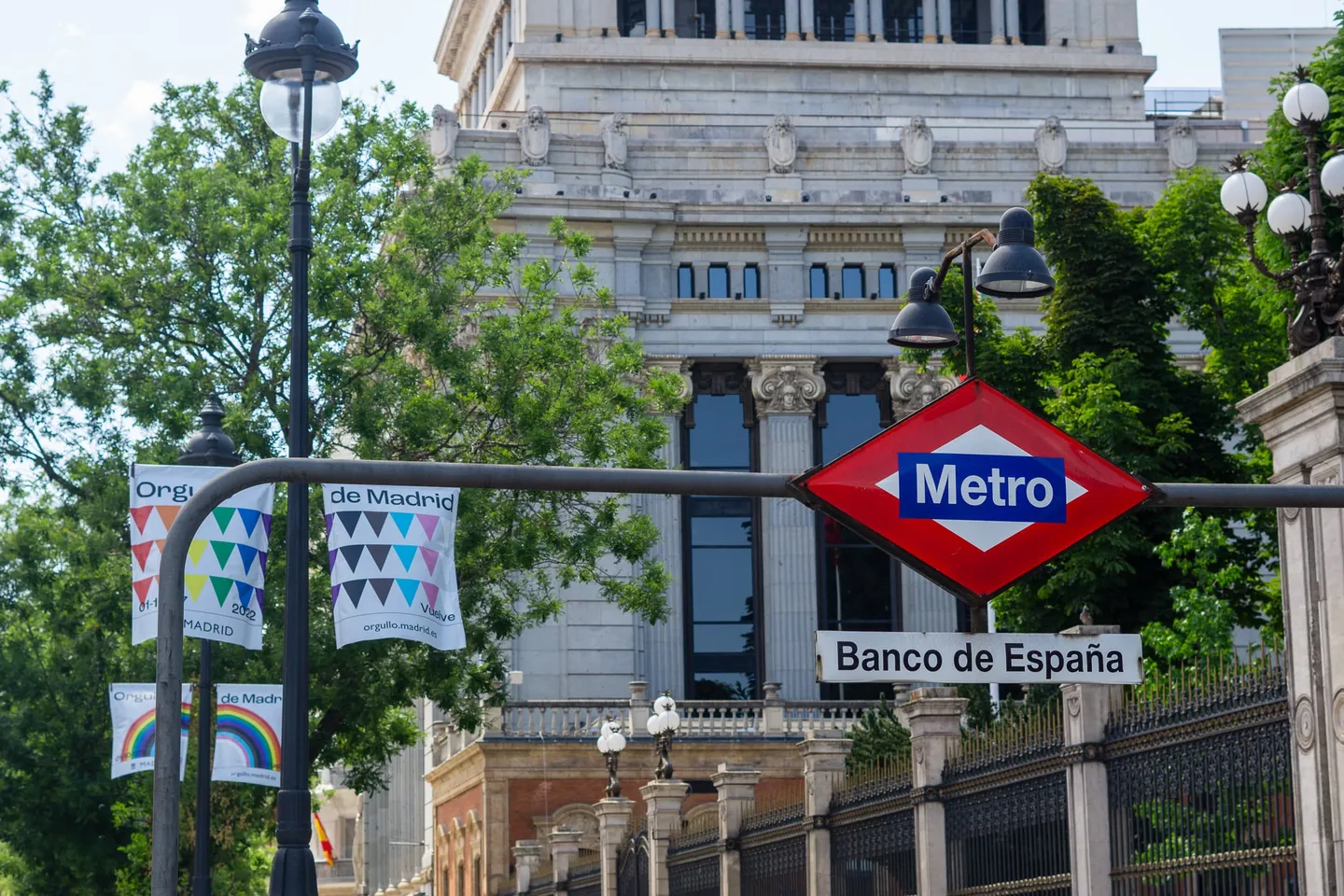
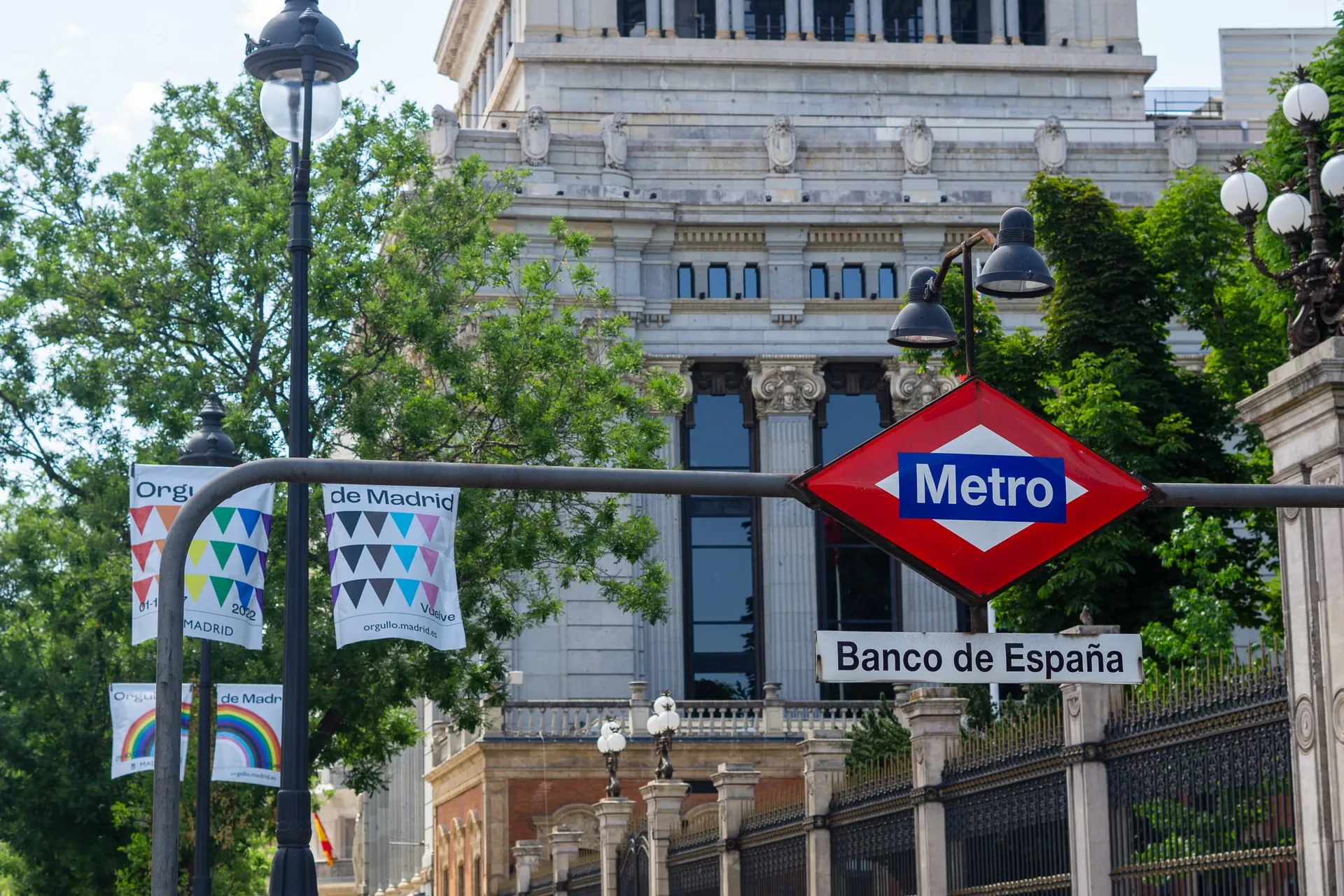
The recurring station names in the set do more than establish location. Plaza de España, La Latina, and Banco de España act like subtitles for different versions of central Madrid, each tied to a distinct commercial ecology. Official transit information confirms all three as active metro nodes, and that matters because this part of the city is legible through short movements rather than big distances. A few stops or a manageable walk can shift the street from market spillover to souvenir frontage to institutional stone to luxury retail.
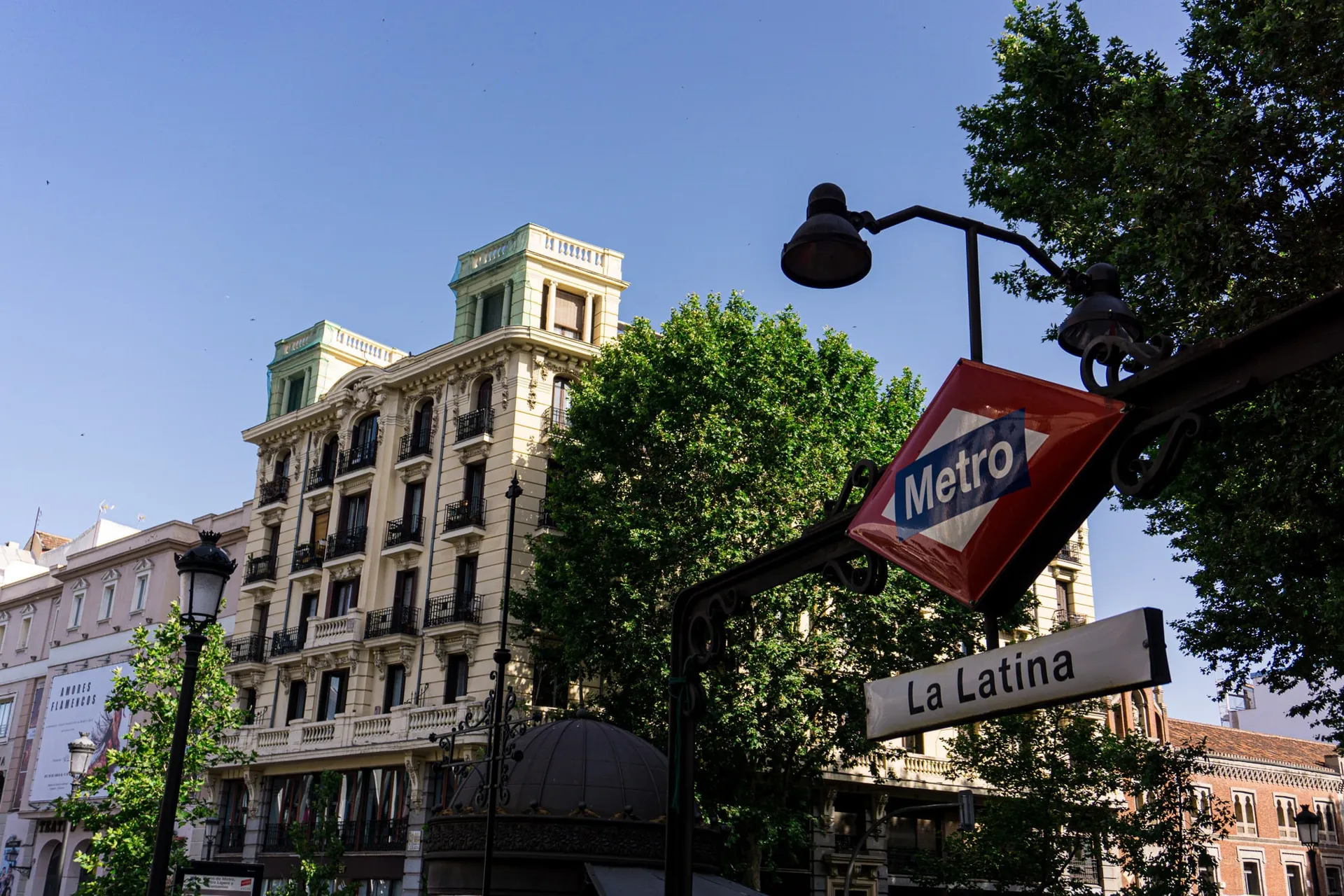
That transit logic helps explain why the center feels so compressed. Sol, with its intermodal role and its pedestrian-heavy streets, feeds directly into corridors like Arenal, Preciados, and Carmen, where foot traffic is the operating system. La Latina places the metro beside the Rastro zone, where street-market rhythms and permanent small businesses overlap. Banco de España anchors the eastern side of the core, where civic architecture and upscale redevelopment come into sharper view. The photographs keep returning to metro signage because the city itself does: in central Madrid, the station plaque is often the quickest way to understand what kind of street economy you are about to enter.
Even the visual language of the transit system participates in the city’s identity. Madrid’s red diamond metro sign is one of those pieces of urban design that reads instantly, like a logo from the pre-app era that still does its job better than most screens. In these images it keeps appearing against ornate façades and summer sky, reminding you that historic character here is not separate from circulation. The old center works because people can arrive, surface, browse, eat, sleep, exchange cash, and move on with very little friction.
La Latina and the Rastro orbit run on more than Sunday nostalgia
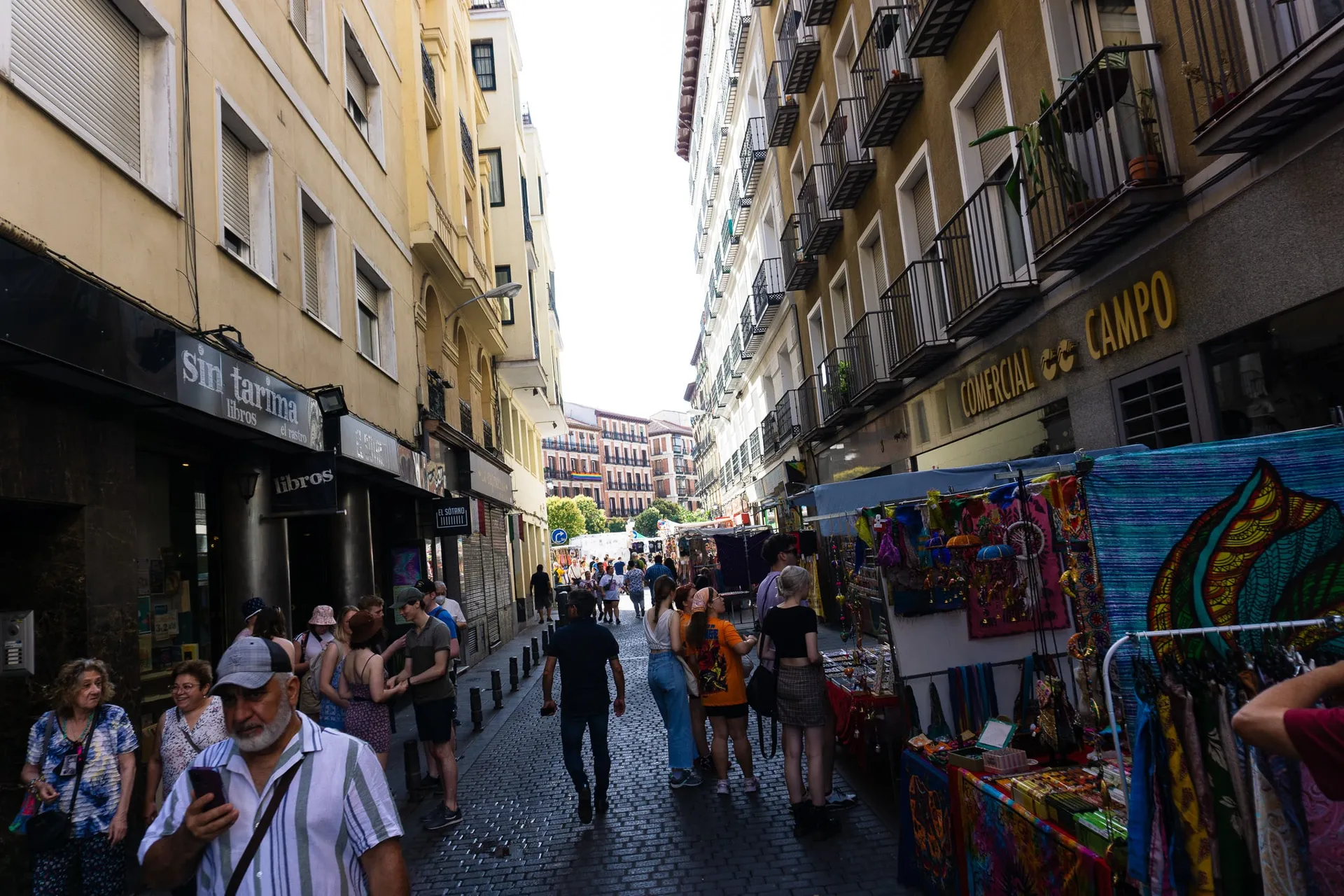
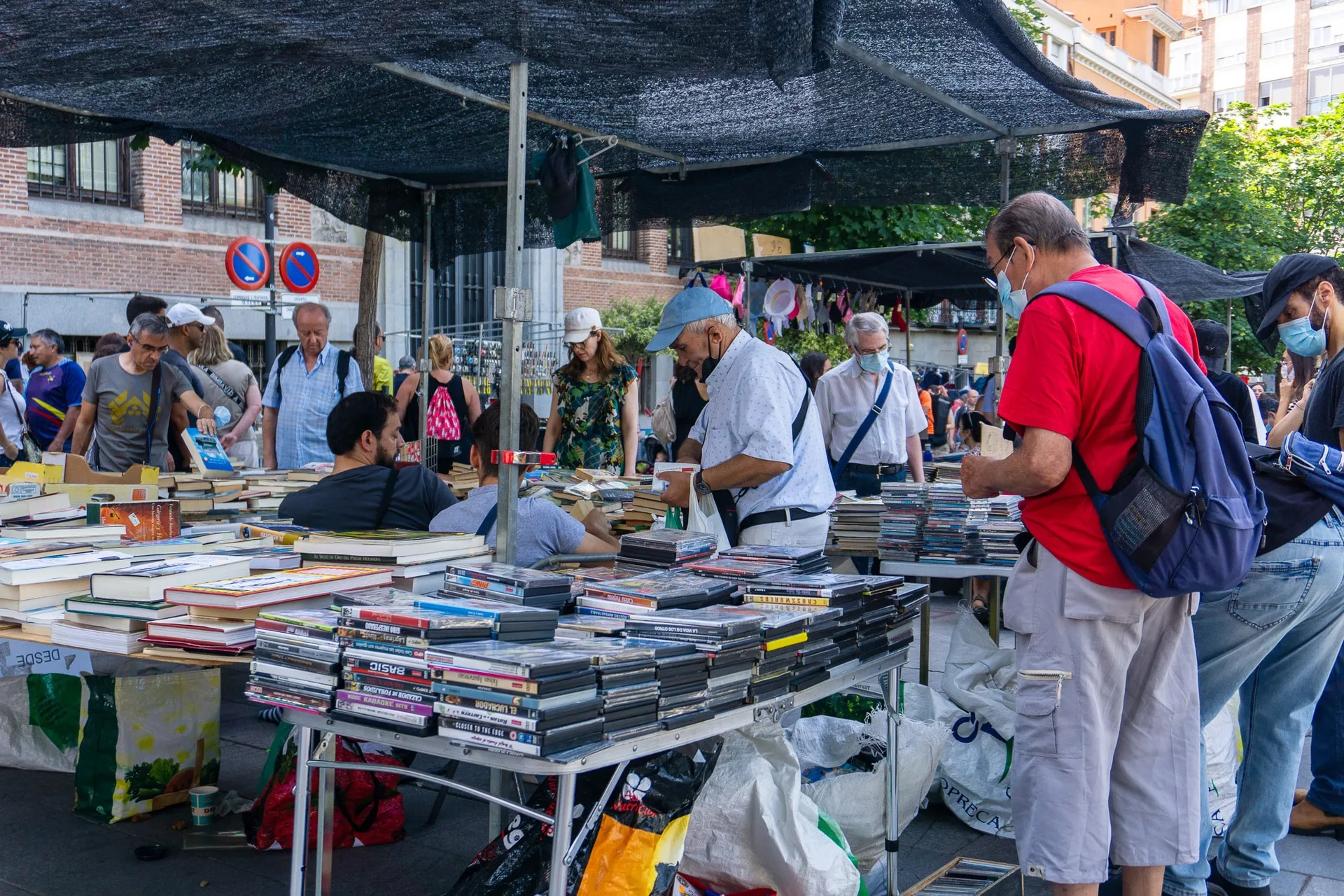
The market scenes are the clearest argument against treating old Madrid as heritage theater. Official city sources describe El Rastro both as a regulated Sunday and holiday street market and as a broader commercial area with specialist shops, bars, and historic corners active beyond market hours. That distinction matters. It means the district’s trading identity is not limited to one weekly burst of stalls, even if the best-known market activity is periodic and heavily managed through traffic restrictions.
In the photographs, that economy appears through tables of used books and DVDs, racks of clothing, household overflow, chalkboard bar signs, and narrow streets built for slow browsing rather than efficient throughput. It is a less polished form of commerce than flagship retail, and that is the point. Secondhand media, paperbacks, and miscellaneous objects still occupy physical space in the middle of a major European capital. For anyone who grew up digging through CD bins and discount shelves, there is something pleasantly stubborn about that. The market is not retro branding; it is a system for circulation and resale.
Just as important is what sits beside it. Bars, groceries, hostales, and small storefronts are not decorative local color around an otherwise self-contained flea market. They are part of the same ecosystem. The Rastro area’s historical link to trade around Ribera de Curtidores survives not as a museum fact but as a street pattern: commerce layered in different tempos, from scheduled vending to permanent shops to food and drink that keep the district active between peaks.
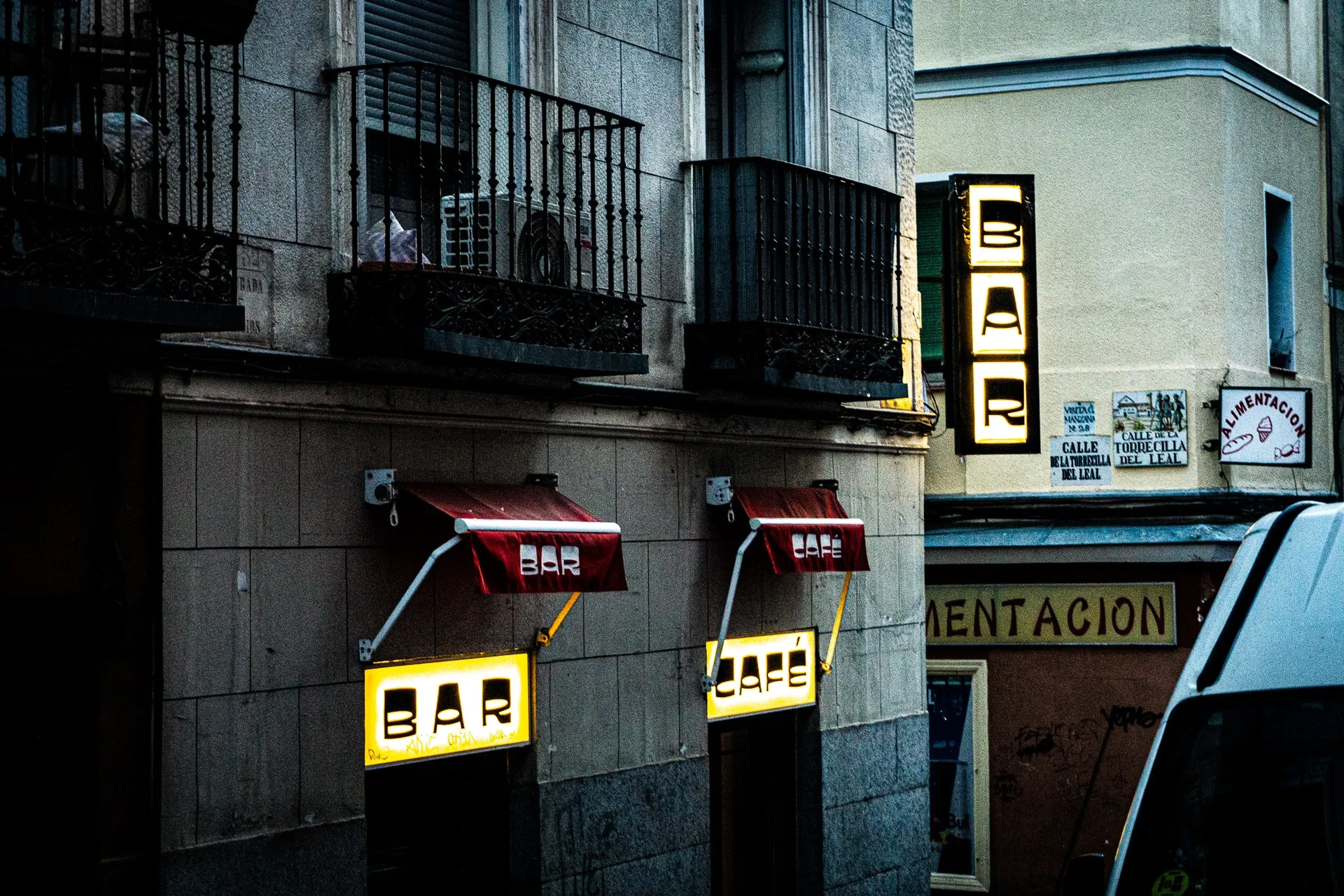
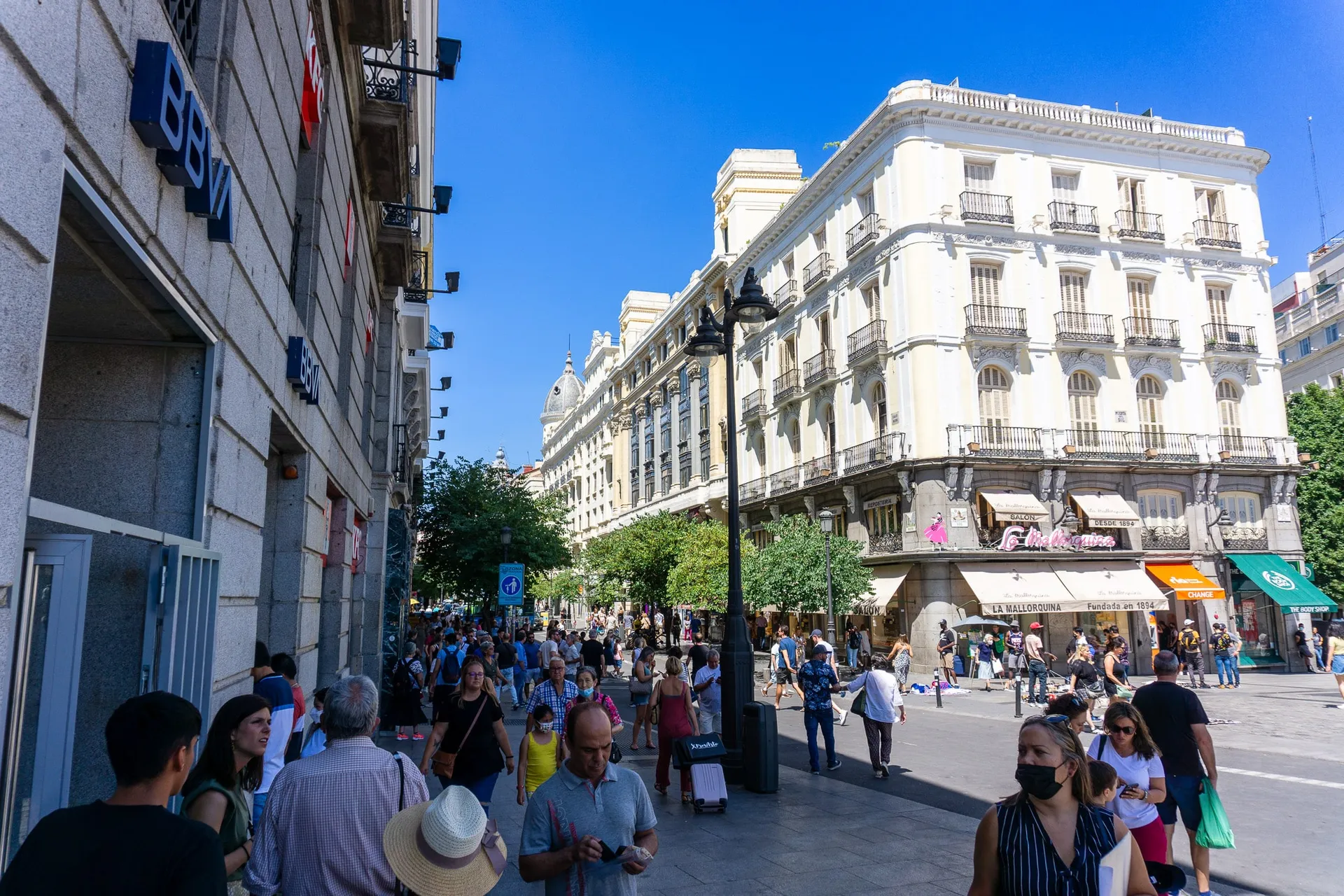
The set is careful not to romanticize this as untouched neighborhood life. Tourism is present in the signage and merchandise, and the old center clearly sells itself. But that does not make the commerce fake. Souvenir textiles, budget lodging, used books, and a bar terrace can all belong to the same real urban economy. Madrid’s center is convincing precisely because it does not try to purify one kind of trade from another.
Hostales, cajeros, and exchange counters are part of the architecture now
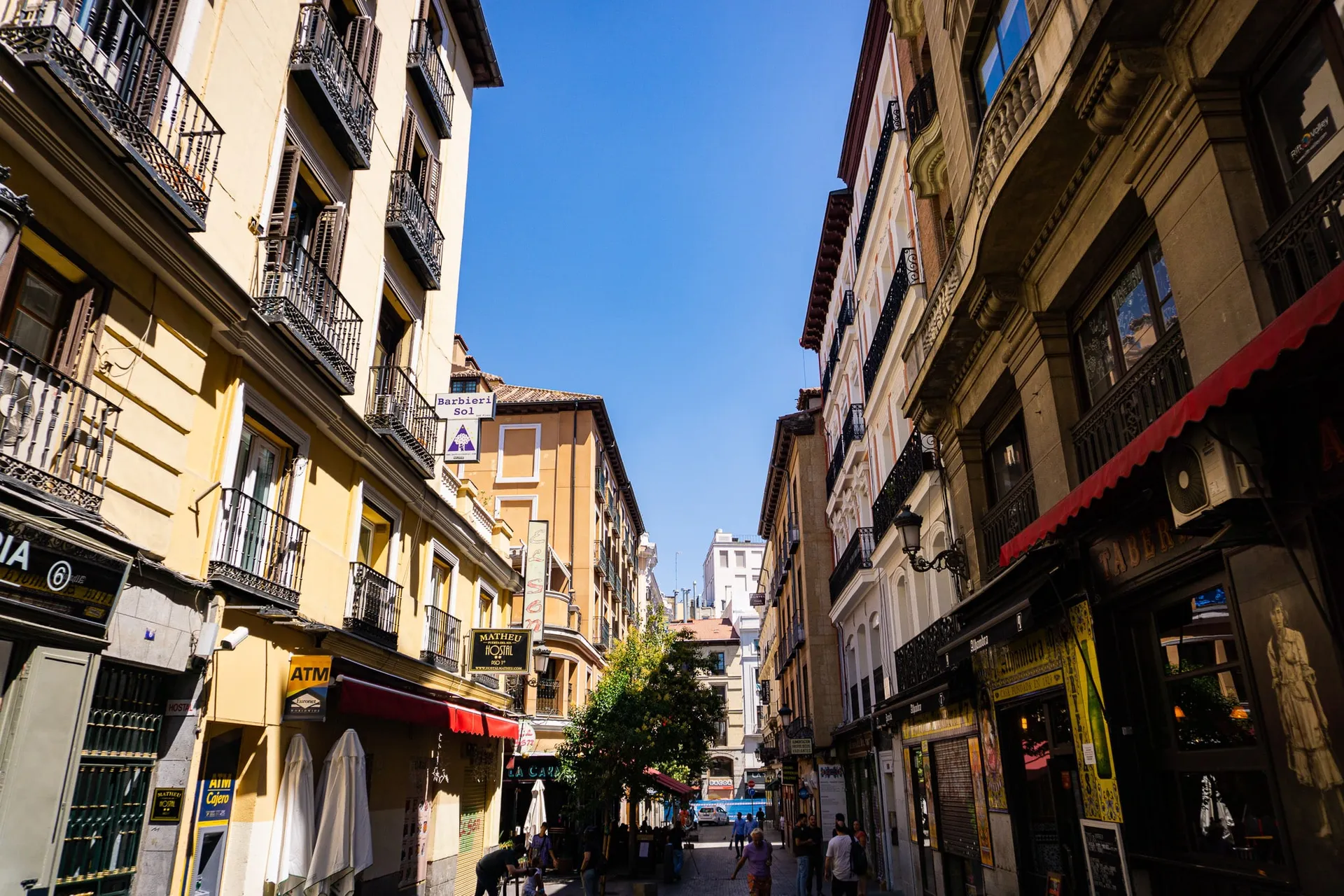
Some of the most revealing details in the set are the least glamorous: HOSTAL signs, ATM and cajero lettering, alimentación storefronts, currency exchange awnings, luggage-oriented retail, and multilingual traces aimed at people who may only be in the city for a few days. These are easy to dismiss as clutter if you are hunting for postcard Madrid. Seen properly, they are the service layer that allows the historic center to function at contemporary scale.
Official tourism information supports this concentration. The Sol area is known for numerous exchange offices, and accommodation listings place hostales squarely within the old core’s main shopping and visitor zones, often in older buildings between major squares. The photographs show exactly that arrangement: nineteenth- and early twentieth-century façades repurposed not only for bars and retail but for short-stay infrastructure. A balcony above a narrow lane might belong to a residence, a hostel room, or an office supporting the tourist economy below.
There is a design story here too. The signage is rarely elegant in a pure sense, but it reveals how older building stock adapts. A stone façade can absorb a glowing BAR sign, a pharmacy-green ATM marker, a grocery awning, and a hostel placard without losing its urban authority. In fact, the tension is part of the character. Madrid’s center does not preserve architecture by stripping away use; it preserves it while asking it to carry more use than heritage districts are usually allowed to admit.
That same street-level density also complicates the idea of authenticity. A hostal sign does not make a street less madrileño. Neither does a currency exchange counter. They show how the center mediates between residents and outsiders every day, using small commercial formats embedded in old buildings rather than giant standalone visitor infrastructure. The result is messier than a curated historic quarter and much more interesting.
Canalejas shows how luxury moved into the same conversation
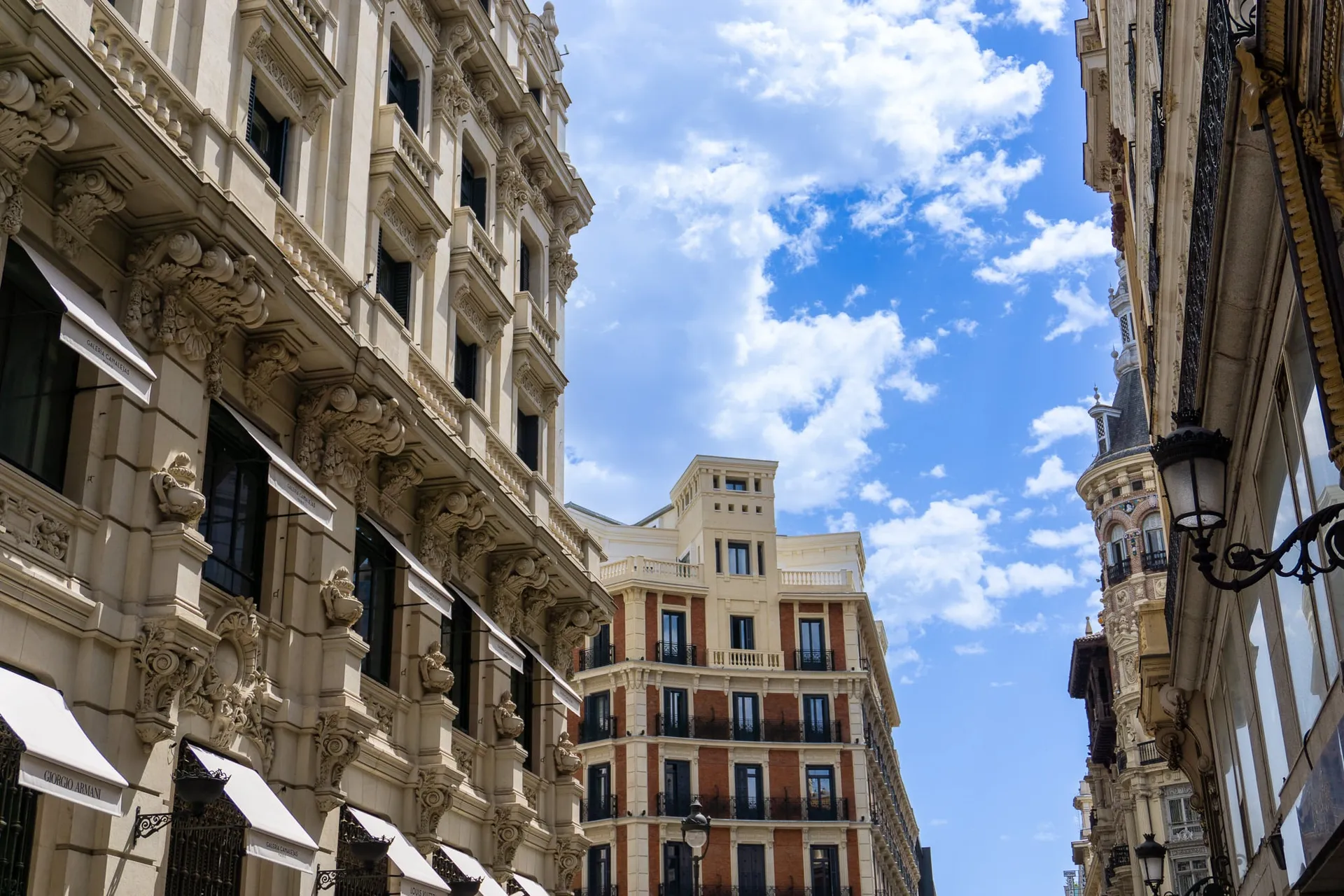
If the market and hostel streets represent one end of the commercial spectrum, Galería Canalejas marks another. Official sources describe it as a luxury shopping and gastronomy complex in the former Palacio de la Equitativa, tied to the Four Seasons project and positioned explicitly as a new central icon. In practical terms, it brings high-end global branding into the same urban radius as tabernas, exchange shops, and long-established pedestrian shopping streets.
What makes that interesting is not simply the arrival of luxury retail. Big cities do that all the time. The more revealing point is where it happens: inside heritage architecture, in the middle of the old center, without fully displacing the smaller commercial formats visible elsewhere in the set. The luxury storefronts do not stand in a sealed-off enclave. They sit within walking distance of pastry counters, metro exits, souvenir shops, hostales, and the older commercial spine running through Sol and Arenal.
The photographs catch this collision in a very Madrid way. Ornate façades and rounded corners, all cornices and decorative restraint from street level to roofline, now frame names like Giorgio Armani and Louis Vuitton. It is easy to read that as contradiction, but it may be more accurate to call it continuity under different price points. These buildings have long been instruments of commerce and prestige; the branding has changed faster than the urban script.
Canalejas therefore works as a useful contrast class rather than a villain. It sharpens the article’s central idea: central Madrid is not a preserved old quarter interrupted by modern retail, nor a luxury district that has erased older trade. It is an accumulation of commercial layers, some informal-looking, some institutional, some aggressively polished, all sharing the same walkable historic frame.
Temporary civic graphics keep the center from becoming a museum set
One of the smartest visual threads in the set is textual rather than architectural. Street plaques, station names, chalkboards, posters, and banners keep insisting that the city is time-bound, not frozen. Near Banco de España, Orgullo de Madrid graphics place the images firmly in July 2022, when official Pride-related security and traffic measures reshaped parts of the center. That matters because it interrupts the lazy fantasy of the historic core as timeless backdrop.
Temporary event urbanism changes how commerce reads. A Pride banner hung near monumental architecture or a metro sign does not just decorate the street; it updates the meaning of the corridor for a specific public moment. Nearby, bar interiors use posters for Las Ventas and Feria de San Isidro as graphic shorthand for another kind of local identity, less as documentary evidence of an event than as décor performing madrileño codes. Across the set, text-rich surfaces show a city constantly labelling itself in public.
That constant relabelling may be the best argument for understanding central Madrid as active urban machinery. Roofscapes and domes provide continuity, but the commercial and civic text keeps changing: menus, hostal signs, ATM decals, exchange branding, rainbow banners, market price boards. The center survives because it can accept those overlays without losing its spatial coherence.
Seen that way, the old city is not old in any simple sense. It is a durable container for changing uses, from secondhand DVDs to luxury leather goods, from Sunday market restrictions to late-night tapas service, from static stone façades to event graphics pegged to one summer in 2022. The real subject of these photographs is not Madrid as monument. It is Madrid as a working interface.
Photography by Gil DeSaant. Explore more of his photography at gildesaant.com.