Checked: 2026-11-07.
Aerobús and the L9 Sud metro both connect Barcelona Airport with the city, but they serve different routes and use different ticket rules. The useful comparison is the full journey to your accommodation, including any interchange and the ticket you already hold.
This guide compares official operator information. Check fares and service notices before travelling, particularly for late arrivals.
The short version: what each option is for
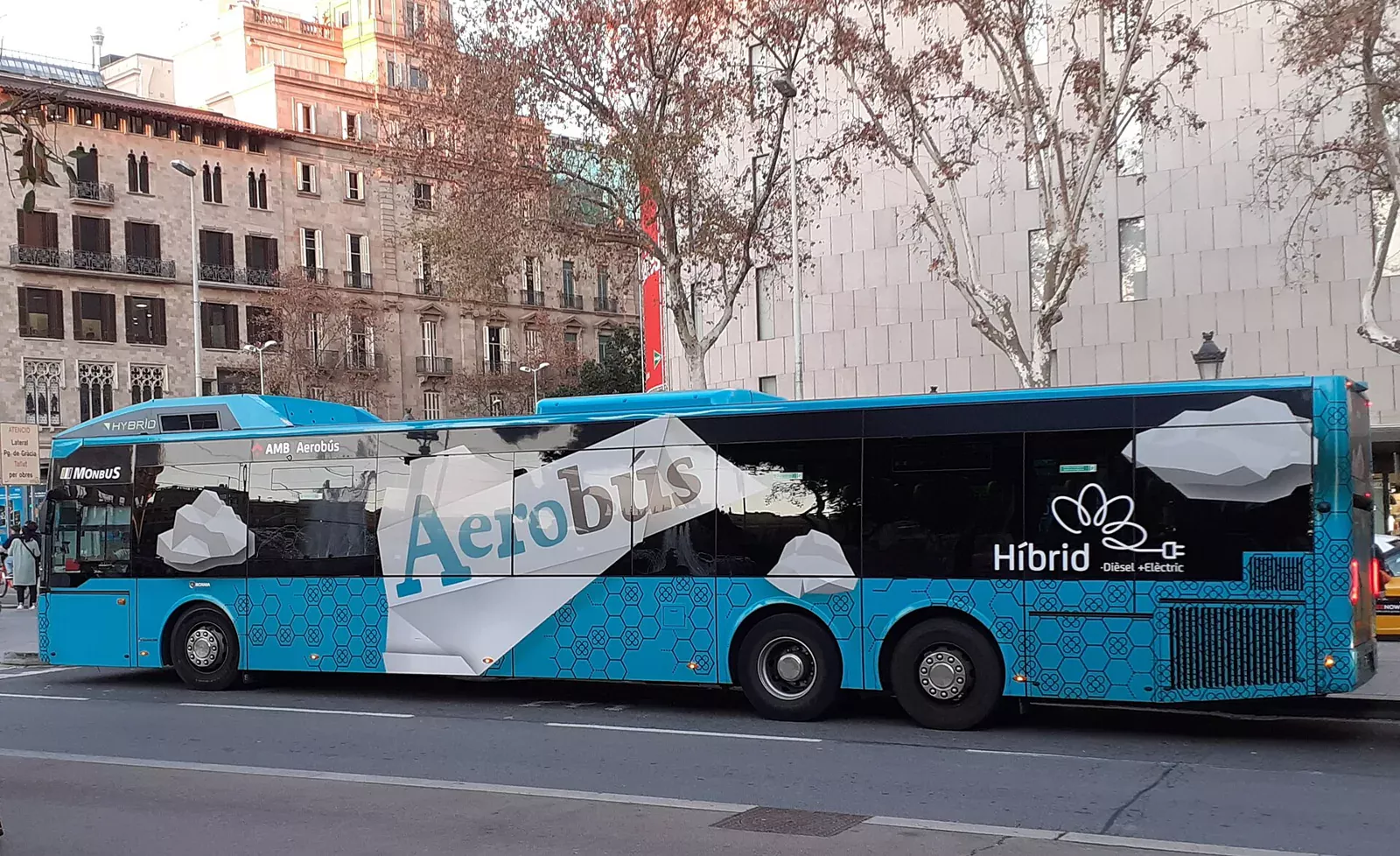
Aerobús is the “I want a direct airport shuttle and a suitable city stop” option. It is the official airport bus service, runs two lines for Terminals 1 and 2, and operates 24 hours a day, 365 days a year. It also has current published fares for single, return, and combined tickets. Source: Aerobús official homepage, lines, stops and schedules, rates.
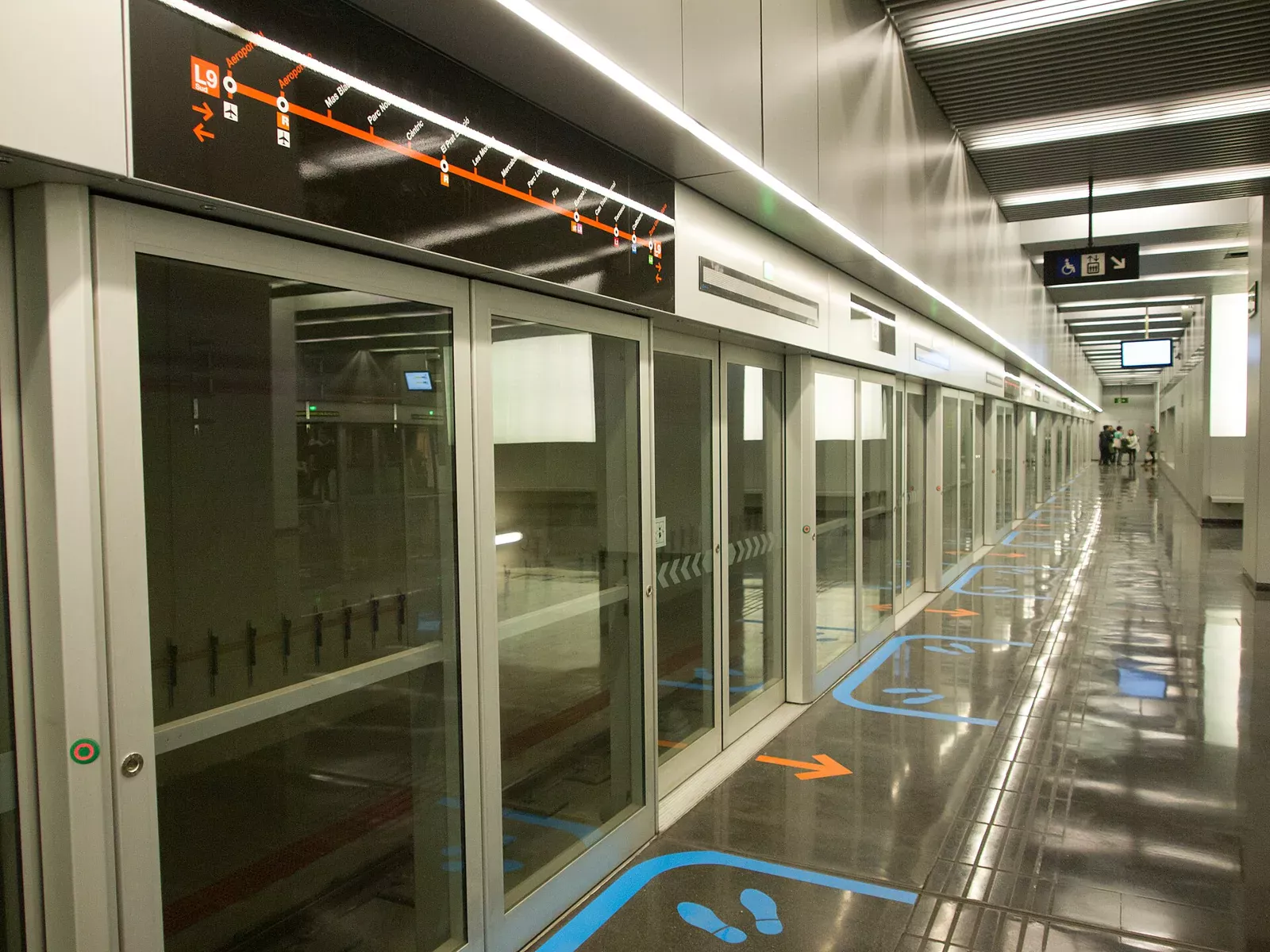
The metro is the “I care about price and I don’t mind an interchange” option. TMB says L9 Sud links the airport terminals with the city, runs every 7 minutes, and the trip to the city center takes about 32 minutes. But airport trips have their own ticket rules, so you cannot just assume your ordinary metro pass will work. Source: TMB airport metro page.
That’s the whole decision tree in one sentence: use Aerobús if you want a straightforward transfer; use the metro if the airport-valid fare makes the difference worth the onward connection.
Cost: the metro is cheaper, but only if you buy the right thing
On current official pricing, the airport metro ticket is 5.90 €. Aerobús currently lists a 7.75 € one-way fare and a 13.30 € return fare. Aerobús also lists a 10.15 € one-way Metro/Bus + Aerobús combined fare. Sources: TMB 2026 fare table, Aerobús rates.
So yes, the metro is the cheaper headline price. But the real comparison is not “metro ticket vs bus ticket” in a vacuum; it is “airport-valid metro ticket vs the convenience of a dedicated shuttle.” Compare the fare difference with the final leg to your accommodation. A lower headline fare does not necessarily mean a simpler journey.
One more wrinkle: Aerobús says its tickets are valid for 90 days from purchase, and return tickets remain valid for an additional 90 days from the outbound journey date. It also says children under 4 travel free. Source: Aerobús rates.
Do not generalize those rules to every transport product in Barcelona. They are operator-specific, not universal wisdom.
Ticket rules are the part that trips up visitors
Ticket validity is the key detail to check before boarding. TMB says the airport metro requires airport-valid tickets when traveling to or from Aeroport T1 or Aeroport T2. It also says the single ticket, T-casual, and T-grup are not valid for that airport trip. Source: TMB airport metro page.
Aerobús is even more explicit: it says it is not part of the integrated fare system, and that products such as T-casual, T-usual, T-mobilitat, and T-day are not valid on Aerobús unless sold as a combined product. It also says combined tickets with Hola Barcelona are available. Source: Aerobús fare guide.
There is one useful exception worth noting: TMB says the Hola Barcelona travel card is valid for airport stations Aeroport T1 and Aeroport T2 on L9 Sud. Source: TMB airport ticket guidance.
Translation: if you already plan to use Hola Barcelona for city transport, the airport metro can become much more attractive. If not, you need to buy an airport-valid metro ticket or pay for Aerobús separately. The cheap option is only cheap when you buy the correct cheap thing.
Time and convenience: what the official data actually says
TMB says the L9 Sud airport ride runs every 7 minutes and takes about 32 minutes to the city center. That is good enough for planning, but still an estimate, an estimate that excludes some waiting and onward travel. Source: TMB airport metro page.
Aerobús does not present the airport transfer as a city-center rail substitute. It presents it as a dedicated airport shuttle with separate routes for Terminal 1 and Terminal 2, and it runs around the clock. Source: Aerobús lines, stops and schedules.
That matters because “fastest” and “least annoying” are not always the same thing. The metro journey can require an interchange: you may have to navigate a station, possibly change later, and manage luggage through normal transit space. Aerobús is simpler as a airport-to-city transfer, especially if your first priority is not solving Barcelona’s underground in real time after landing.
For a late arrival, check the metro operating hours and your onward connection; Aerobús advertises a 24-hour service. If your lodging is already near an L9 Sud connection or you are comfortable making a transfer, the metro can be enough.
Which one should most visitors choose? A practical rule, not a fantasy ranking
Use this rule set instead of pretending there is a universally best transfer:
- Choose Aerobús if you want the simplest airport-to-city ride, do not want to decode ticket validity, or care more about convenience than saving a couple of euros.
- Choose the metro if you have an airport-valid ticket already, such as Hola Barcelona, or if you are specifically optimizing for lower fare and are fine with a more conventional transit experience.
- Do not choose either blindly if your hotel is awkwardly placed. The last leg can erase any transfer savings very quickly.
Also, keep your payment logic boring and local. As a general travel rule, when a system gives you a local-currency option, that is usually the cleaner choice than making card or ATM decisions in a second currency. For the wider why, see Pay in Local Currency or USD? The Smarter Rule for Cards and ATMs Abroad.
And if you like transport comparisons that cut through the marketing, the same no-nonsense approach applies in Contactless vs Oyster in London and Istanbul Transport Cards Compared. These guides explain different ticket systems and their visitor-specific restrictions.
Future applicability and caveats: what could change after this was checked
Checked date: 2026-11-07.
This article is based on official pages checked on that date, but it has a short shelf life in the way all transport advice does. Fares can change, ticket integrations can change, and service details can be updated without much ceremony. The numbers here should be treated as current as of the checked date, not guaranteed for every future month of 2026 or beyond.
Specific caveats:
- The Aerobús stop-by-stop timetable was not fully exposed in the crawl output, so verify live stop details directly on the operator site before you travel.
- TMB’s “about 32 minutes” is an approximate journey time, not a binding countdown.
- The fare comparison assumes the current official prices listed on the pages cited above; do not reuse them blindly if you are reading this later.
- Neighborhood convenience depends on your actual destination, which this guide does not guess at.
Choose by destination and ticket validity: Aerobús may suit a stop near your accommodation, while the metro may be useful if you already hold an airport-valid pass and have a convenient onward connection.
Source recap: Aerobús official site, TMB airport metro page, TMB 2026 fares.
Featured image: Photo: AlbertRA / Wikimedia Commons, CC BY-SA 4.0. Resized and converted to WebP; the image adaptation retains its source license.