Verona is easy to reduce to the usual set pieces: Roman remains, medieval towers, polished piazzas, Shakespeare branding. But the more interesting read of the city often sits a few degrees lower, at street level, where preservation is less about immaculate surfaces than about continued use.
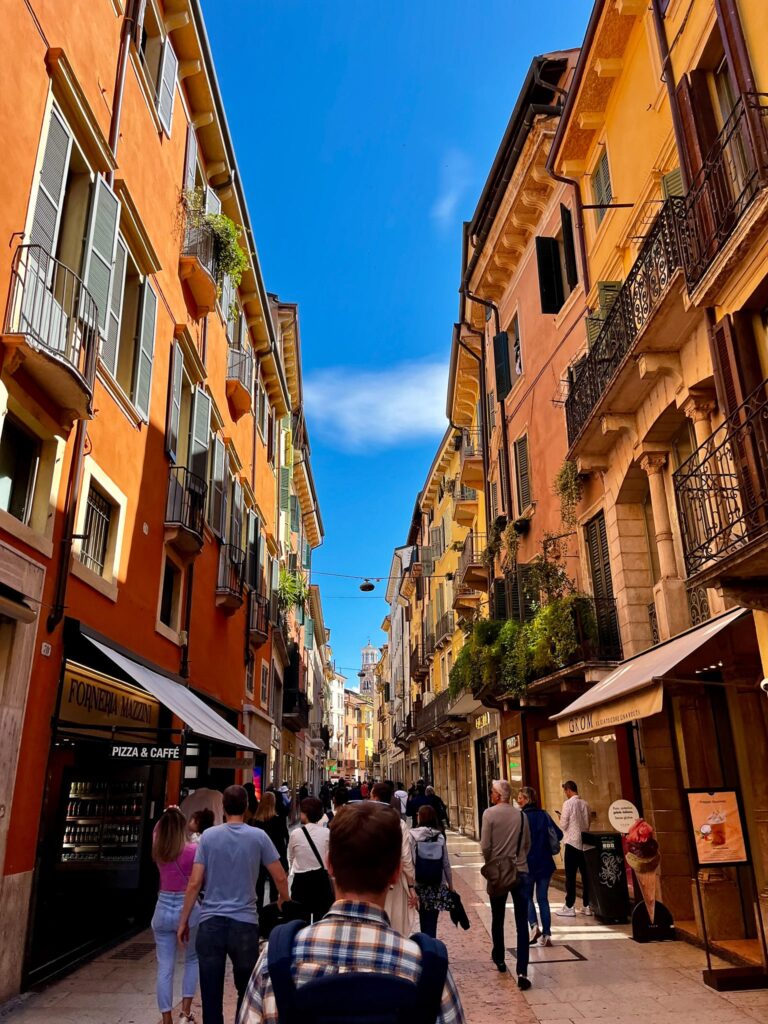
In this slice of the historic center, the visual pattern is consistent. Ochre and peach facades rise like canyon walls above narrow pedestrian lanes. Shutters open and close unevenly. Plaster flakes, cables cut across the sky, bakery and gelato signs tuck into older masonry, and bicycles lean against walls that have clearly been repaired more than once. The point is not that Verona escapes tourism or modern retail. It is that the old city still behaves like a city.
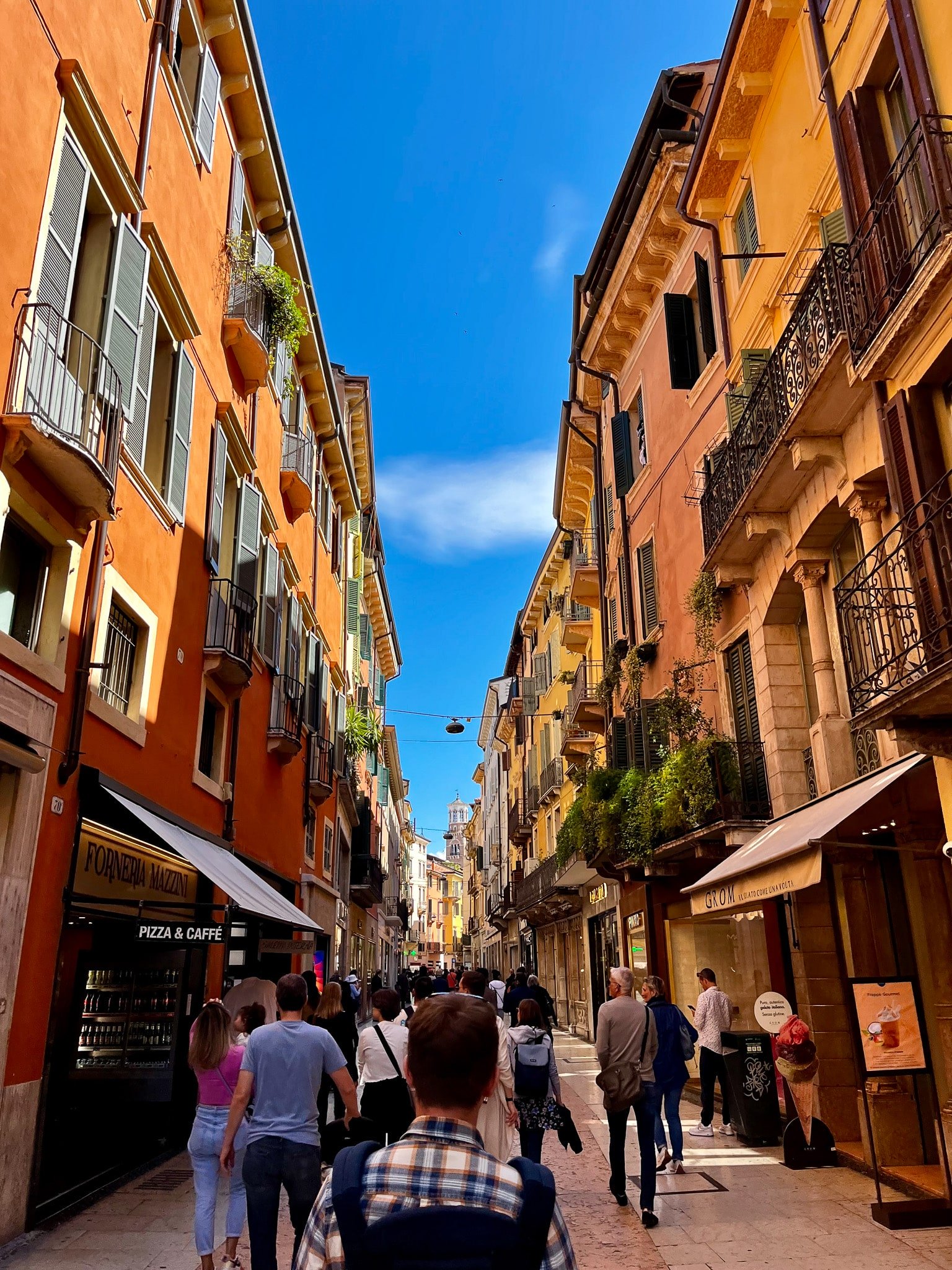
That matters because Verona’s historic core is not an accidental backdrop. UNESCO notes that the city has been an urban settlement on the Adige for more than two millennia, and that its Roman street pattern is still legible today. Municipal rules continue to regulate signs, awnings, and alterations in protected areas, which helps explain why contemporary commerce is present but rarely allowed to overwhelm the architecture around it.
What emerges is a version of Verona that feels less like a sealed heritage object and more like a functioning interface between centuries: Roman traces, medieval mass, Baroque display, market routines, deli counters, pedestrian flow, and the occasional digital screen all sharing the same frame.
The streets look vertical because the city is still read on foot
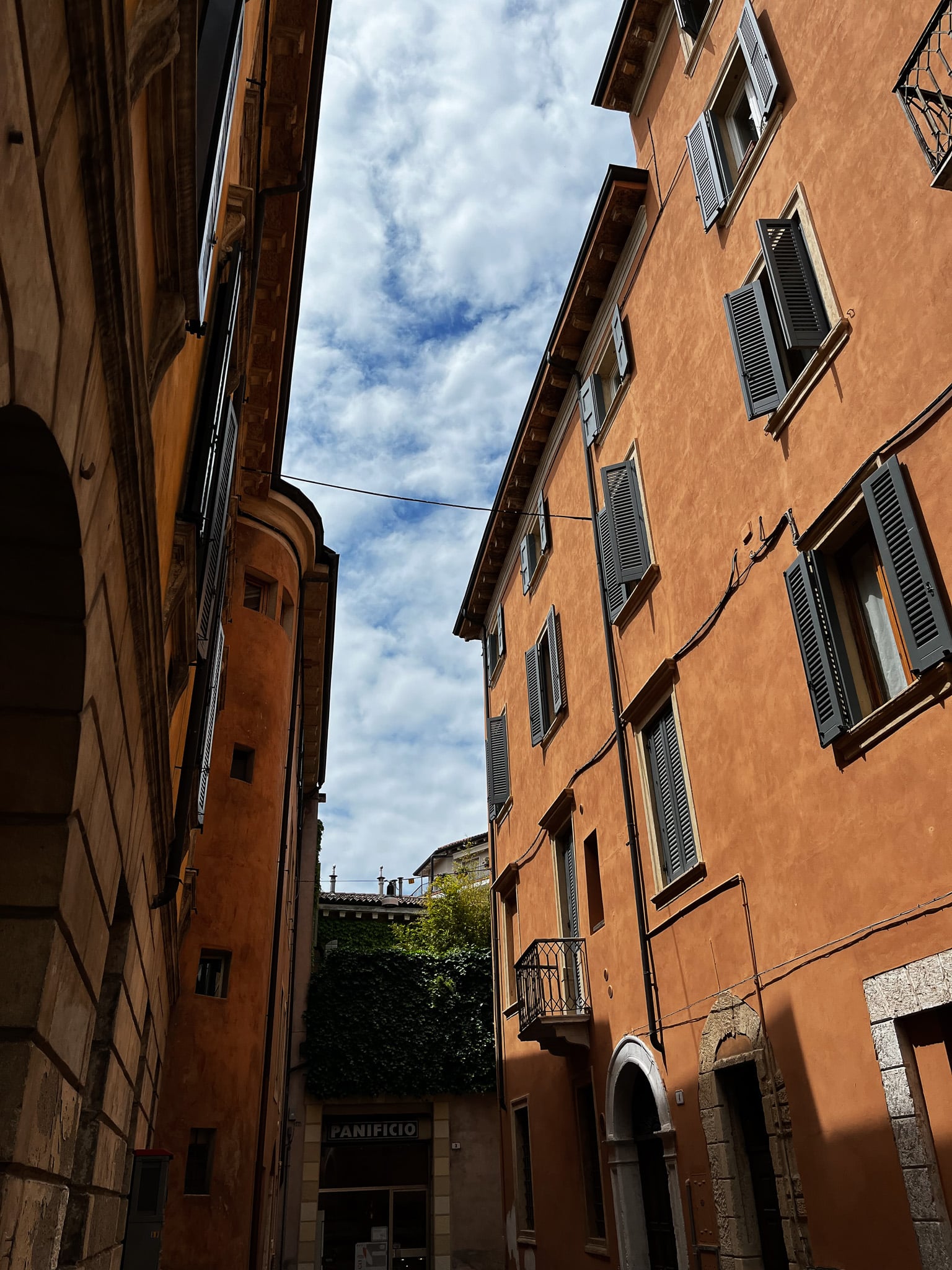
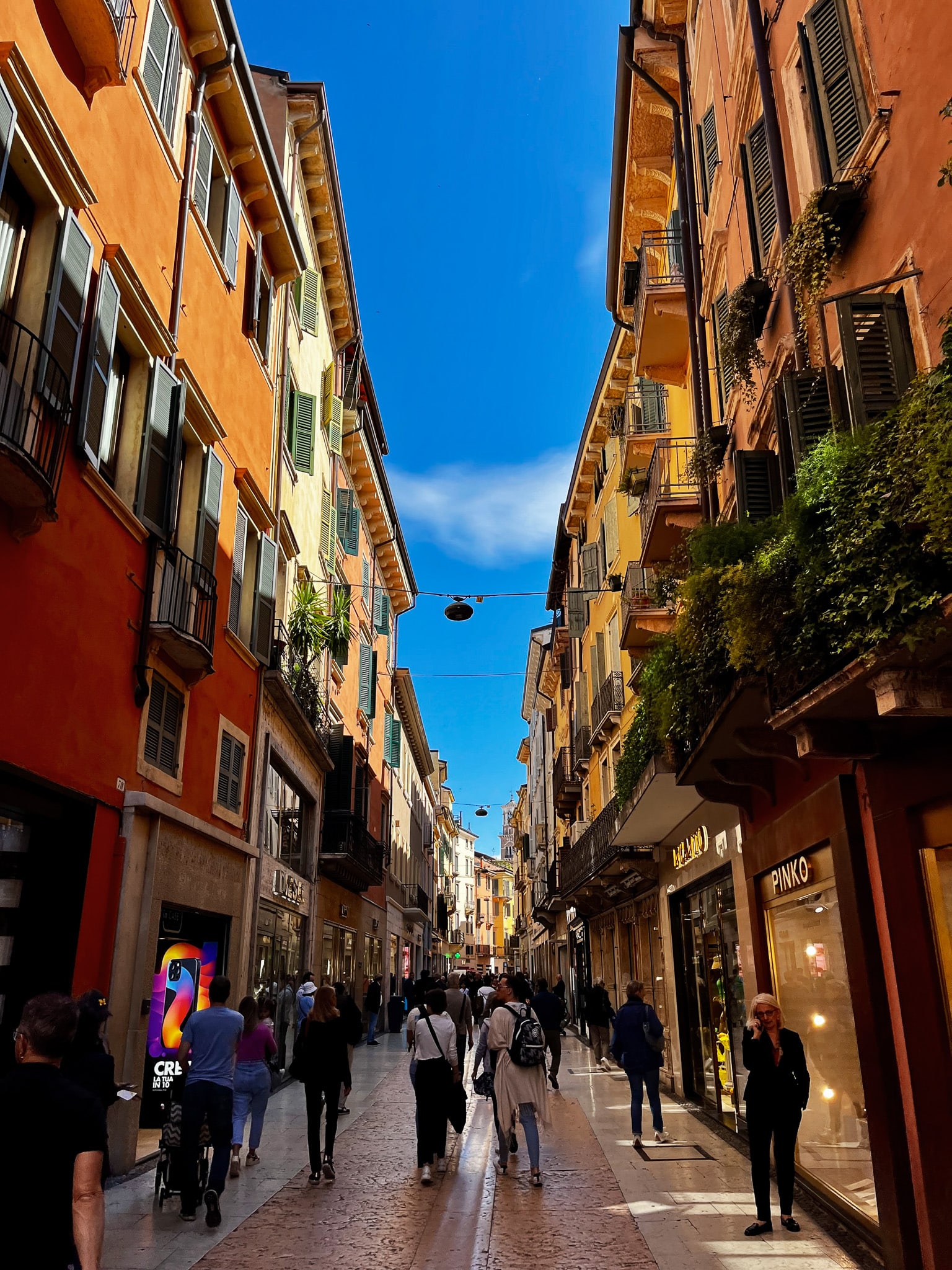
Several of the strongest views in this set look upward rather than outward. That choice does more than flatter Verona’s warm facades. It emphasizes how the historic center is experienced: in compressed passages, between closely spaced buildings, with only a narrow strip of sky overhead. Windows, shutters, iron balconies, exposed eaves, and overhead fixtures become the vocabulary of movement.
There is a practical urban logic behind that feeling. Verona’s center is heavily shaped by restricted traffic measures, including a ZTL, and the municipality actively promotes walking and cycling through the core. In photographs, that translates into a city whose scale is legible at pedestrian speed. You notice the patched plaster at ground level, the hanging plants on a balcony, the way one storefront glows beneath a much older wall, the way a lane bends and tightens before opening again.
The result is not pristine symmetry. It is visual layering. One street holds fashion retail and a digital advertising display beneath shuttered upper floors. Another gives you nothing more dramatic than a bakery sign, overhead wires, and weathered stucco, yet says more about the actual life of the center than a perfectly isolated monument shot could. Verona’s old town works because it is still being traversed, bought from, repaired, and inhabited.
Piazza delle Erbe still behaves like a market before it behaves like a postcard
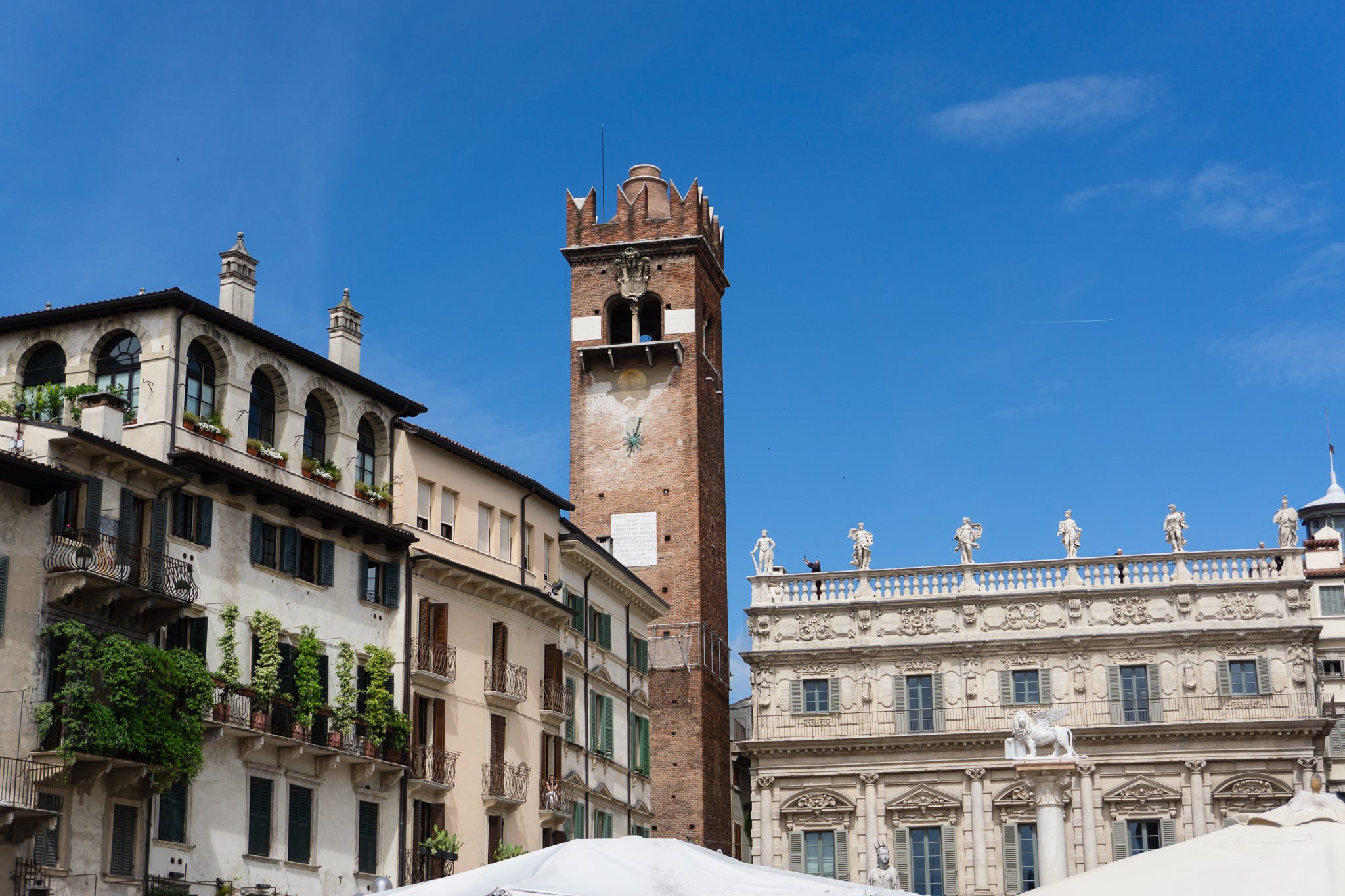
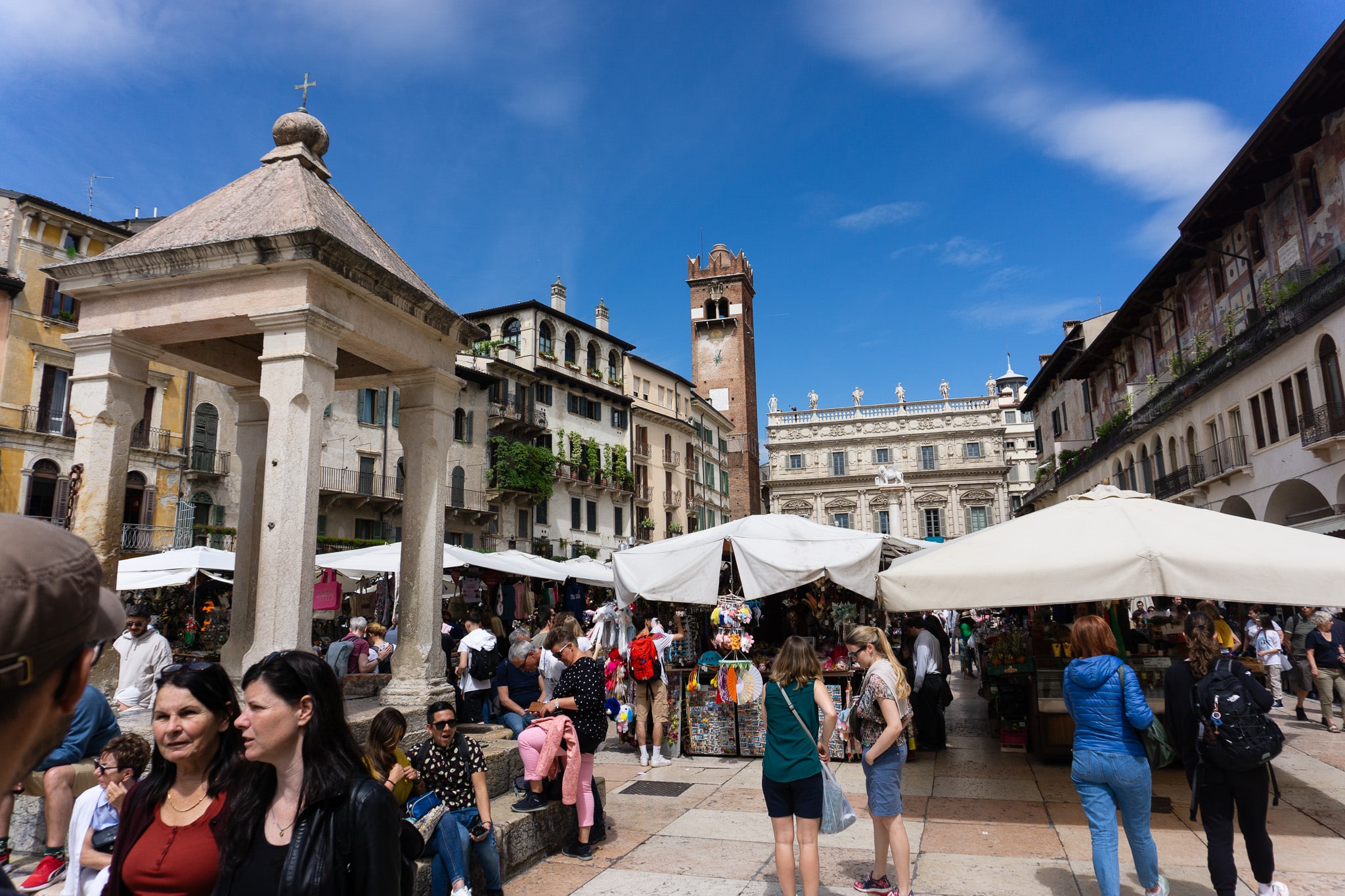
When Verona opens into a square, the city’s continuity becomes easier to read. Piazza delle Erbe is one of the oldest and most characteristic spaces in the center, occupying the site of the ancient Roman forum. It still functions as a market and meeting place today, not just as a ceremonial leftover. The city even maintains specific regulations for the market there, which is a very unromantic but telling detail: civic heritage survives through administration as much as atmosphere.
In the square, the architecture carries multiple timelines at once. Torre dei Lamberti rises beside the historic civic buildings and remains the city’s highest tower at 84 meters. Nearby, Palazzo Maffei adds a more theatrical register, with its 17th-century Baroque facade and rooftop statues. In front of it stands the Lion of Saint Mark, installed in 1523 as a reminder of Venetian dominion. None of this reads as tidy chronology when seen from the ground. It reads as accumulation.
Just as important is what happens below those facades. Umbrellas, stalls, café seating, souvenir displays, pedestrian drift. The square is monumental, obviously, but it is also commercially occupied. That distinction matters. A lot of historic centers are presented as if the ideal visitor experience were to remove friction, signage, retail clutter, and ordinary trade until only architecture remains. Verona’s center suggests the opposite model: the old fabric stays convincing precisely because it still has to host exchange, loitering, orientation, and small transactions.
Preservation here includes shop signs, deli counters, and the right amount of visual noise
One of the quiet pleasures of this set is its typography. PANIFICIO. FORNERIA MAZZINI. PIZZA & CAFFÈ. GROM. Deli labels. Street plaques. None of it feels graphically neutral, and none of it entirely hijacks the scene either. That balance is not accidental. Verona regulates signage and commercial fixtures in protected areas, restricting more intrusive forms while allowing sign types that echo older local formats. The city also controls elements like awnings and facade treatments.
That bureaucratic framework helps explain why the center can absorb both local retail and recognizable contemporary brands without dissolving into generic high-street sameness. The storefronts are present, sometimes brightly so, but they remain embedded in the inherited walls. Commerce is not staged as a heritage performance; it is simply part of how the place continues to function.
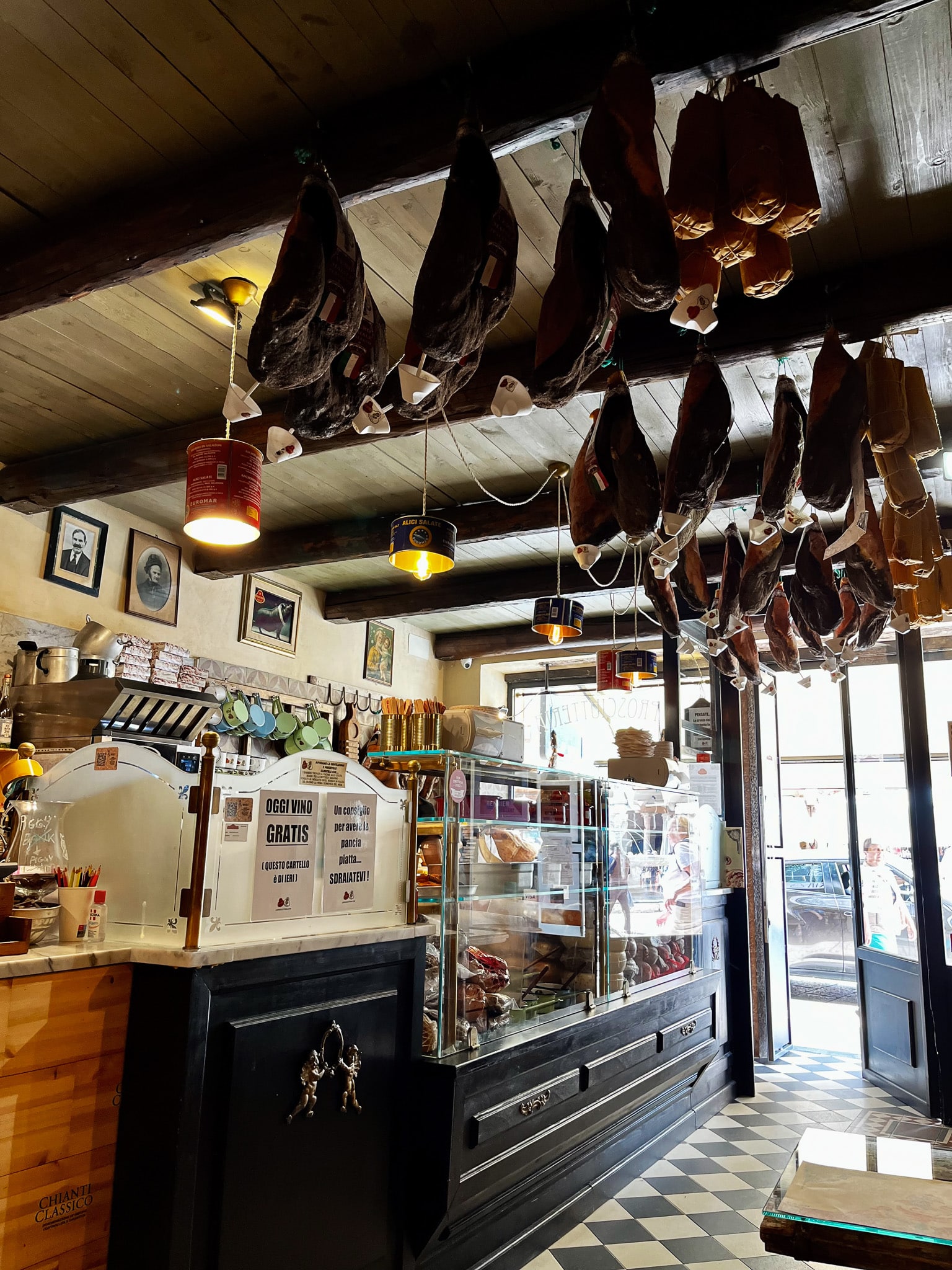
The deli interior in this set sharpens the point. Hanging prosciutti, dark beams, checkered floor, handwritten jokes, product tags, pendant lights improvised from utilitarian metal forms: it is an environment where display, labor, and tradition overlap. There is no need to overstate it into some grand symbol of authenticity. What matters is simpler. Verona’s cultural texture is not confined to churches and towers. It also survives in the design of ordinary retail interiors, in how food is presented, in the density of labels and objects, in the way a shop can feel accumulated rather than concepted.
Roman fragments and river embankments keep Verona from becoming a stage set
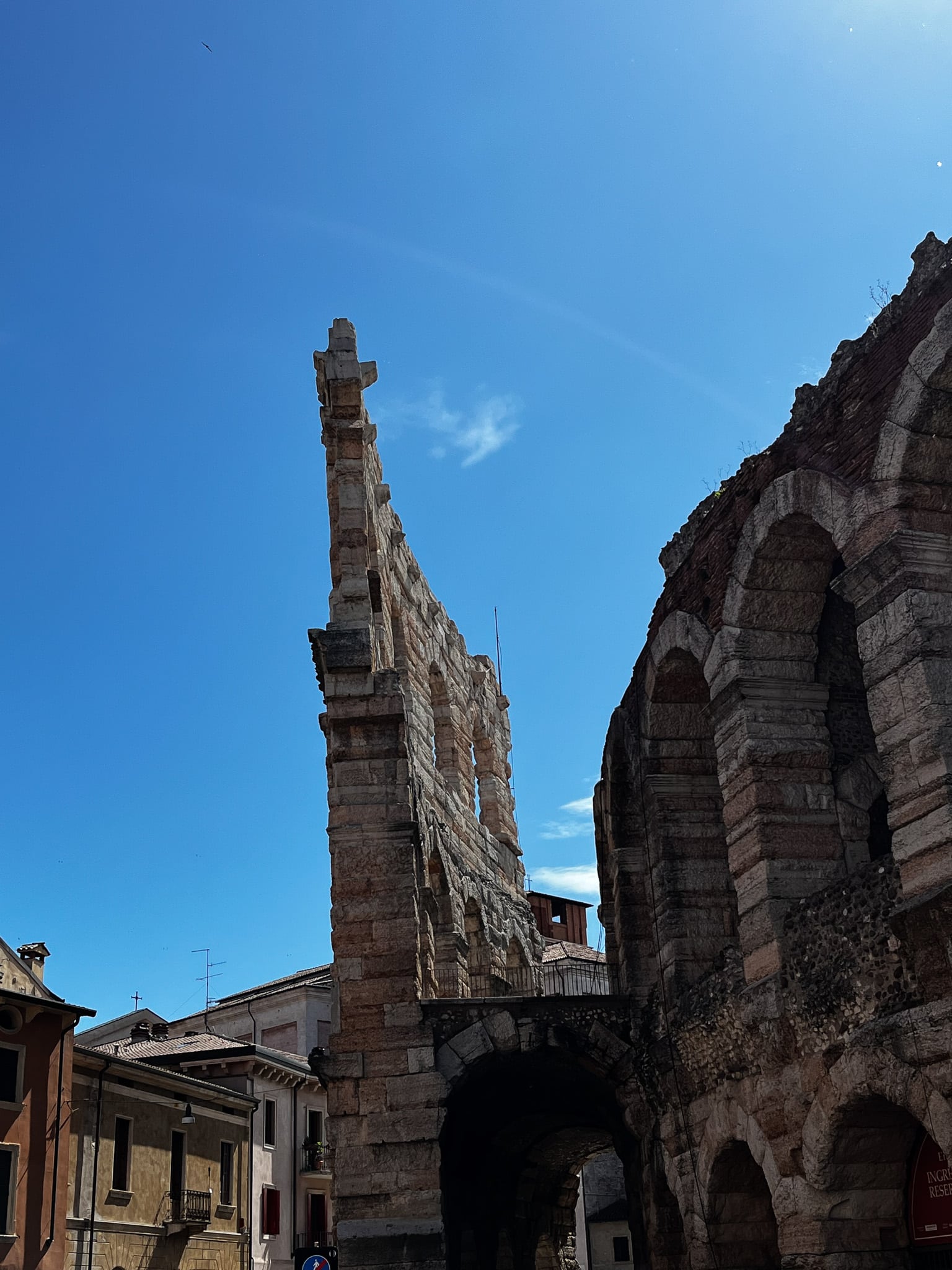
Verona’s old center gains depth from the fact that its history is not sealed behind barriers. Porta Borsari, the Roman gate that once marked the main entrance to the city along Via Postumia, still sits directly on an active urban axis. Official city material presents it not as an isolated ruin but as part of the everyday route toward the commercial center. That is probably the most useful way to think about Verona’s antiquity in general: embedded, not detached.
UNESCO’s broader point about Verona is that the Roman urban form remains visible in the present street pattern. You do not need every monument perfectly identified to grasp that logic. Ancient fragments, medieval towers, and later facades keep appearing inside ordinary circulation space, folded into blocks that also contain apartments, cafés, and shops. The city resists the clean separation between heritage zone and living zone because, structurally, the two are the same place.
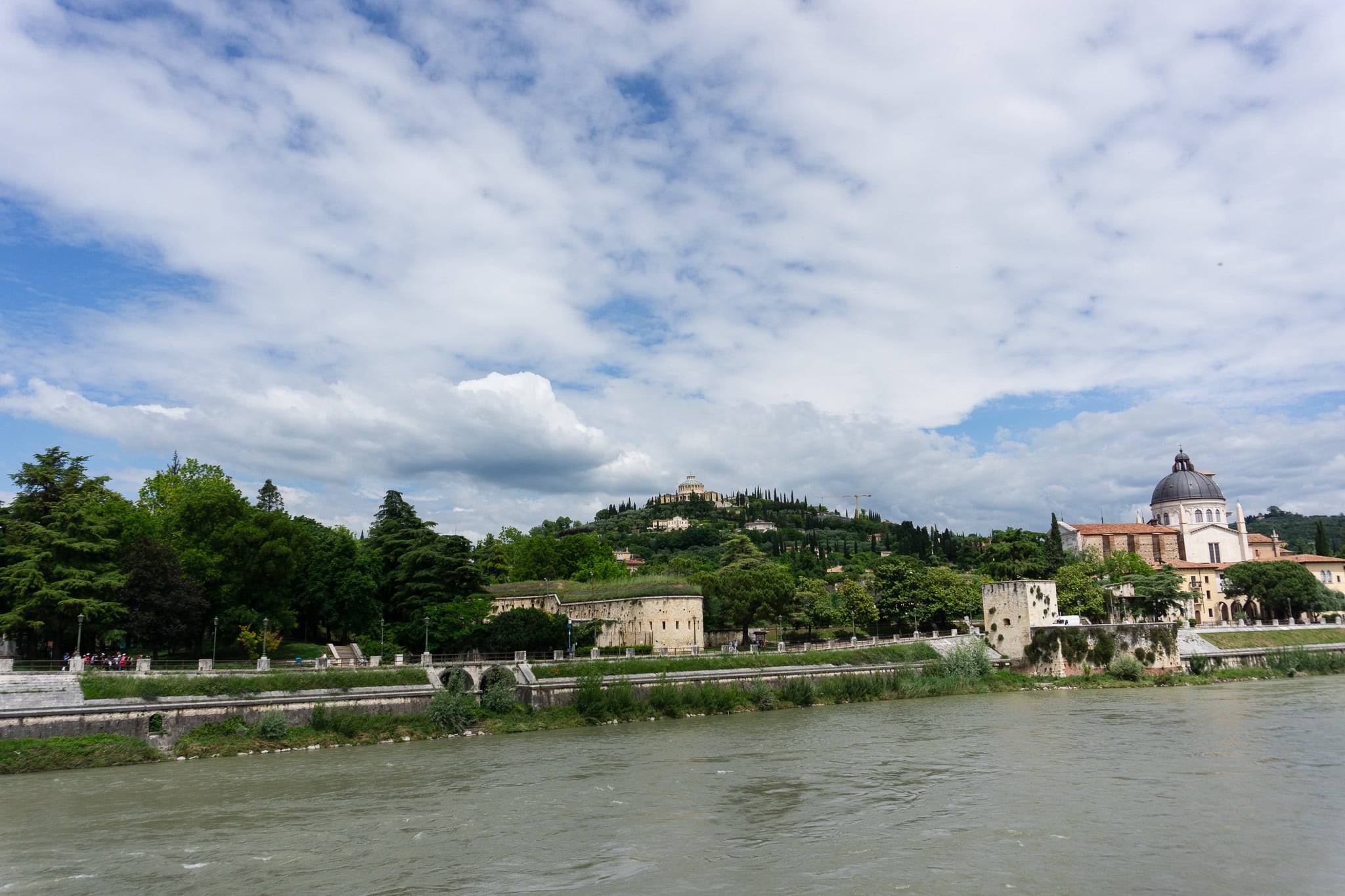
The Adige reinforces that reading. Verona developed within a bend of the river, which shaped its defenses and urban form for centuries. The embanked riverfront seen today also belongs to a more modern preservation story, especially after the flood-control works undertaken following the 1882 flood. So even the scenic river views are not just scenic. They show containment walls, edges, and managed boundaries: a reminder that keeping an old city alive requires engineering as much as romance.
Seen from above or across the water, Verona’s campanili, domes, rooflines, and green hills make a handsome skyline. But the more interesting fact is that this landscape is still infrastructural. The river is not a backdrop pasted behind the center; it is one of the reasons the center looks and works the way it does.
Photography by Gil DeSaant. Explore more of his photography at gildesaant.com.