
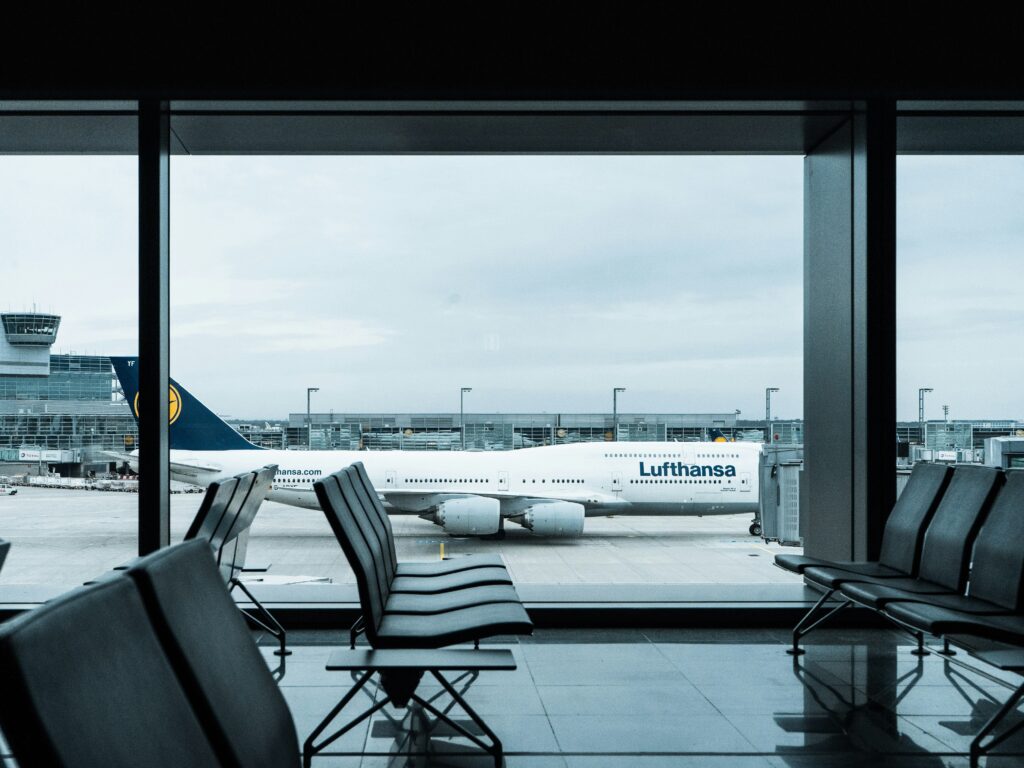
Most long haul flight tips fall into two camps: useful but obvious, or elaborate nonsense involving supplements and inflatable furniture. This guide takes a stricter approach. It covers what to do before booking, during the days before departure, at the airport, onboard and after landing—while separating supported tactics from preference-based comforts and viral cabin folklore.
For this article, “long haul” means roughly six hours or more. That is an editorial definition, not an official global rule: aviation classifications vary, while health guidance commonly treats travel longer than four hours as relevant to prolonged immobility and blood-clot risk.
Before booking: choose for sleep or movement
Evidence label: practical but preference-based.
There is no universally best economy seat. Choose according to the discomfort you most want to reduce.
- Choose an aisle seat if easy access to the aisle will make you more likely to walk and stretch. The trade-off is more interruptions from seatmates and passing traffic.
- Choose a window seat if you hope to sleep with fewer interruptions. It does not guarantee better sleep, and climbing over other passengers may discourage movement.
- Be cautious with bulkheads. Their geometry varies, and bags generally need to go overhead during taxi, takeoff and landing rather than under the seat.
- Treat exit rows as safety positions, not merely legroom upgrades. Passengers must be willing and physically capable of helping during an emergency.
- Do not assume seats near toilets are always noisy or that the rear is always rougher. Aircraft layouts and passenger traffic vary.
Check the operating airline’s current seat map rather than relying solely on a generic diagram for the aircraft type. Then check again after a schedule change: an aircraft substitution can rearrange the entire cabin.
Flight timing matters too. If sleep is the priority, compare the onboard sleep window with the destination’s night rather than automatically choosing the longest overnight sector. Advance seat selection or extra-legroom seating may cost more, particularly on basic fares, so decide whether the benefit addresses a real problem rather than paying for a vaguely “better” seat.
Two or three days before departure: start moving your body clock
Evidence label: well supported, but timing is itinerary-specific.
When crossing several time zones, the CDC recommends gradually moving sleep earlier before eastward travel and later before westward travel, when practical. Westward adjustment is generally easier, but neither direction benefits from staying up all night to “exhaust yourself” before departure.
Light exposure is also a powerful timing signal. The catch is that generic advice such as “get morning light” can be wrong after a large time-zone shift. Correct timing depends on direction, habitual sleep time, arrival time and the number of zones crossed. A personalized jet-lag calculator or professional advice is more useful than a one-size-fits-all clock time.
For a short trip, complete adaptation may not even be desirable. Travelers with sleep disorders or complicated itineraries should get individualized guidance rather than attempting an aggressive schedule shift.
Pack a compact cabin kit, not a portable bedroom
Evidence label: high practical value; product choice is personal.
The best long flight essentials solve predictable annoyances while remaining accessible from the seat:
- an eye mask;
- earplugs or headphones;
- an extra layer for changing cabin temperatures;
- tissues;
- a small moisturizer or lip product;
- essential medication;
- glasses if contact lenses aggravate dry eyes;
- a charging cable and permitted power bank;
- an empty reusable water bottle to fill after security.
Put these in a small pouch that fits within the operating airline’s personal-item allowance. Retrieve it before placing the main bag overhead. A neck pillow may count toward the cabin-baggage limit, and there is no strong evidence that one expensive shape is medically superior.
Liquids, medication and batteries
Security rules depend on the departure and connecting airports. Standard carry-on liquids are limited to containers of 100 milliliters or 3.4 ounces for US screening and generally to 100-milliliter containers in a one-liter resealable bag at EU airports. Essential medicines can qualify for exemptions, but screening procedures differ.
Medication-import rules are a separate issue. Check the relevant embassy, customs or health authority for every destination and transit country rather than assuming departure-airport approval makes a medicine legal everywhere.
Under US FAA rules, spare lithium batteries and power banks belong in the cabin, not checked baggage. Units up to 100 watt-hours are generally permitted; those from 101 to 160 watt-hours require airline approval and are quantity-limited. Airlines can be stricter. Qantas, for example, says permitted power banks can be carried but cannot be used or charged onboard from December 15, 2025. Check the operating carrier, including each carrier on a multi-airline itinerary.

At the airport: handle the basics before boarding
Evidence label: practical and low risk.
Eat a modest meal if needed, refill an empty bottle after security where filling facilities are available and walk before boarding. None of this prevents jet lag, but it reduces dependence on meal carts, water rounds and safe opportunities to stand once onboard.
Avoid beginning the flight after excessive alcohol or with the intention of using alcohol as a sleep aid. It may shorten the time taken to fall asleep, but it fragments sleep and adds impairment.
Use the final pre-boarding check to confirm what the airline actually provides. Do not assume that a full-service fare includes a particular amenity—or that a lower-cost carrier provides nothing.
Check, don’t assume: amenities and aircraft details
Evidence label: airline- and route-specific.
Verify these details with the operating airline close to departure:
- the current aircraft and seat map;
- meal inclusion and special-meal request deadlines;
- snacks and water service;
- blankets, pillows and amenity kits;
- Wi-Fi availability and cost;
- seat power and outlet type;
- carry-on and personal-item allowances;
- power-bank carriage and use restrictions;
- rules for footrests, hammocks, bed boxes and other comfort devices.
Published information can still change after an aircraft swap. Cabin crew also retain authority over whether an accessory can be used safely onboard.

After boarding: build a usable seat space
Evidence label: practical but preference-based.
Before stowing the main bag, pull out everything likely to be needed during the next few hours: medication, water, charging cable, headphones, eye mask and an extra layer. Repeatedly opening an overhead bin is irritating for everyone and may be impossible during turbulence.
Set a phone or watch to destination time if that helps guide sleeping and eating, while keeping the original itinerary details easy to retrieve. Fasten the seatbelt where it remains visible to crew when resting, and keep the floor and aisle clear.
Layers are more useful than attempting to predict cabin temperature. If removing shoes, keep feet covered, contained within your own space and ready to put shoes back on when instructed. This is primarily an issue of courtesy and evacuation readiness, not a reason to make sweeping hygiene claims.
How to sleep on a plane without making things worse
Evidence label: sleep scheduling is well supported; actual sleep remains uncertain.
Economy does not become a bedroom because someone bought the right pillow. The realistic goal is to improve the conditions for sleep when sleeping makes sense for the destination schedule.
- Use destination time. Try to sleep during the destination’s night rather than attempting to remain unconscious for the entire flight.
- Reduce light and noise. An eye mask and earplugs or headphones are simple tools without grand medical claims attached.
- Time caffeine deliberately. Use it as an alertness aid when staying awake supports the schedule, not near the period reserved for sleep.
- Skip alcohol as a sedative. Faster sleep onset is a poor bargain if sleep becomes more fragmented.
- Do not test an unfamiliar sedative onboard. Impairment, interactions and prolonged immobility are not problems to discover at cruising altitude.
Melatonin needs timing, not bravado
Correctly timed melatonin can help with jet lag, but it is an intervention rather than a casual flight accessory. Mistimed melatonin can shift the body clock in the wrong direction. The CDC notes that 0.5 to 1 milligram is often enough to produce a circadian shift and advises against high doses above 5 milligrams; supplement contents may also differ from their labels.
That is not a universal dosing instruction. Timing depends on the itinerary, and interactions are possible with cardiovascular, epilepsy and sedating medications. Anyone taking prescription medicine—or managing a sleep or medical condition—should discuss melatonin and sleep aids with a healthcare professional. Never combine sleep medication with alcohol.
Food and water: ignore the litre-per-hour mythology
Evidence label: strong for avoiding inadequate intake; weak for rigid quotas and supplement claims.
Aircraft cabins commonly have relative humidity below 20 percent, which can contribute to dry eyes, lips, skin and nasal passages. That does not prove that every healthy passenger becomes substantially dehydrated.
Drink regularly according to thirst and personal needs. There is no evidence-backed universal requirement to drink a fixed amount every hour, and water does not prevent jet lag or blood clots by itself. Routine electrolyte packets are also unnecessary for most passengers and have not been shown to prevent jet lag, deep-vein thrombosis or ordinary flight fatigue.
People with heart, kidney or fluid-restriction conditions should follow their own medical advice rather than generic hydration rules.
For food, small meals and destination-time meal scheduling are more defensible than claims about a magical “anti-bloat” menu. Choose quantities and foods that suit personal tolerance. Special airline meals may meet dietary requirements, but there is no universal meal that prevents jet lag.

Move for circulation—when it is safe
Evidence label: well supported.
The overall risk of a travel-associated blood clot is small for most people, but it increases with prolonged immobility and personal factors. The CDC’s travel guidance recommends moving the legs frequently and walking roughly every one to two hours when possible.
Simple seated movements include ankle flexion, heel raises and calf-muscle contractions. Walk only when the seatbelt sign is off and the crew indicates it is safe. Turbulence wins every argument.
Risk can be higher for people with a history of clots, recent surgery, active cancer, pregnancy or the postpartum period, estrogen use or limited mobility. An aisle seat may make movement easier, but it does not prevent a clot.
Compression stockings are not mandatory long flight gear. Their clearest use is among selected travelers after individual risk assessment, and strong compression can be inappropriate for people with severe or suspected peripheral arterial disease. Travelers with elevated risk or circulation problems should ask a clinician whether compression or medication is suitable.
Do not take aspirin solely to prevent a travel-related clot. CDC guidance specifically advises against it for that purpose.
Keep cabin hygiene realistic
Evidence label: strong for hand hygiene; cabin-air claims require context.
Wash hands or use sanitizer containing at least 60 percent alcohol after using the restroom and before eating. A tray-table wipe may remove visible grime, but it does not sterilize the seating area and should not replace hand hygiene.
Most large modern commercial aircraft mix outside air with recirculated air passed through HEPA filtration. That is more accurate than claiming the cabin contains only “dirty recycled air,” but it does not make the air germ-free or eliminate infection risk. Ventilation performance can also differ during boarding, ground delays and flight.
Travel-size sanitizer remains subject to the relevant departure-airport liquid rules unless an exemption applies.

Skip the viral hacks that obstruct the cabin
Evidence label: strong safety rationale; exact policies vary.
Do not buy a cabin comfort device before checking the operating airline’s current policy. Rules differ sharply: some carriers allow selected child bed products in specified seats, while others prohibit inflatable footrests, leg hammocks, knee defenders and devices that attach to seats or occupy adjacent space.
A device is a bad idea if it blocks a row, aisle or emergency equipment; interferes with another passenger’s seat; or cannot be stowed when instructed. Cabin crew have final authority over its use.
Other hacks to reject include:
- lying or sleeping on the cabin floor;
- blocking the aisle to stretch;
- placing feet on shared fixtures or in another passenger’s space;
- mixing alcohol with sedatives;
- taking aspirin without medical direction;
- using a power bank when the airline prohibits onboard use;
- arguing with crew over prohibited equipment.
The best long haul flight hacks should make the journey easier without making everyone else’s journey worse.
After landing: switch to local time carefully
Evidence label: well supported, with direction-specific timing.
After arrival, use local-time meals and sleep as anchors. Daytime activity and appropriately timed natural light can help adjustment, though the useful light window depends on travel direction and the number of time zones crossed.
If sleepiness becomes overwhelming, a short nap of about 20 minutes can improve alertness without consuming the entire afternoon. A long daytime nap is more likely to undermine nighttime sleep and prolong adjustment.
Do not schedule driving or another safety-sensitive task if severe sleepiness is likely after arrival. Immediate intense exercise is also not appropriate for every traveler after prolonged immobility; ordinary daytime movement is the more cautious default.
Season matters. Winter darkness can make useful daylight harder to find, while late summer light can delay sleep if exposure is poorly timed. Jet lag is primarily circadian misalignment—not dehydration—so another bottle of water cannot replace a sensible sleep and light schedule.
The most reliable way to survive a long flight is unglamorous: choose a seat for your actual priority, adjust sleep gradually when possible, pack a small accessible kit, follow destination time, drink according to need, move when safe and avoid improvised pharmacology.
Before every trip, recheck the operating airline’s seat map, baggage allowance, battery rules, onboard amenities and comfort-device policy. Those details change. The fundamentals—sleep timing, strategic light, sensible caffeine, limited alcohol, hand hygiene and regular leg movement—travel rather better.