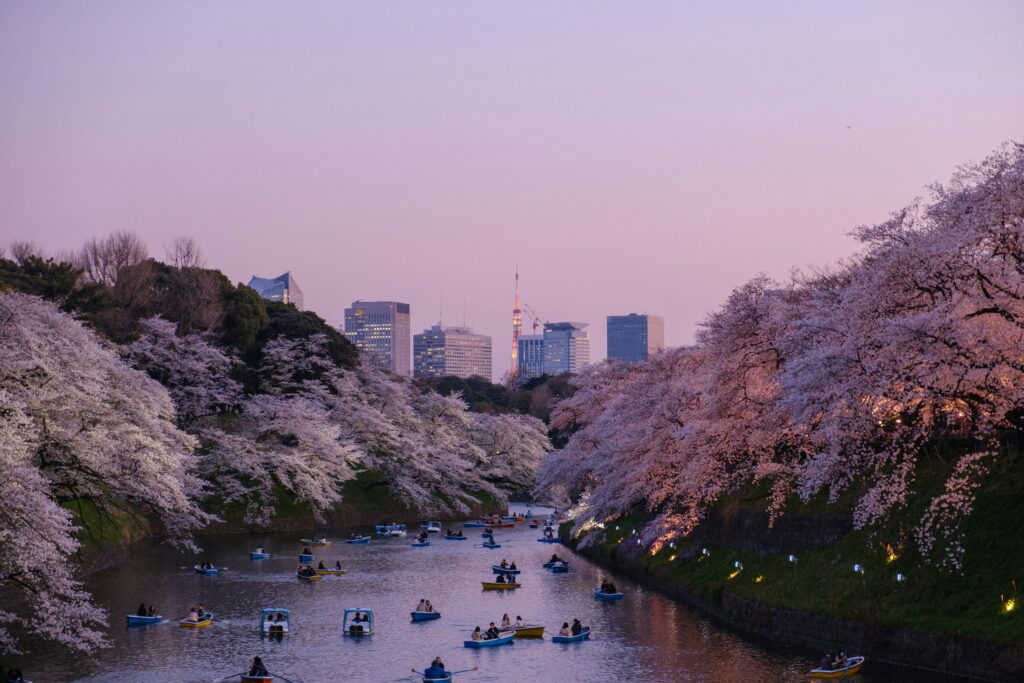
Tokyo and Kyoto do not have a monopoly on cherry blossoms. They do, however, have a talent for making spring hotel searches mildly alarming.
These ten affordable cherry blossom destinations in Japan offer credible alternatives: worthwhile blossom sites, enough to do for a two- or three-night stay and accommodation markets that compared favorably with Tokyo or Kyoto in April 2026 data. They are not ranked, because the available figures mix listed hotel rates with estimated settled rates and do not yet support a clean league table.
Nor are the dates below 2027 predictions. As of the latest planning update, official 2027 blossom forecasts had not been released. Historical timing is useful for choosing a broad travel window; it is not a promise from the trees.
First, what “affordable” means here
A city with a cheap hotel and an expensive, awkward journey is not automatically good value. This shortlist weighs spring accommodation evidence against rail or air access, car-free blossom viewing and the amount there is to do after the petals have had enough.
In one April 2026 city comparison, average daily rates were approximately ¥51,000 in Tokyo and ¥64,400 in Kyoto. Hiroshima, Nagasaki, Kagoshima, Sendai and Kanazawa were lower, ranging from roughly ¥23,300 to ¥33,700. A separate dataset placed Okayama, Takamatsu and Niigata between approximately ¥20,600 and ¥26,900.
Those figures establish a value case, not a 2027 room quote. The datasets used different hotel samples and methodologies, while Fukushima and Kochi figures came from broader prefecture-level estimates. Actual prices will depend on dates, occupancy, room type, taxes, cancellation terms, events and whether the stay falls on a peak-bloom weekend.
For 2027 bookings, compare each city against Tokyo and Kyoto using the same dates and room conditions. Then add the cost of reaching it. That last step is where some supposedly cheap places stop being cheap.
How to read Japan’s cherry blossom dates
The Japan Meteorological Agency uses sample trees for its observations. It defines first bloom as the first day five or six flowers are open, while full bloom begins when roughly 80 percent are open. Its current climate normals cover 1991–2020.
That produces three different kinds of date, which should not be mashed together:
- Historical normal: a long-term planning benchmark.
- Forecast: a dated prediction that can change as spring approaches.
- Observed date: what the sample tree actually did that year.
The distinction matters. Sendai’s historical normal is April 8 for first bloom, but in 2026 the observed date was March 31. The first Japan Weather Association forecast for 2026 appeared on January 29, followed by updates in March and April. No equivalent 2027 release schedule had been confirmed at the time of this update.
Fukushima City: strong budget signals and a broad flower season
Fukushima has one of the shortlist’s most persuasive combinations of access, blossom appeal and preliminary accommodation value. The Tohoku Shinkansen reaches the city from Tokyo in approximately 90 minutes, making this a realistic northern alternative rather than a transport project.
Hanamiyama is the main draw: a free-to-enter hillside flower destination with multiple cherry varieties and other flowering species. Its usual viewing period is described as late March through mid-April, broader than the bloom period of a single sample tree. Shinobuyama adds another city blossom option, while nearby onsen, food and sake experiences can fill a second day.
Fukushima Prefecture’s estimated April 2026 settled average daily rate was approximately ¥7,425 for city hotels and ¥6,222 for business hotels, excluding tax. Those are category-level prefectural estimates, not bookable Fukushima City prices, but they signal a potentially substantial saving.
The catch: Hanamiyama’s paths include inclines, and traffic controls apply during the busiest period. A seasonal bus ran from Fukushima Station in 2026, but its operating dates changed as flowers developed early. Check the 2027 bus period, fare and any environmental cooperation charge before booking.

Okayama City: easy rail access and more than a day-trip base
Okayama is one of the easiest choices for travelers entering through Kansai. It is a major Sanyo Shinkansen hub, approximately 45 minutes from Shin-Osaka, and its central blossom sights do not require a car.
Sakura Road follows the Asahi River, with Okayama Castle and Korakuen Garden nearby. Korakuen is reached from Okayama Station by bus or tram followed by a short walk. The river offers a free outdoor option; the garden and castle charge admission.
Late March to early April is the sensible historical planning window, pending a dated 2027 forecast. April 2026 data placed Okayama around ¥20,600 in an OTA-listed-rate comparison. A separate prefecture-level estimate was much lower because it measured settled rates and used different hotel categories. That mismatch is precisely why the numbers should not be blended into a definitive ranking.
Okayama also earns its place by functioning as a base for Kurashiki and Setouchi destinations. Just remember that island ferries, art admissions and event-driven hotel demand can erode the savings. Check the 2027 Setouchi event calendar before treating any particular weekend as a bargain.
Hiroshima City: central blossoms and convincing overall value
Hiroshima is not undiscovered, and nobody should pretend otherwise. What it offers is a practical city break in which the blossoms, transport and major sights occupy the same compact urban area.
Peace Memorial Park and the riverside core provide free, centrally located blossom viewing. From Hiroshima Station, the streetcar takes roughly 20 minutes to the Atomic Bomb Dome area, followed by a short walk. The city’s museums, historical sites and food scene easily support several nights, while Miyajima works as an optional day trip.
The 1991–2020 planning average cited by JNTO places first bloom around March 25. Full bloom comes later, but do not assume a fixed interval; use the current 2027 forecast once released.
Hiroshima had one of the clearest city-level accommodation advantages in the research. April 2026 comparisons put its average daily rate at approximately ¥24,000–¥24,100, against ¥51,000 in Tokyo and ¥64,400 in Kyoto. Rates were rising year over year, so repeat the comparison before booking.
The catch: peak weekends can still be busy, and staying on Miyajima may cost considerably more than using a central Hiroshima hotel. Keep those searches separate.

Takamatsu: a compact Shikoku base with a serious garden
Takamatsu makes sense for travelers who want blossoms plus a wider Setouchi itinerary. Its headline site is Ritsurin Garden, reached by JR, Kotoden train or bus. Adult admission was listed at ¥500.
The JMA 1991–2020 normal for first bloom is March 27, making late March to early April the broad planning period until the 2027 forecast arrives. Spring evening illumination may extend visiting hours, but dates need annual confirmation.
An April 2026 listed-rate comparison placed Takamatsu’s average daily rate at approximately ¥26,900. That was below the cited Tokyo and Kyoto figures, although not as low as the preliminary evidence for Fukushima, Kochi or Okayama.
JR Takamatsu Station is about one hour by rapid train from Okayama, the nearest major Shinkansen hub. The city can also anchor trips to Naoshima, Teshima, Shodoshima and local udon stops.
The catch: ferries and island admissions increase the daily budget. Major art events can also push up hotel demand, so Takamatsu is not reliably cheap on every spring date.
Kochi City: early blossoms around an original castle
Kochi is one of the earlier options on this list. JMA’s 1991–2020 normals put first bloom around March 22 and full bloom around March 30, although annual variation can shift both dates.
The central draw is Kochi Castle, where cherry trees surround one of Japan’s surviving original castles. Kochijo-mae tram stop is about three minutes away on foot, and adult admission to the keep was ¥500. Hirome Market, the Sunday Market, museums and the local food scene give the city enough depth for at least two nights.
Kochi Prefecture’s estimated settled accommodation rate averaged approximately ¥7,649 during April–June 2026, excluding tax. That is encouraging budget evidence, but it covers the prefecture and multiple accommodation categories. It is not a guaranteed Kochi City hotel rate for blossom season.
The catch: Kochi is less straightforward by rail than Okayama or Hiroshima. Travelers connect from the Shinkansen at Okayama to an express train, while direct domestic flights may work better for some itineraries. Compare the full transport cost before celebrating the hotel saving.
Nagasaki City: low 2026 rates and plenty beyond the blossoms
Nagasaki had the lowest city-level average in the main April 2026 comparison: approximately ¥23,300. That was less than half the cited Kyoto figure, although it remains a market average rather than a consumer price promise.
Tateyama Park has roughly 700 cherry trees and sits about 15 minutes by bus from Nagasaki Station. Official guidance describes late March to early April as the usual viewing period. Dejima, Glover Garden, the peace sites, historic churches and the harbor landscape provide ample reasons to stay after the picnic sheets are folded away.
Nagasaki can be reached through Nagasaki or Fukuoka airports. Rail journeys from Hakata use the current Nishi Kyushu corridor and may require a transfer depending on the service. Check the 2027 JR Kyushu timetable rather than relying on older descriptions of through trains.
The catch: this is a hilly city, and Tateyama Park includes slopes and uneven surfaces. Blossom-season parking becomes paid, though bus access makes a car unnecessary for the park itself.

Niigata City: a later historical window with direct Tokyo trains
Niigata is useful for travelers whose dates fall after the typical late-March windows farther south. Its JMA 1991–2020 normal for first bloom is April 8, although observed conditions and full bloom must be checked against 2027 reports.
Hakusan Park and the adjacent Air Gardens provide central cherry blossoms. The park is accessible by bus from Niigata Station to City Hall followed by a short walk, or on foot from Hakusan Station. Sake, seafood and nearby cultural venues give the city substance beyond one park.
An April 2026 OTA-listed-rate comparison placed Niigata at approximately ¥26,400, below the corresponding Tokyo and Kyoto benchmarks. From Tokyo, the city has direct Joetsu Shinkansen service.
The catch: Niigata is less convenient from Kansai. Rail trips from Osaka, Kyoto or Nagoya require routing through Tokyo or Kanazawa. Sado Island can make a rewarding extension, but ferry fares, local transport and the time commitment should sit outside the core budget calculation.
Sendai: value based on convenience, not rock-bottom prices
Sendai belongs here because it combines a later historical bloom period, fast rail access and enough attractions for a proper stay. It is not one of Japan’s cheapest hotel markets.
JMA’s 1991–2020 normals are April 8 for first bloom and April 13 for full bloom. In 2026, however, the observed dates were March 31 and April 4. That week-plus difference is an excellent warning against treating climate averages as an itinerary guarantee.
Tsutsujigaoka Park contains several cherry varieties and is approximately three minutes on foot from JR Tsutsujigaoka Station. Elsewhere, Aoba Castle sites, Zuihoden and the city’s food scene can fill another day. Matsushima and Yamadera are possible extensions at additional transport cost.
Sendai is directly connected to Tokyo by the Tohoku Shinkansen and has rail access from Sendai Airport. Its April 2026 average daily rate was approximately ¥32,300, compared with ¥51,000 in Tokyo and ¥64,400 in Kyoto.
The catch: that discount pays for convenience and trip depth rather than bargain-basement lodging. Regional blossom excursions and peak-weekend demand can raise the total cost.

Kanazawa: a Kyoto alternative, not Japan’s cheapest spring city
Kanazawa offers one of the strongest combinations of blossoms, gardens and traditional architecture outside Kyoto. Kenrokuen, Kanazawa Castle Park, the Asanogawa River, teahouse districts, museums and markets comfortably support a two- or three-night stay.
The JMA 1991–2020 normal for first bloom is April 3, while local guidance broadly describes early April as the main season. Different cherry varieties may extend viewing beyond the sample tree’s peak.
April 2026 accommodation comparisons placed Kanazawa at approximately ¥30,800–¥33,700, depending on the sample and methodology. That was below Tokyo and Kyoto, but above lower-priced alternatives such as Hiroshima and Okayama. The correct pitch is better value than Kyoto, not cheapest in Japan.
Kanazawa is approximately two hours 30 minutes from Tokyo by Hokuriku Shinkansen. From Osaka or Kyoto, travelers take the limited express to Tsuruga and transfer to the Shinkansen. Buses connect Kanazawa Station with Kenrokuen, whose standard adult admission was ¥320.
The catch: popularity and a short peak can put serious pressure on room rates. Kenrokuen offered free entry and illumination during peak blossom dates in 2026, but the 2027 period will depend on conditions and should not be assumed in advance.
Kagoshima City: best folded into a wider Kyushu trip
Kagoshima combines cherry blossoms with Sakurajima views, ferries, volcanic landscapes, hot springs and Sengan-en. It offers far more than a one-park stop, particularly for travelers already moving through Kyushu.
JNTO lists the 1991–2020 average first-bloom date around March 26. At Yoshino Park, species matter: Kawazu cherries can flower in late February, while standard cherry trees appear later. Do not confuse the two when choosing dates.
Yoshino Park is free and has broad views toward Sakurajima. However, current English-language tourism information does not establish a sufficiently clear public-bus itinerary from central Kagoshima. Until a current route and frequency are verified, the park should not be sold as effortlessly car-free.
Kagoshima-Chuo is connected to Hakata by Kyushu Shinkansen, and Kagoshima Airport handles domestic and international services. The city’s April 2026 average daily hotel rate was approximately ¥28,200, below the Tokyo and Kyoto benchmarks but sharply higher than the previous year.
The catch: reaching Kagoshima from Tokyo can outweigh the accommodation saving unless airfare is favorable. It makes the strongest budget sense as part of a Kyushu itinerary.
There is no single cheapest place to see cherry blossoms in Japan. The useful choice depends on your gateway, dates and tolerance for transfers.
- For straightforward rail access: compare Fukushima from Tokyo, Okayama or Hiroshima from Kansai, and Sendai for a historically later window.
- For the strongest preliminary lodging-value signals: start with Fukushima, Okayama, Kochi, Hiroshima and Nagasaki, while respecting the differences in the underlying hotel data.
- For Kyoto-style garden and architecture appeal: Kanazawa is the obvious comparison, but only if 2027 rates remain meaningfully lower.
- For wider regional trips: Takamatsu suits Setouchi plans, while Kagoshima is more persuasive within Kyushu than as a standalone detour from Tokyo.
Before paying, rerun identical hotel searches for Tokyo, Kyoto and your chosen alternative. Match the dates, occupancy, room type, taxes and cancellation policy; compare weekdays with Friday and Saturday; then add point-to-point transport and admission costs. Finally, check a dated 2027 blossom forecast rather than building the trip around a historical average. That is less romantic than trusting a pastel-colored calendar, but considerably more useful.