This seven-day route gives Vienna, Salzburg and Munich two nights each, with daytime trains and no rental car. It works best from late November to mid-December 2026, but several closure dates and a major rail timetable change require more attention than the fairy lights might suggest.
Route at a glance
- Day 1: Arrive in Vienna; visit Rathausplatz and, if energy permits, Stephansplatz.
- Day 2: Schönbrunn in daylight, followed by Art Advent at Karlsplatz or Spittelberg after dark.
- Day 3: Late-morning direct train to Salzburg; visit the Domplatz and Residenzplatz market that evening.
- Day 4: Explore Salzburg Old Town and Stern Advent; add Hellbrunn in the late afternoon if it is operating.
- Day 5: Direct train to Munich; spend the evening around Marienplatz and either the Residenz or Medieval Market.
- Day 6: Return to the Medieval Market and Marienplatz after dark, or swap one central stop for Haidhausen.
- Day 7: Depart from Munich.
Two nights per city is the sensible balance. It provides one arrival evening and one full day in each place without reducing the trip to stations, hotel check-ins and frantic encounters with hot wine.
An open-jaw flight into Vienna and out of Munich avoids backtracking. Vienna Airport has Railjet trains to Wien Hauptbahnhof every 30 minutes, with a scheduled journey of about 15 minutes. Munich Airport is roughly 40 minutes from München Hauptbahnhof on the S1 or S8. Reversing the route is still perfectly workable if the airfare or flight schedule is substantially better.
Choose your 2026 dates carefully
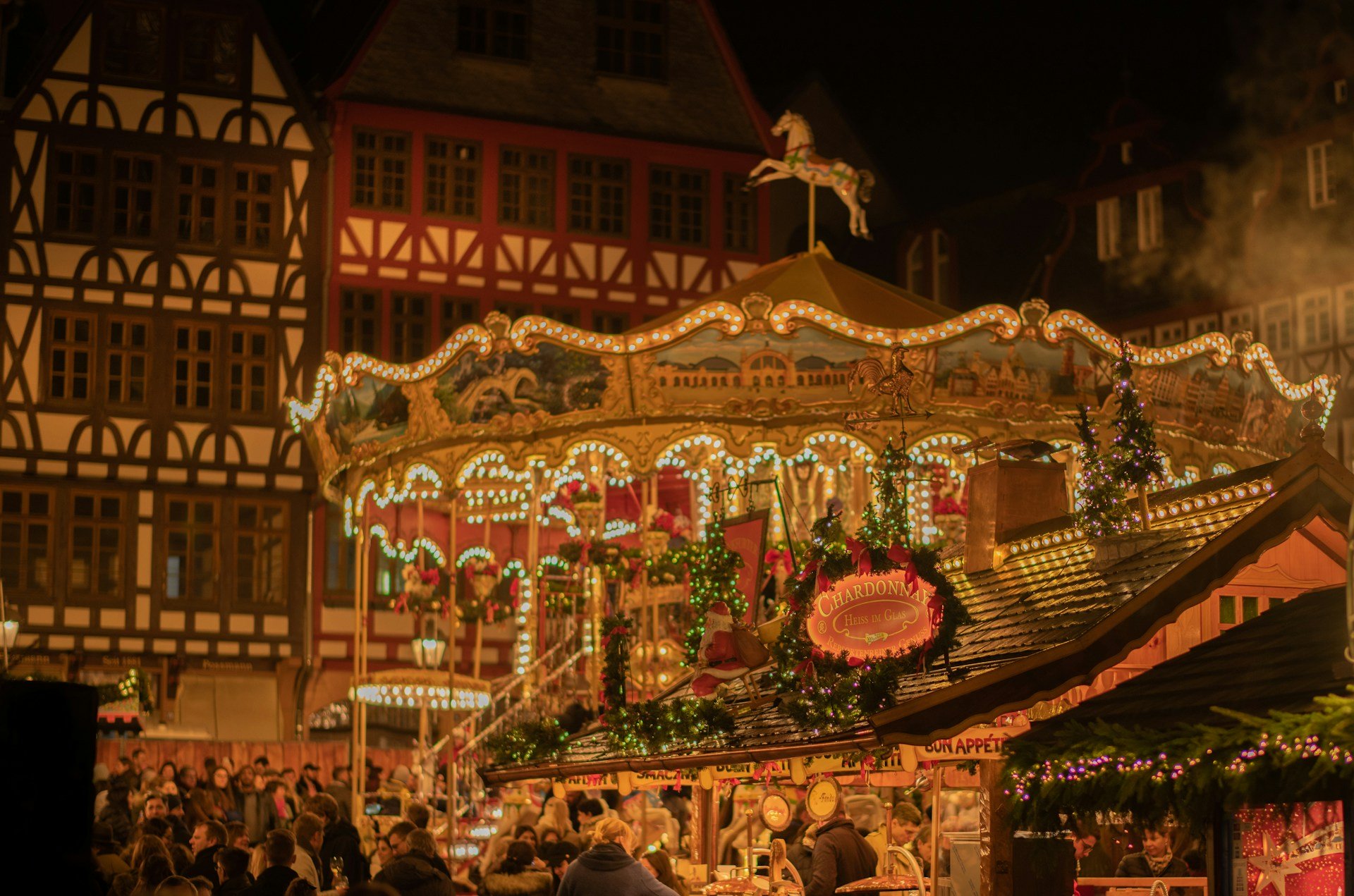
The cleanest start window is approximately November 19 to December 17, 2026. Salzburg’s principal market opens November 19, while Munich’s main markets open November 20. Starting by December 17 also puts the Munich portion before the sharp reduction in market choice around December 23 and 24.
There are two particularly important catches:
- November 22: Munich’s major Christmas markets are completely closed for Totensonntag. Do not schedule either Munich market day then.
- December 13: The European rail timetable changes. Salzburg–Munich services must be checked for the exact travel date rather than treated as one unchanging schedule.
Trips covering December 24–26 need a modified plan. Munich’s Marienplatz and Haidhausen markets close at 14:00 on December 24 and do not continue on December 25 or 26. The Medieval Market finishes on December 23.
Vienna and Salzburg retain selected options. Rathausplatz in Vienna opens until 18:30 on December 24, while Schönbrunn continues after Christmas with reduced hours. Salzburg’s Domplatz and Residenzplatz market opens from 11:00 to 18:00 on December 25 and 26. Restaurants, shops and transport may follow special holiday schedules, so reserve meals and verify each venue rather than assuming ordinary service.
Days 1 and 2: Vienna’s spectacle, crafts and palace setting
Day 1: Arrival and Rathausplatz
After checking in, begin at the Viennese Christmas Market at Rathausplatz. It runs from November 13 to December 26, 2026, normally from 10:00 to 22:00. On December 24 it closes at 18:30.
This is the large-scale opening act: a central Ringstrasse location, skating and the sort of illuminated municipal grandeur that makes restraint seem vaguely suspicious. It is also likely to be busiest on Friday and Saturday evenings. Treat it as Vienna’s spectacle stop, not proof that the biggest market is automatically the most rewarding.
If arrival time and energy allow, continue toward Stephansplatz. Otherwise, stop. Seven-day itineraries unravel when the first evening becomes an endurance event.
Day 2: Schönbrunn, then Karlsplatz or Spittelberg
Travel to Schönbrunn in the morning or around lunchtime. The palace market runs from November 6, 2026, to January 6, 2027, opening daily from 10:00 to 21:00 during Advent. It closes at 16:00 on December 24 and operates from 10:00 to 19:00 from December 25 through January 6.
Schönbrunn requires a dedicated U-Bahn journey west, but the palace forecourt supplies a setting that central street markets cannot. Market entry is free; palace visits and Imperial Lights cost extra. Do not attempt to cram Schönbrunn and every central Vienna market into one evening.
After dark, choose between Spittelberg and Art Advent at Karlsplatz. Karlsplatz is particularly efficient for travelers staying in Wieden and has an official emphasis on art and crafts. In 2026 it runs from November 13 to December 23; stalls close at 20:00 and food service at 21:00. Go there before dinner rather than leaving it until the end of the night.
Days 3 and 4: Salzburg’s compact Old Town and optional palace excursion
Day 3: Train to Salzburg and the principal market
Take a direct late-morning train, leaving time for breakfast and avoiding an unnecessarily early hotel departure. Vienna–Salzburg usually takes about two and a half hours. Check whether the chosen service leaves from Wien Hauptbahnhof or Wien Westbahnhof; the distinction matters.
After checking in around Neustadt or Mirabell, walk or take a trolleybus into the Old Town for the Salzburg Christkindlmarkt at Domplatz and Residenzplatz. This is the essential Salzburg stop because it combines the historic center with programmed choirs, tower brass and seasonal events without requiring another excursion.
The market runs from November 19, 2026, to January 1, 2027. Standard hours are 10:00–20:30 Monday to Thursday, 10:00–21:00 Friday, 09:00–21:00 Saturday and 09:00–20:30 on Sundays and holidays. Holiday hours differ: 09:00–15:00 on December 24 and 11:00–18:00 on December 25 and 26.
Day 4: Old Town, Stern Advent and Hellbrunn
Use the morning and early afternoon for Salzburg’s Old Town, then duck into Stern Advent between Getreidegasse and Griesgasse. Its courtyard setting provides a more enclosed contrast to the larger squares, but it is a complementary stop rather than a half-day destination. It runs from November 19 to January 6, normally 11:00–19:00 Sunday to Thursday and 11:00–20:30 Friday and Saturday.
For a bigger change of scene, spend late afternoon at Hellbrunner Adventzauber. The palace grounds, lighting and children’s activities make it the strongest Salzburg add-on for families. Entry costs €8 per person through 19:00 and includes one hot drink; children up to six enter free. Admission is free after 19:00 and on December 24.
Hellbrunn runs from November 19 to December 24 but is normally closed on Mondays. Hours are 13:00–20:00 Tuesday to Friday and 10:00–20:00 on weekends and December 8. December 21 is a special Monday opening; December 24 hours are 10:00–14:00. Because it requires a bus trip and more outdoor walking, skip it if your priority is food stalls rather than the palace setting.
Days 5 to 7: Munich’s central markets and a neighborhood alternative
Day 5: Salzburg to Munich and Marienplatz
Take a direct daytime train to Munich. Depending on the service and date, the journey takes roughly 1 hour 36 minutes to just over two hours. Border controls apply on international trains entering Germany, so keep a passport or identity card accessible and leave some tolerance for delays.
Begin Munich at the Münchner Christkindlmarkt at Marienplatz. The market spreads through Marienplatz, Rindermarkt and the Kripperlmarkt near St. Peter, making it less a single square than a central-city circuit.
It runs from November 20 to December 24, 2026, from 10:00 to 21:00 Monday to Saturday and 10:00 to 20:00 Sunday. It is closed on November 22 and finishes at 14:00 on December 24.
If there is time, continue toward the Residenz or Wittelsbacherplatz. Both are close enough to reach on foot; no elaborate transit strategy is required.
Day 6: The Medieval Market and Munich after dark
Center the full day on the Medieval Market at Wittelsbacherplatz. Its theatrical stalls, performances, demonstrations and medieval-styled food make it Munich’s clearest contrast to Marienplatz. It operates from November 20 to December 23, daily from 11:00 to 21:00, except for the November 22 closure.
Return to Marienplatz after dark, when the town-hall backdrop and central tree have their greatest visual impact. Travelers who would rather avoid spending both evenings in the Altstadt can substitute the Haidhausen Christmas market at Weißenburger Platz. Its roughly 50 huts and neighborhood setting are particularly convenient for anyone staying near München Ost or arriving on Westbahn.
Haidhausen runs from November 20 to December 24, normally 11:00–21:00. It closes on November 22 and operates from 10:00 to 14:00 on December 24.
Day 7: Departure
Allow about 40 minutes for the S1 or S8 journey from München Hauptbahnhof to Munich Airport under normal conditions. The two lines combine for an approximate 10-minute interval, but construction, winter conditions and airport formalities remain excellent reasons not to engineer a dramatic final morning.
Three markets worth prioritizing
If time or weather cuts the plan down to one headline market in each city, prioritize these for setting and itinerary logic rather than any dubious claim of objective superiority:
- Vienna: Schönbrunn. It provides the imperial setting that most clearly distinguishes Vienna, remains open after Christmas and works naturally as a half-day excursion. Choose Karlsplatz instead if crafts and transport efficiency matter more than palace scenery.
- Salzburg: Domplatz and Residenzplatz. It occupies the Old Town core, has the city’s most extensive programmed events and requires no suburban transfer.
- Munich: Marienplatz. It is the city’s central anchor and pairs easily with the nearby Medieval Market, producing two visibly different experiences in one walkable circuit.
Rathausplatz in Vienna remains worthwhile for sheer scale, but it need not consume both Vienna evenings. Salzburg’s Mirabellplatz is convenient near the station but expendable on a short trip. Munich’s Residenz market is attractive and central, though it overlaps more with the traditional and family-oriented offer elsewhere.
Train cheat sheet
Vienna to Salzburg
ÖBB advertises two direct trains per hour from Wien Hauptbahnhof. Westbahn advertises 28 daily direct trains from Wien Westbahnhof, normally taking about 2 hours 30 minutes. These operators use different Vienna stations, and their tickets are not generally interchangeable.
Westbahn advertises advance fares from €13.99. Qualifying online bookings can include a free WestFixplatz reservation when booked up to three hours before departure, subject to availability. An ÖBB 2026 fare publication listed Sparschiene tickets from €19.90 and a €73.50 standard single fare through December 12. These are fare products, not promises that the cheapest tier will remain available for a particular Advent departure.
ÖBB Sparschiene tickets are limited, train-specific and generally non-refundable. Standard domestic ÖBB tickets are more flexible and can be canceled before their first validity day under the published conditions.
Salzburg to Munich
Through December 12, the corridor has direct regional RE5 and long-distance services, generally taking about 1 hour 40 minutes to just over two hours. The timetable changes on December 13. ÖBB has confirmed that Vienna–Munich Railjets are then rerouted via Passau rather than following the old Salzburg corridor.
From December 13, Westbahn has confirmed five daily Salzburg–Munich trains, scheduled at approximately 1 hour 36–38 minutes. The post-change BRB regional timetable was not clearly available when researched, so check the exact date in ÖBB, DB Navigator, Westbahn or BRB before booking. Do not rely on an all-season frequency copied from an older timetable.
When the Bayern-Ticket makes sense
The regional Bayern-Ticket is valid from Salzburg Hbf to Munich on eligible regional trains, but not on faster EC, Railjet or Westbahn services. In 2026 it costs €34 for one traveler, €44 for two and €10 for each additional passenger up to five. On weekdays it is normally intended for travel after 09:00.
It can be useful for groups, but it is not automatically the cheapest or fastest choice. A solo traveler booking early may find a lower long-distance saver fare. Seat reservations are sensible on busy long-distance departures, though they are not universally mandatory.
Where to stay and which local tickets help
Vienna
Wieden, the 4th district between Hauptbahnhof and Karlsplatz, offers the best compromise between train logistics and market access. Immediate Hauptbahnhof lodging is easier with luggage; the Innere Stadt is better for evening walking.
Vienna’s digital 24-hour transit ticket costs €9.70, while the digital seven-day ticket costs €25.20. For this two-night stay, 24-hour tickets may be better value unless the schedule includes three transit-heavy days.
Salzburg
Neustadt and the Mirabell area sit conveniently between Salzburg Hbf and the Old Town. The central markets are walkable, while trolleybuses 3, 5 and 6 connect the station area with Rathaus near the principal market.
A 24-hour core-zone ticket costs €5.20 from machines, online or in the app, compared with €6.40 on eligible vehicles. It is particularly easy to justify on the Hellbrunn day; central-market days may require little transport.
Munich
Karlsplatz and the western Altstadt provide better market access than the immediate Hauptbahnhof area. The main station remains convenient, but ongoing construction affects the walking environment and may restrict locker availability. Haidhausen or Ostbahnhof is a viable base for Westbahn users and anyone prioritizing the Haidhausen market.
A Zone M day ticket costs €10.10, while the Zone M group day ticket is €19.70. Buy one only when the day’s rides justify it. Munich Airport requires the wider M–5 ticket, costing €17.50 for one traveler or €32.60 for a group in 2026.
What to book now, and the traps to avoid
Book ahead
- Open-jaw flights: Vienna inbound and Munich outbound eliminate a return rail leg.
- All six hotel nights: No stable 2026 hotel-price comparison supports a useful city-by-city budget, but the seasonal demand makes committing to suitable locations more important than chasing a theoretical cheapest city.
- Fixed-fare intercity tickets: Buy early when the savings justify losing flexibility.
- Long-distance seat reservations: Recommended for busy Advent trains, but not a blanket requirement.
- Holiday meals: Reserve restaurants for December 24–26 and verify their exact opening hours.
- Timed extras: Book Imperial Lights separately if wanted, and schedule Hellbrunn only after checking its operating day.
Biggest planning traps
- Confusing Wien Hauptbahnhof with Wien Westbahnhof.
- Assuming an ÖBB or DB ticket can be used on Westbahn.
- Using the same Salzburg–Munich timetable on both sides of December 13.
- Arriving in Munich for the markets on November 22.
- Expecting Munich’s Christmas markets to continue through December 25 and 26.
- Scheduling Hellbrunn on a normal Monday.
- Relying entirely on cards. Salzburg’s principal market explicitly warns that card acceptance varies by stall, so carry a modest amount of euro cash.
- Assuming one mug-deposit system applies everywhere. Deposits, designs and refund arrangements vary by market.
- Expecting guaranteed snow. White Christmases have become less frequent at low elevations; prepare for cold rain, damp paving and freeze-thaw conditions as well.
Station lockers are available at Wien Hbf and Salzburg Hbf. Munich Hbf also has lockers, but construction may limit availability; its traditional lockers are listed at €4–€6 for 24 hours and require coins. Do not build a tight schedule around finding an empty locker at Munich’s main station.
For accessibility, Salzburg describes its principal market as barrier-free and identifies accessible toilets. Vienna Rathausplatz and Munich Marienplatz also publish accessibility provisions. Crowds, wet stone and icy paths can still impede movement, while Hellbrunn involves more outdoor walking than the central markets.
The route works because it is simple: two nights in Vienna, two in Salzburg and two in Munich, linked by daytime trains. Keep the Vienna departure station straight, recheck Salzburg–Munich services around the December 13 timetable change and treat November 22 plus December 24–26 as special cases. Do that, and the week remains a market trip rather than a cautionary tale involving closed huts and the wrong railway terminal.