The Bernina railway is the attraction; the panoramic train is one way to experience it. Red carriages, high mountain scenery and the descent into Italy make this a tempting addition to a Switzerland itinerary. The booking pages can be less obvious: are you choosing a different route, a different train, or simply a different seat?
Both the Bernina Express and the regional alternative are official RhB services. The useful comparison is panoramic coaches with a compulsory reservation versus regular trains on the Bernina Line. First choose the section you want to travel, then choose the service that suits your day.

Choose your route before you choose your train
Chur–Tirano is the longer option, combining the Albula and Bernina railway landscapes. The Landwasser Viaduct belongs to the Albula portion: it is not something you automatically see by booking only St. Moritz–Tirano. RhB gives an approximate journey time of four hours for Chur–Tirano, subject to the selected departure and operating conditions.
St. Moritz–Tirano starts in the Engadin and concentrates on the Bernina crossing into Italy. RhB quotes approximately two hours and fifteen minutes for the panoramic service. These are planning estimates, not connection times for every regional itinerary. Compare your actual date in the official Bernina Express timetable.
If you are already staying near St. Moritz, starting there keeps the trip focused. If you want the Albula railway as well, look at a Chur departure and confirm the routing. A shorter itinerary can be the better fit when the alternative means rushing to reach the mountains.
Panoramic or regional: what actually changes?
| Decision | Bernina Express panoramic coaches | RhB regional trains |
|---|---|---|
| Railway | Bernina corridor, with a longer Chur option | The same Bernina Line between St. Moritz and Tirano |
| Windows | Large panoramic windows curving into the roof | Regular coaches rather than the panoramic product |
| Seat reservation | Compulsory in addition to a valid ticket | Optional but strongly recommended on the Bernina Line |
| Onboard extras | Wi-Fi, digital route information and at-seat catering available | No equivalent panoramic-service catering or InfoT(r)ainment package |
| Planning style | A particular reserved departure | More departures to compare when building a segmented journey |
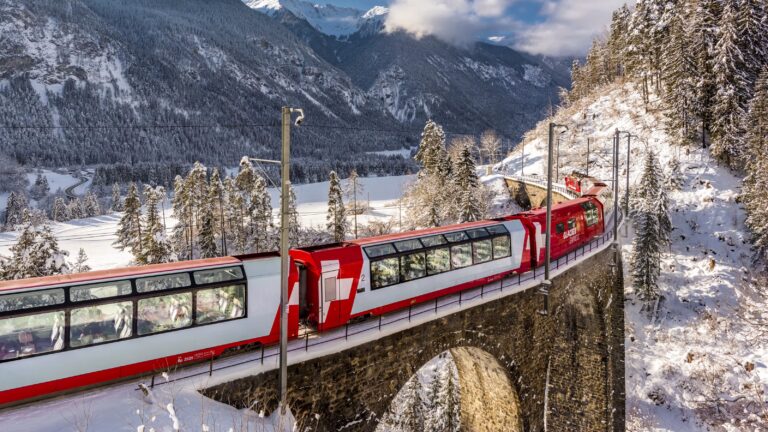
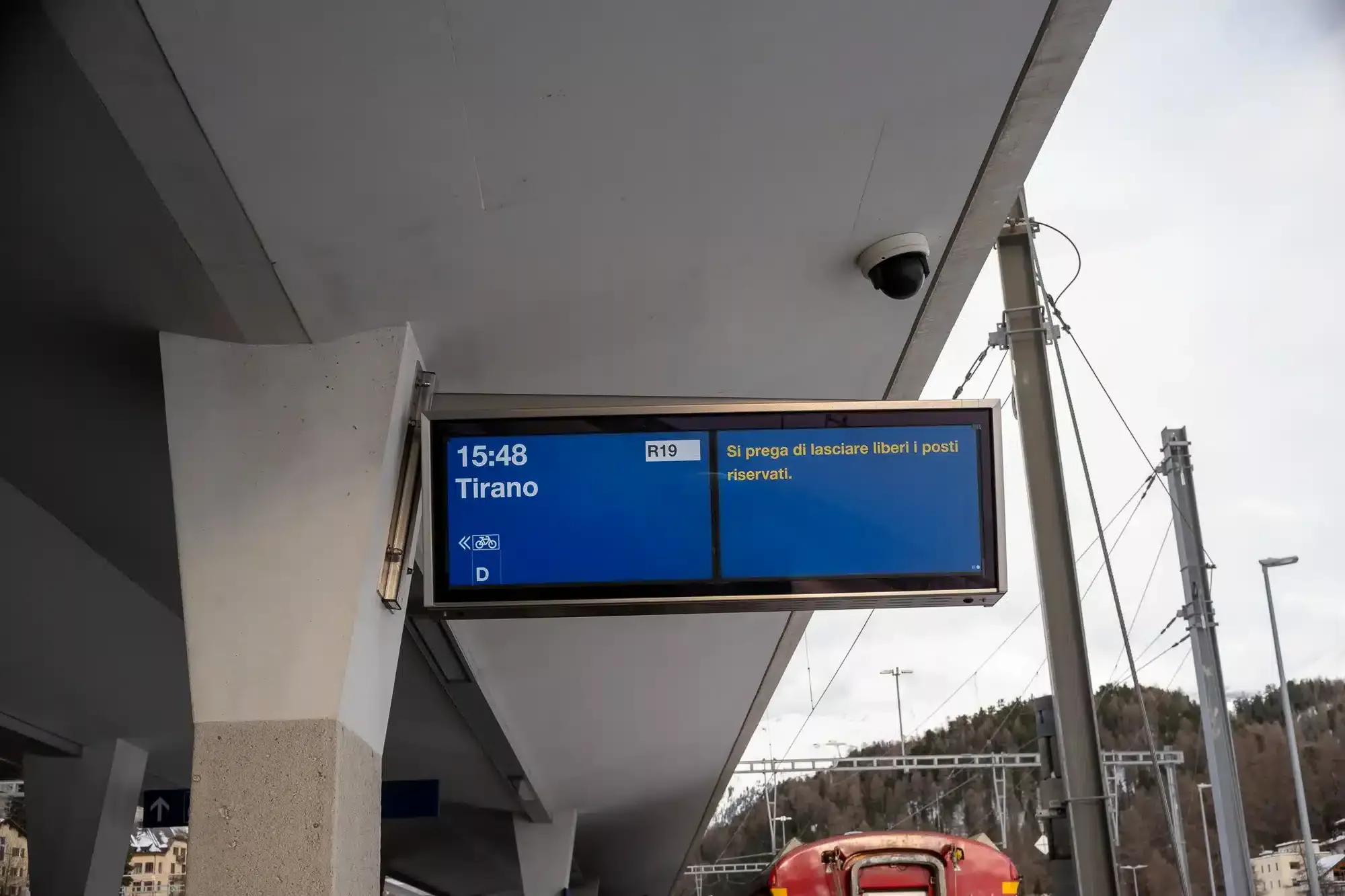
RhB explains that regional and panoramic coaches can sometimes travel together. A red train alone is not enough to identify what you booked: check the train number, coach and reservation. The operator’s guide to recognising the two services describes the panoramic windows and Bernina Express lettering, alongside the regular RhB coaches.

Tickets and reservations are two separate costs
For a panoramic-coach booking, you need a valid travel ticket and the seat reservation. If you already hold a pass valid for the journey, check its coverage before buying another rail ticket; the panoramic reservation still needs to be arranged. RhB describes how to select a reservation-only booking in its booking explanation.
The regional reservation currently costs CHF 5 per person on the Bernina Line. That is a seat reservation, not the fare for the whole journey. It is optional, although RhB strongly recommends it. The regional reservation page says you may still travel when its reserved-seat allocation is sold out, with possible waiting at busy times.
Compare the total for the same date, class and endpoints: rail fare plus any required or chosen reservation. An optional reservation does not make every regional ticket unrestricted. Before building a hop-off itinerary, check whether the ticket or pass you select allows those stops and later departures.
What scenery do you get on the Bernina section?
Choosing the regional service does not replace the Bernina Line with an unrelated railway. The shared corridor is why this comparison matters. Switzerland Tourism highlights the Montebello curve, glacier views, the lakes around Lago Bianco, Alp Grüm and the Brusio Circular Viaduct among the journey’s sights. Its Bernina Express overview also distinguishes the longer Chur journey from the St. Moritz option.
Use that geography to decide what your day needs. If the mountain crossing is the priority, protect that part of the itinerary. If a photograph of the Landwasser Viaduct is the reason you booked, confirm the Albula routing rather than assuming every Bernina-branded departure includes it. A named scenic train and the complete landscape you have in mind are not always the same booking.
Want to stop along the way? Plan the segments
For a day with a break in the mountains or a meal before continuing, compare separate regional legs instead of looking only at the first end-to-end result. RhB notes that regional services run more frequently through the day. That gives you more departures to investigate, not a guarantee that the next train will be empty or that your ticket permits every change of plan.
Write down the departure after your proposed stop and a fallback after that. Check ticket validity for both. Leave room for the walk back to the station and keep an eye on how much daylight remains. For a continuous ride with less itinerary building, a reserved panoramic journey may be worth more to you than extra stopping options.

Connecting from Zurich or continuing to Milan
The named Bernina Express rail routes finish at Tirano on the Italian side; Zurich and Milan are not its two train terminals. Treat a Zurich-to-Milan itinerary via the Bernina railway as a connected journey, and search each approach and onward leg for your travel date in the SBB journey planner.
Gil DeSaant’s photos accompanying this article come from a January 2026 journey described in his archive as Zurich to Milan via the Bernina Express. They illustrate that trip, rather than documenting a direct Zurich–Milan Bernina Express service. Allow a comfortable connection margin instead of planning around the shortest transfer a search result displays.
The separately advertised Bernina Express Bus links Tirano and Lugano. It is a different extension from continuing toward Milan; verify its operating dates and reservation before including it in your plan.
Before you book: timing, works and winter photos
RhB recommends allowing extra time when the line is busy, especially with onward connections. Its Bernina Line planning advice notes higher demand on weekends and holidays and points travellers to the timetable or SBB app for crowding information. If your dates are flexible, compare another day or departure before redesigning the whole trip.
Dated operating note, checked 12 November 2026: RhB lists a Vereina diversion for trains 951 and 952 from 29 October to 13 November 2026. That matters if you specifically want the usual Albula scenery. Read the current operator notice for your departure; this temporary diversion is not the permanent Bernina route.
The photographs here show January conditions. They are not a forecast for your travel date. For a winter trip, plan the mountain section in daylight and check current weather and service information before setting out. For photographs through the window, dark clothing and keeping the lens close to clean glass can help reduce reflections.

Which would we book?
For a continuous scenic ride with an assigned panoramic seat: choose the Bernina Express, provided its departure and total cost fit the rest of your itinerary. For a day built around separate legs or a stop: compare the regional services, reserve if useful, and check your ticket’s conditions.
For a first visit, the deciding question is often how much of the day you want to organise yourself. Neither choice makes the other an unofficial imitation. Start with your route and the time you have, then pay for the service you actually want.
Planning another Swiss rail journey? Our Glacier Express and regional-train comparison concerns a different corridor, between Zermatt and St. Moritz.
Route and booking information checked 12 November 2026. Fares, reservation conditions and engineering notices can change; confirm the dated journey with RhB before buying. Photography: Gil DeSaant, January 2026, used with permission.
Featured image: Bernina rail journey, January 2026. Photo: Gil DeSaant / personal photo archive. © Gil DeSaant. Used with permission; resized for this article.