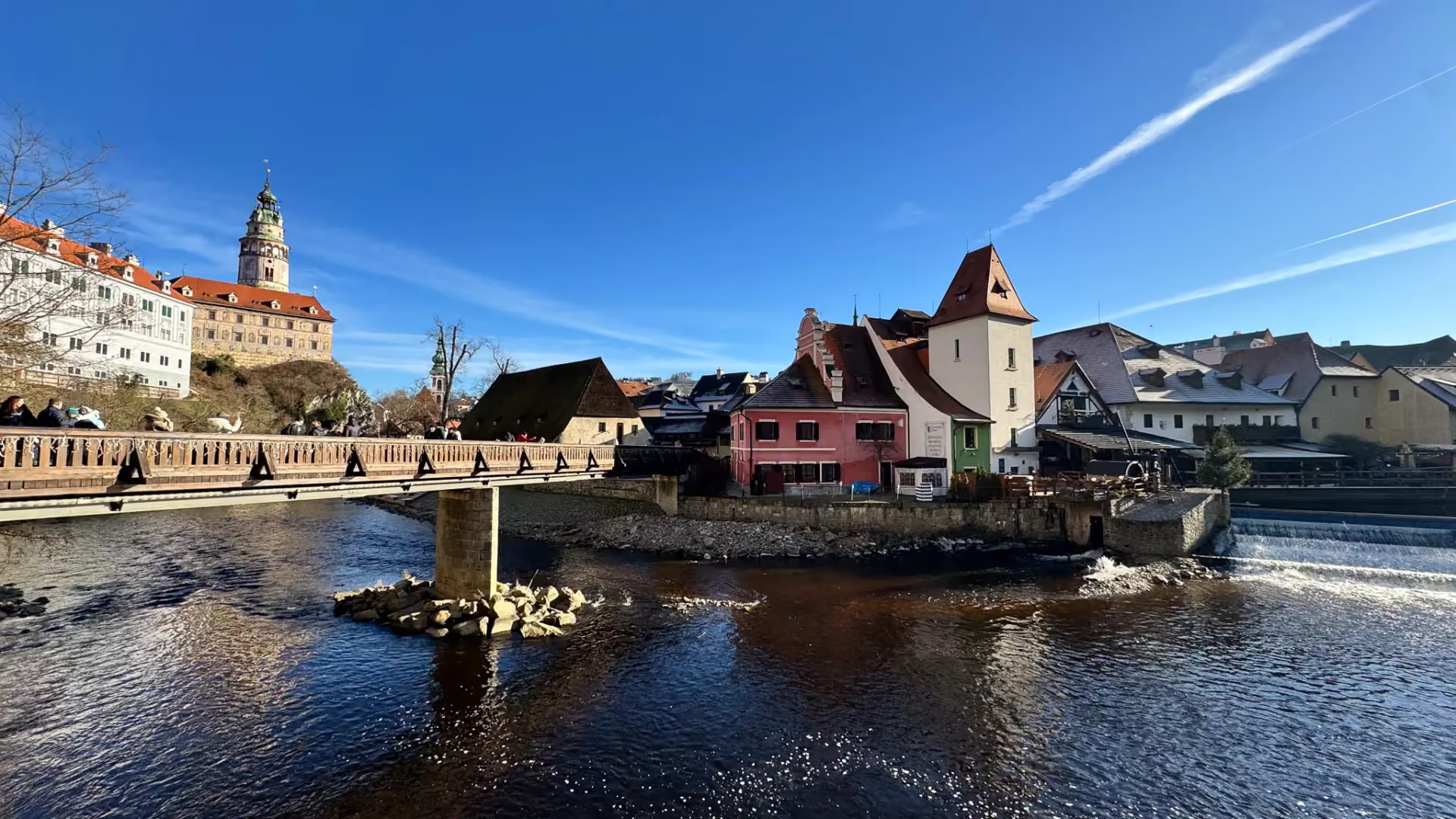
In Český Krumlov, the view changes every time you cross the water. A castle tower that fills one frame slips behind a roof in the next; a bridge turns a panorama into a close look at stone walls, windows and a restaurant terrace. The Vltava gives a walk through the town a rhythm: approach the bank, cross, climb a little, then look back.
Gil DeSaant’s Photodump 051, photographed in December 2024, follows that rhythm through blue winter skies, bare trees, cold river edges and a square with seasonal stalls. This is a photographic introduction to the town and a way to plan a more attentive walk. The pictures record that visit; they do not establish today’s opening hours or the programme for another Christmas season.
Read the river bend before making a checklist
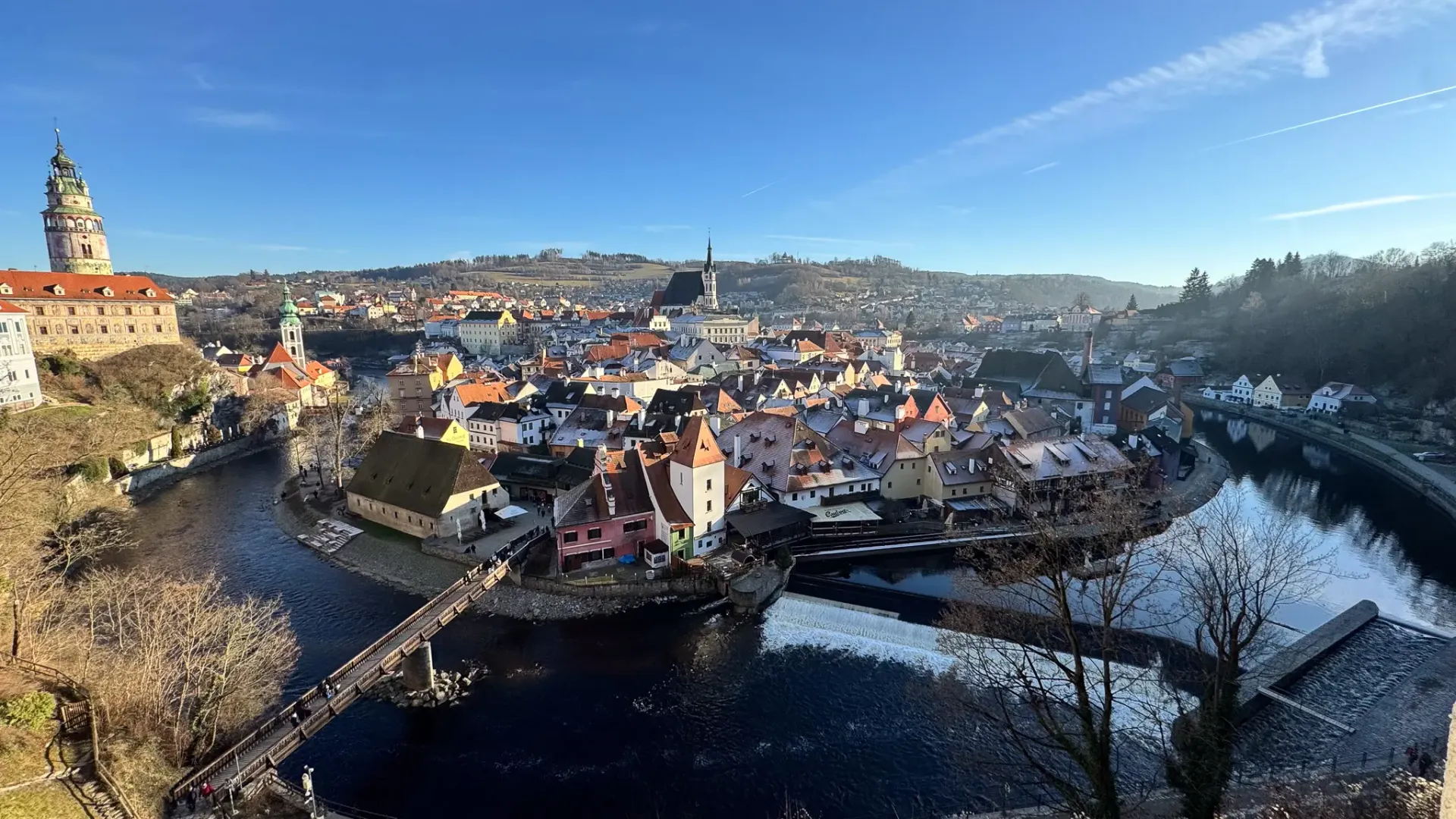
Start by finding the river and the castle on a map. The historic centre sits within a pronounced bend, while the castle occupies higher ground across the water. That relationship helps explain why a place that looks compact from above can keep turning you around at street level. A building may be close in a straight line while the useful route takes you towards a particular bridge.
The geography is central to the UNESCO description of Český Krumlov, which identifies the Vltava meander and the rocky castle slopes as important to the historic centre’s composition. Its preserved street pattern and layers of Gothic, Renaissance and Baroque architecture give you plenty to notice without turning the visit into a race between named monuments.
The elevated photographs are useful for getting your bearings. Follow the water with your eye, locate a crossing, and then look for the line of roofs behind it. Once you return to the street, those relationships become more useful than trying to remember every facade. Leave yourself room to stop on the far bank and see where you have just been.
Let the bridges change your view of the castle
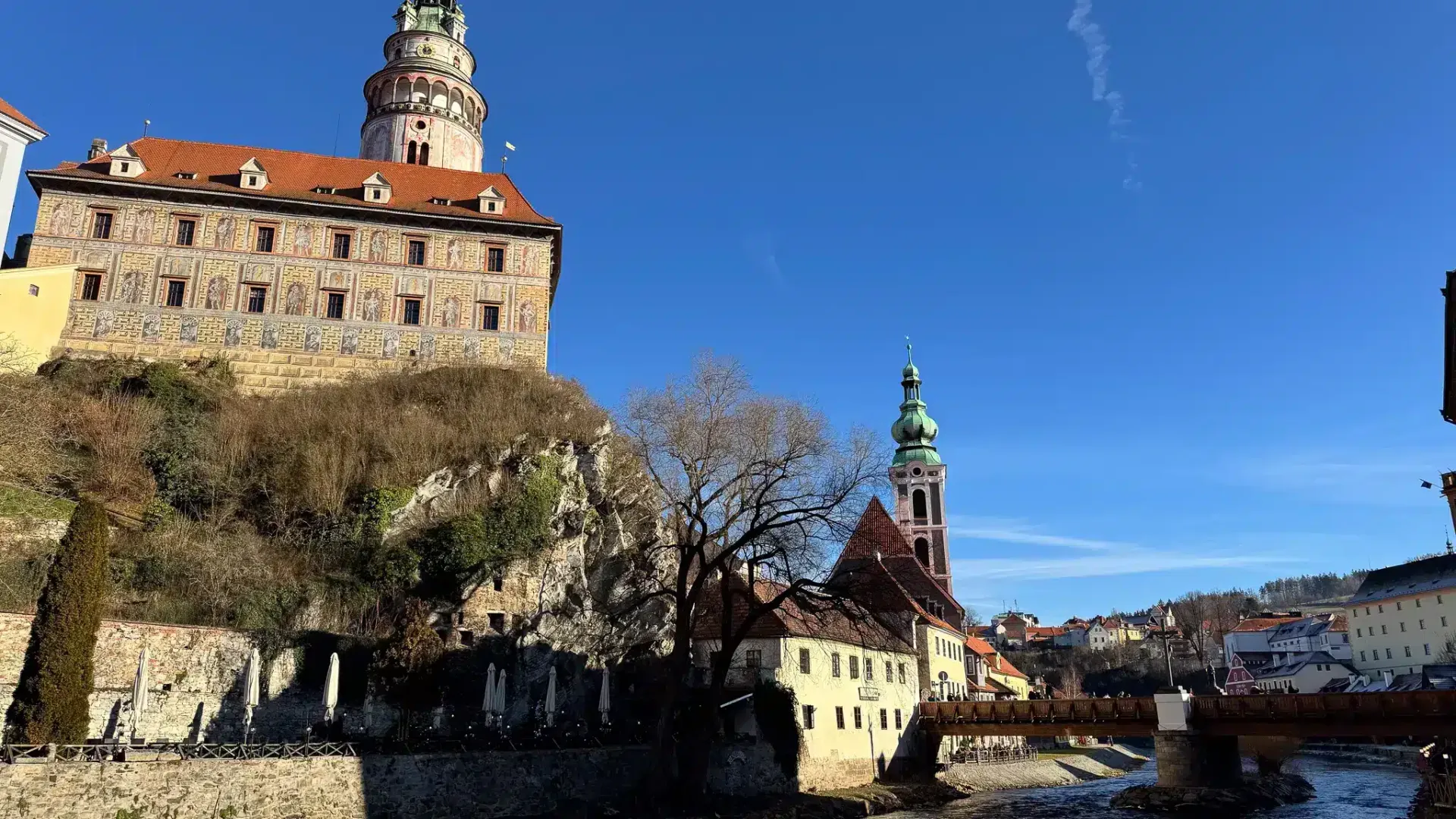
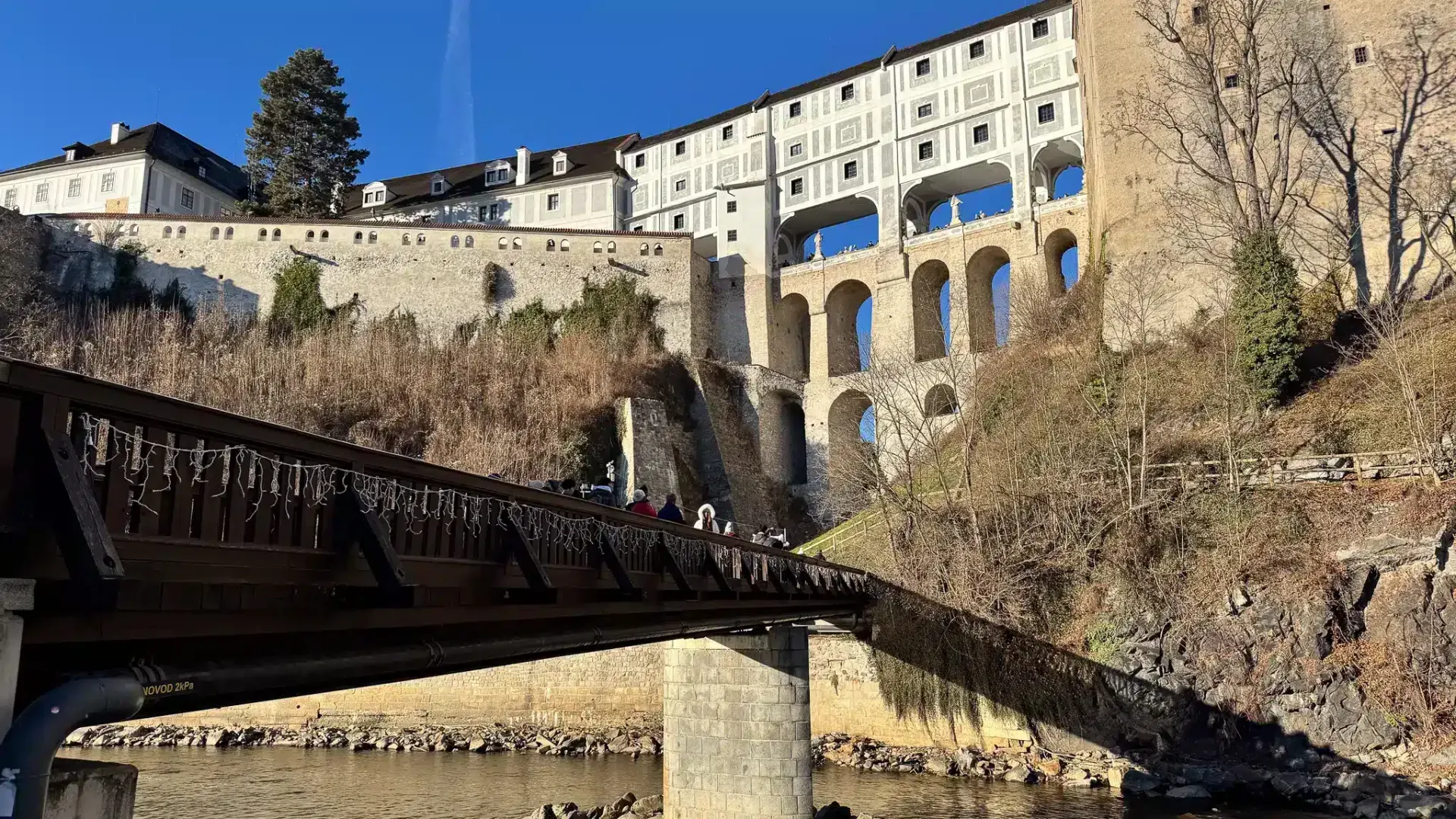
The castle rewards looking from below as well as from above. In these photographs, its long walls sit over a lower world of bridges, riverfront buildings and pedestrians. The tower supplies the familiar silhouette, but the broad supporting walls show how much ground the complex occupies. A close view can explain its scale better than another tightly cropped tower photograph.
The castle administration’s overview places the complex on a rocky promontory above the Vltava meander. That is useful context for a walk: the climb and the outlook are part of the same arrangement. Seeing the buildings from the river first gives the later view down into town something to connect with. Source: National Heritage Institute.
A bridge is a good place to compare those views, provided you keep the crossing clear. Take the wider photograph, then pay attention to a smaller relationship: the bank below a wall, the curve of the water, or a row of windows facing the opposite side. You do not need to identify the exact engineering history of every structure to notice how the town has made room for movement.
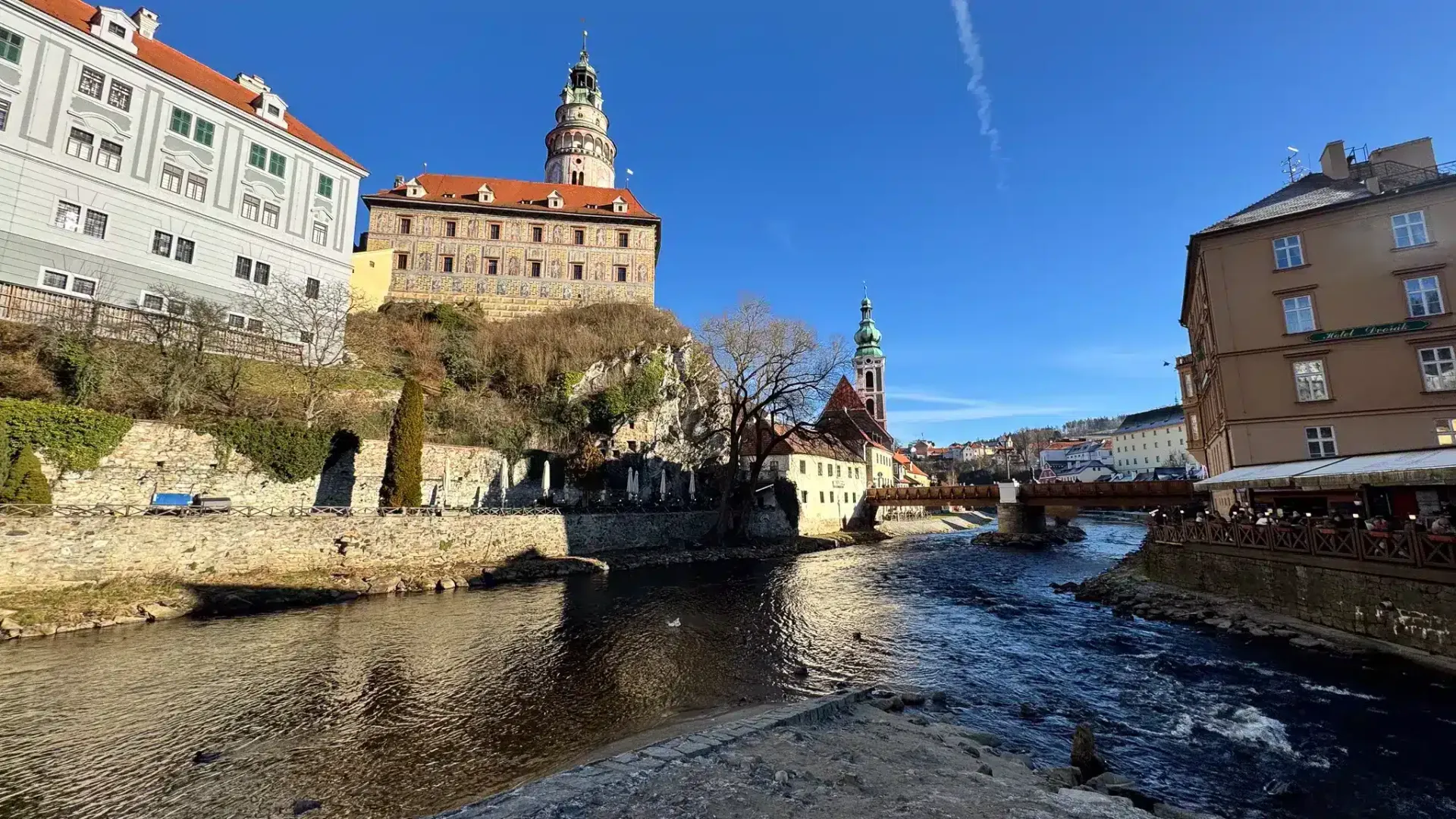
At water level, the town becomes more ordinary—and more interesting
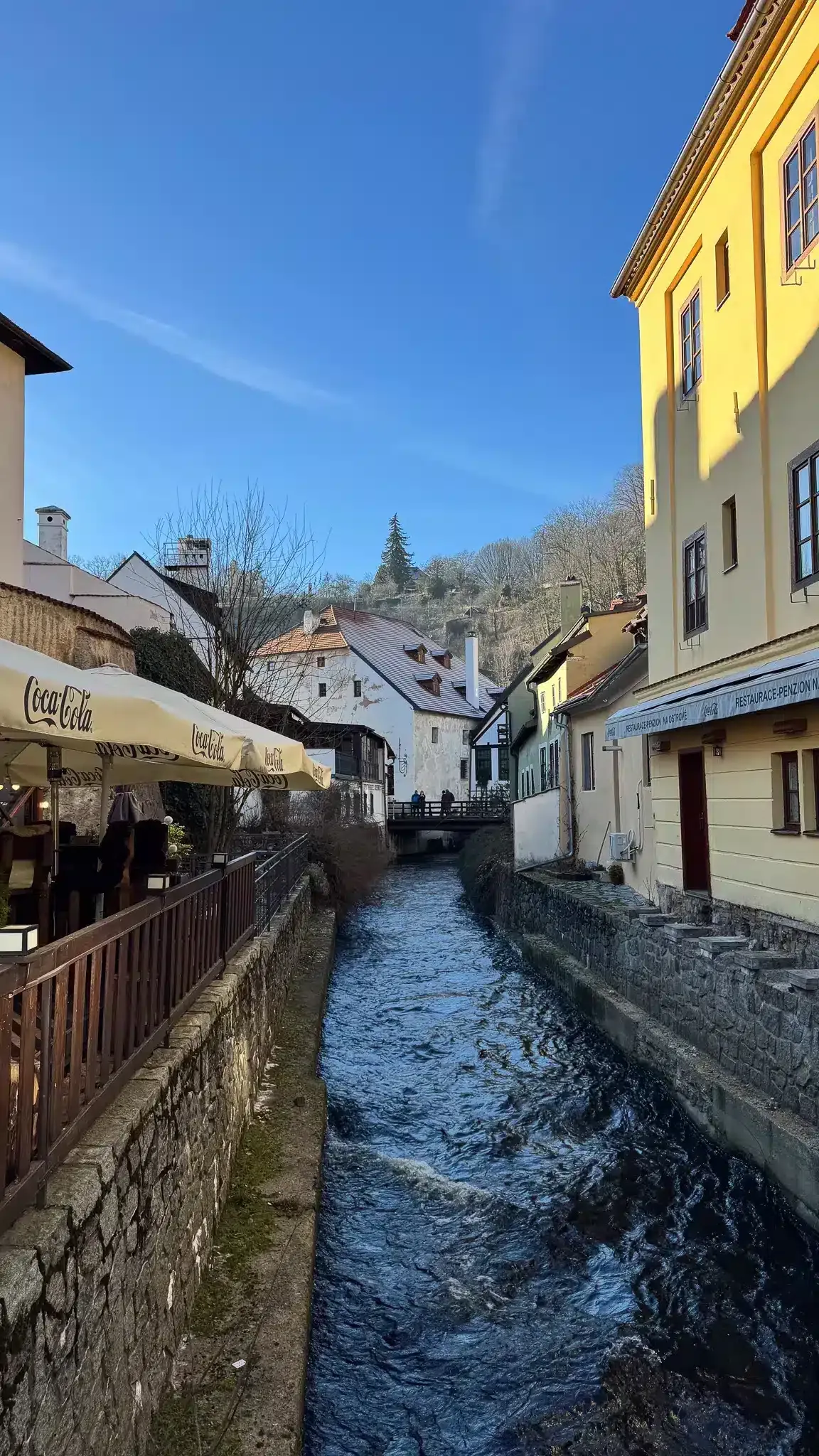
The lower viewpoints contain details that a skyline can hide: signs on hotels, terrace railings, shopfronts and the edges of neighbouring buildings. They help bring the town back to the scale of a walk. A beautiful frontage is also an address, an entrance and a place someone has to reach with luggage or a delivery.
The moving water matters to the photographs, too. Its reflections break up the strong lines of walls and roofs, while a small weir changes the texture of the surface. The pictures support looking closely at those features; they do not prove that a particular waterside business is operating today. Treat a visible name as a detail in the archive, then check a current menu or opening notice separately if you want to visit.
For a first walk, choose a stretch of river rather than a string of restaurants to chase. Allow a meal or coffee stop where it fits your day, with a look at the actual menu before sitting down. The point is to spend some time at this lower level instead of using it only as the approach to the next elevated view.
December adds another layer to the streets
The winter setting is specific without needing a blanket of snow. Bare branches expose more of the buildings behind them. Low light picks out the banks and rooflines. Coats, market stalls and the cold-looking water tell a different story from the busy summer-river images often used to introduce the town.
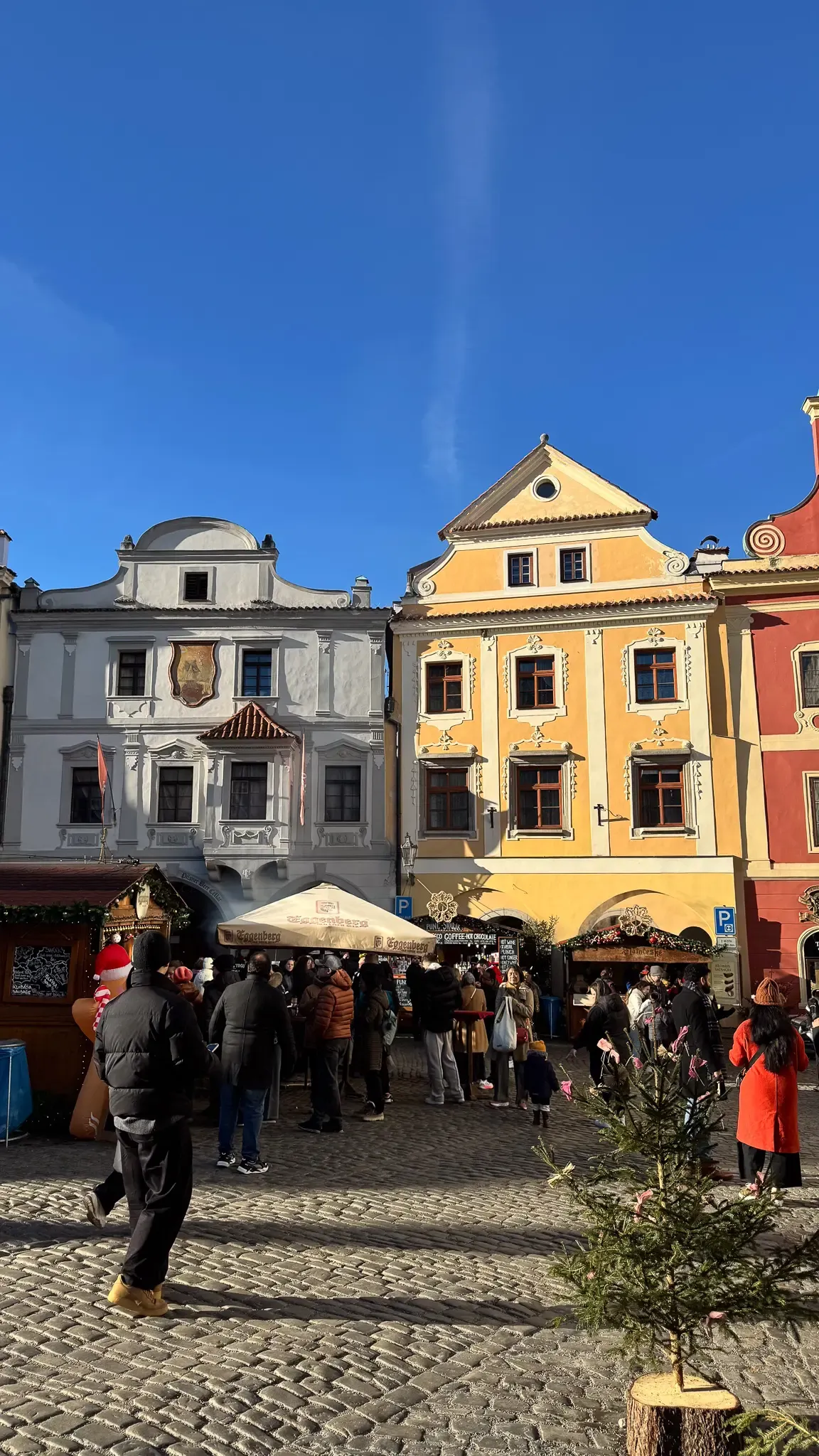
In the square, the seasonal stalls sit directly against the permanent architecture. It is an appealing change of scale: small counters and temporary signs below the taller facades. Look at the roofs and windows as well as the stalls, and leave space in the frame for the people using the square. A photograph of a market can also be a photograph of how a town makes room for one.
These are December 2024 scenes. If a Christmas market is a reason for your trip, confirm the new season’s dates through the official Advent information. Do not use the presence of stalls in an older photograph as evidence that they will be there on your arrival day.
Build the walk around a few changes of viewpoint
You can use the photographs as a way of organising attention rather than a route you must reproduce exactly. Begin with the central streets and square, move towards the river, then make a crossing before considering the higher castle area. Reverse that order if it better fits your arrival point or a booking. The useful ingredients are a lower view, a crossing and a wider outlook.
- Start close. Give the streets and square some time before looking for a panorama. Notice doorways, paving, signs and the gaps between buildings.
- Cross and look back. A short change of position can reveal a different relationship between the riverfront and the castle. Keep walking routes clear when you stop.
- Choose one higher outlook. Use it to understand the places you have already passed, then leave time to return at street level instead of collecting viewpoints in a hurry.
This is an editorial framework, not a timed walking itinerary or a guarantee of step-free access. Check the actual route if slopes, steps or uneven paving affect your plans. In cold weather, keep the last stretch flexible and allow time for an indoor break rather than committing every remaining hour to another photograph.
Check the winter visit you actually want to make
Walking through town and entering the castle’s individual attractions are separate decisions. The interiors, museum, tower and gardens have their own visiting arrangements. The castle’s official opening calendar is the right place to check the specific part you want to see. Avoid the broad claim that the whole complex is open in winter. Source: National Heritage Institute.
If you are interested in the museum and tower, read their current listing before building the day around a climb. If a guided interior tour matters more, check that tour’s own dates and booking conditions. A photograph taken from a high position does not identify the ticket or access route used to make it, and this archive is not a booking guide.
The tourism office’s visitor FAQ also distinguishes the seasonal arrangements for individual attractions. Confirm your return transport separately, especially on a day trip. Give the journey home a real place in the plan instead of assuming the town’s compact centre means the whole excursion will be effortless.
Then let the photographs suggest what to notice: how a bridge brings two banks together, how a tower reappears between buildings, and how the square holds a temporary winter scene. The most rewarding part of this walk may be a view you recognise only after turning around.
Photography: Gil DeSaant, Český Krumlov, December 2024, from Photodump 051. © Gil DeSaant. Used with permission. Featured photograph: a river-level view of the Vltava, a pedestrian crossing and the castle above the town. Visitor sources checked 27 November 2026; confirm current access before travel.